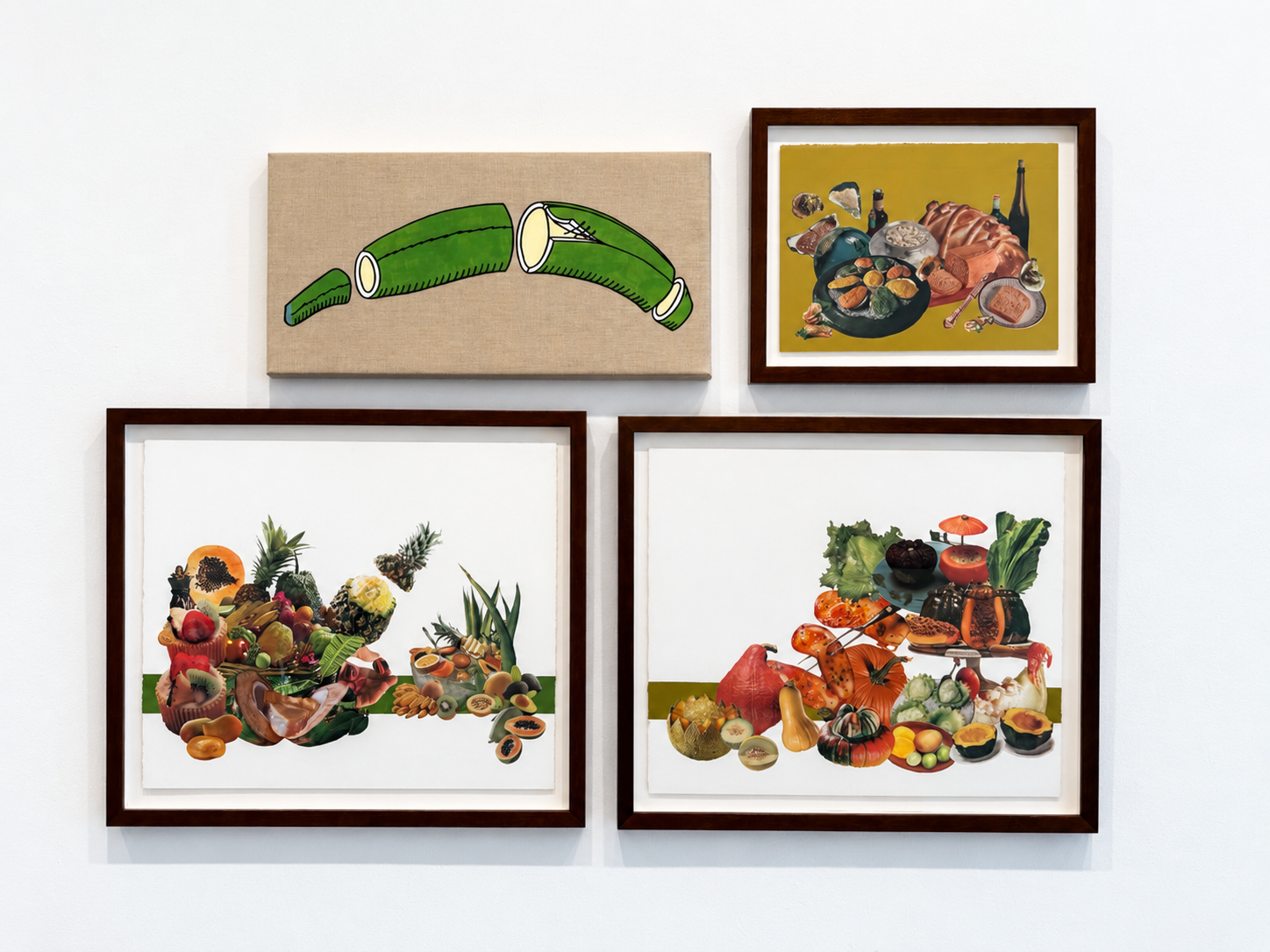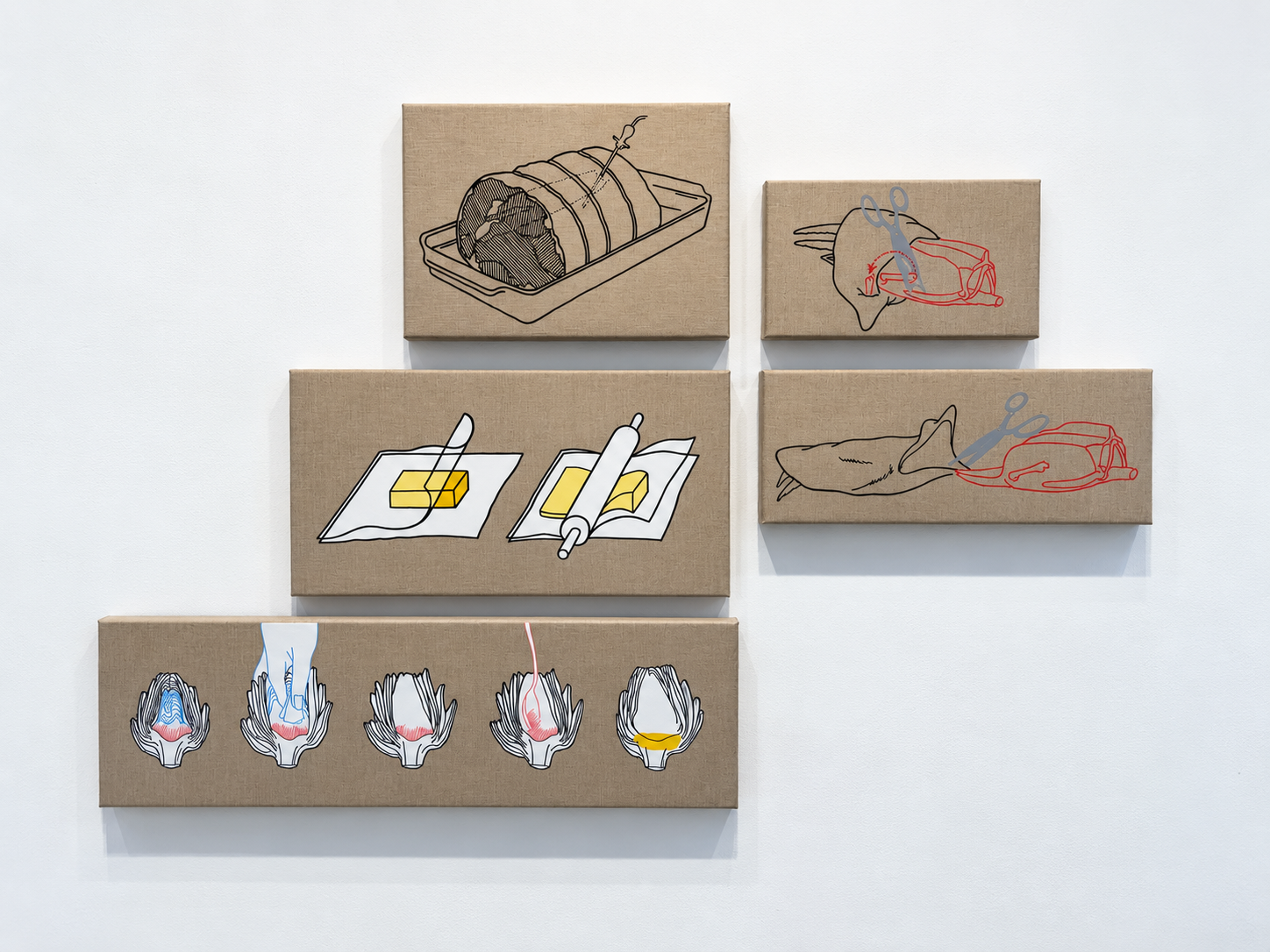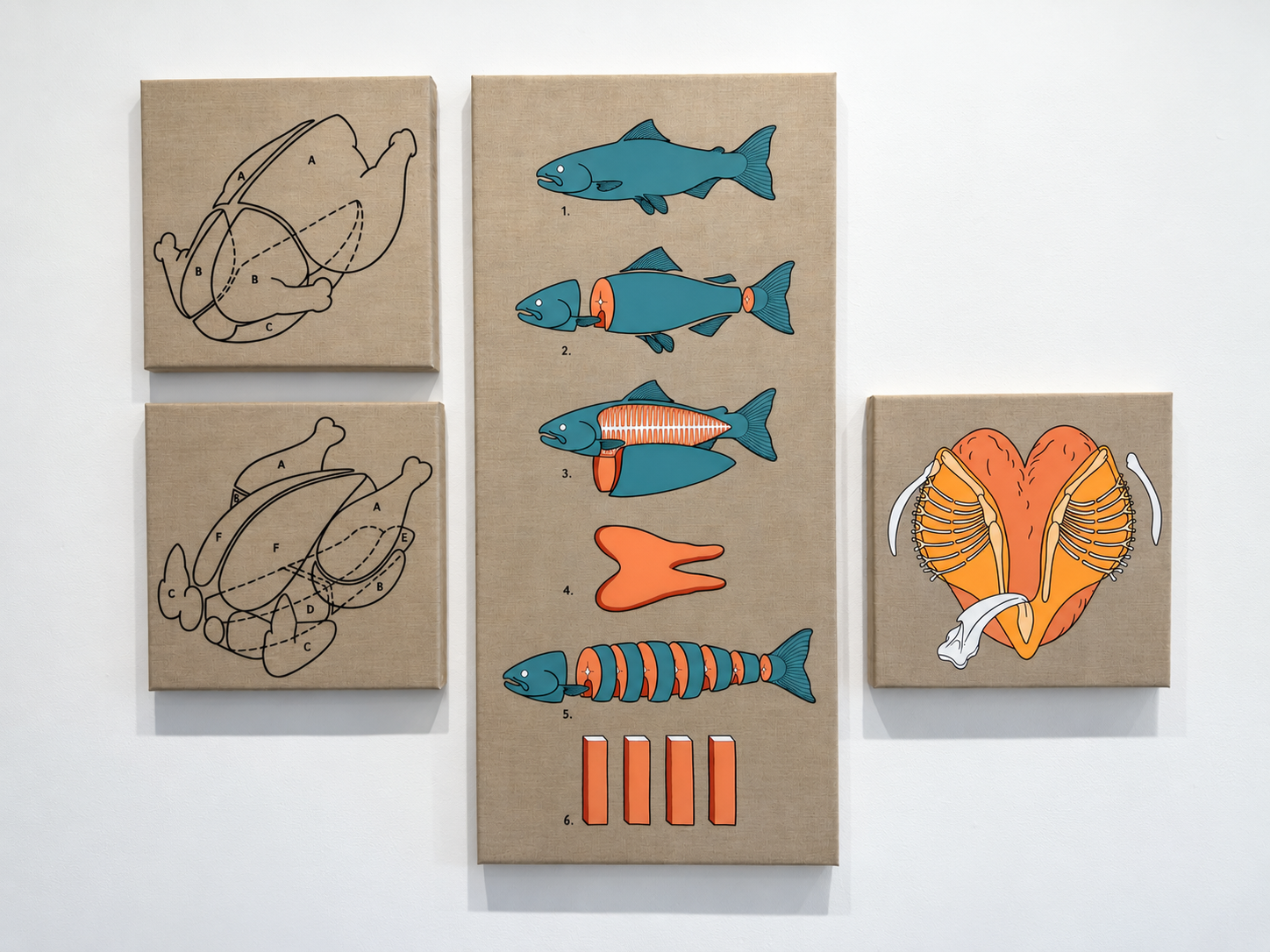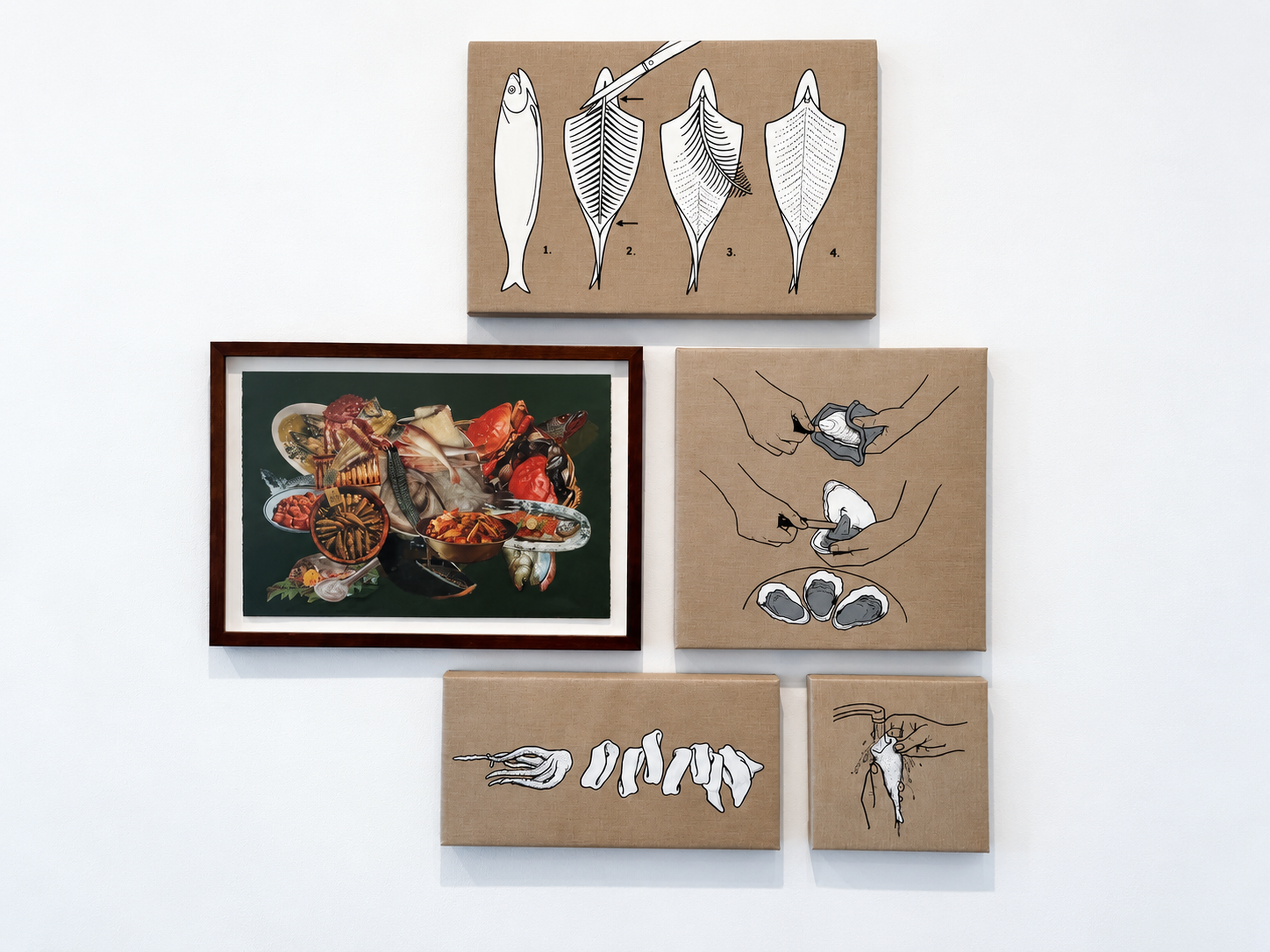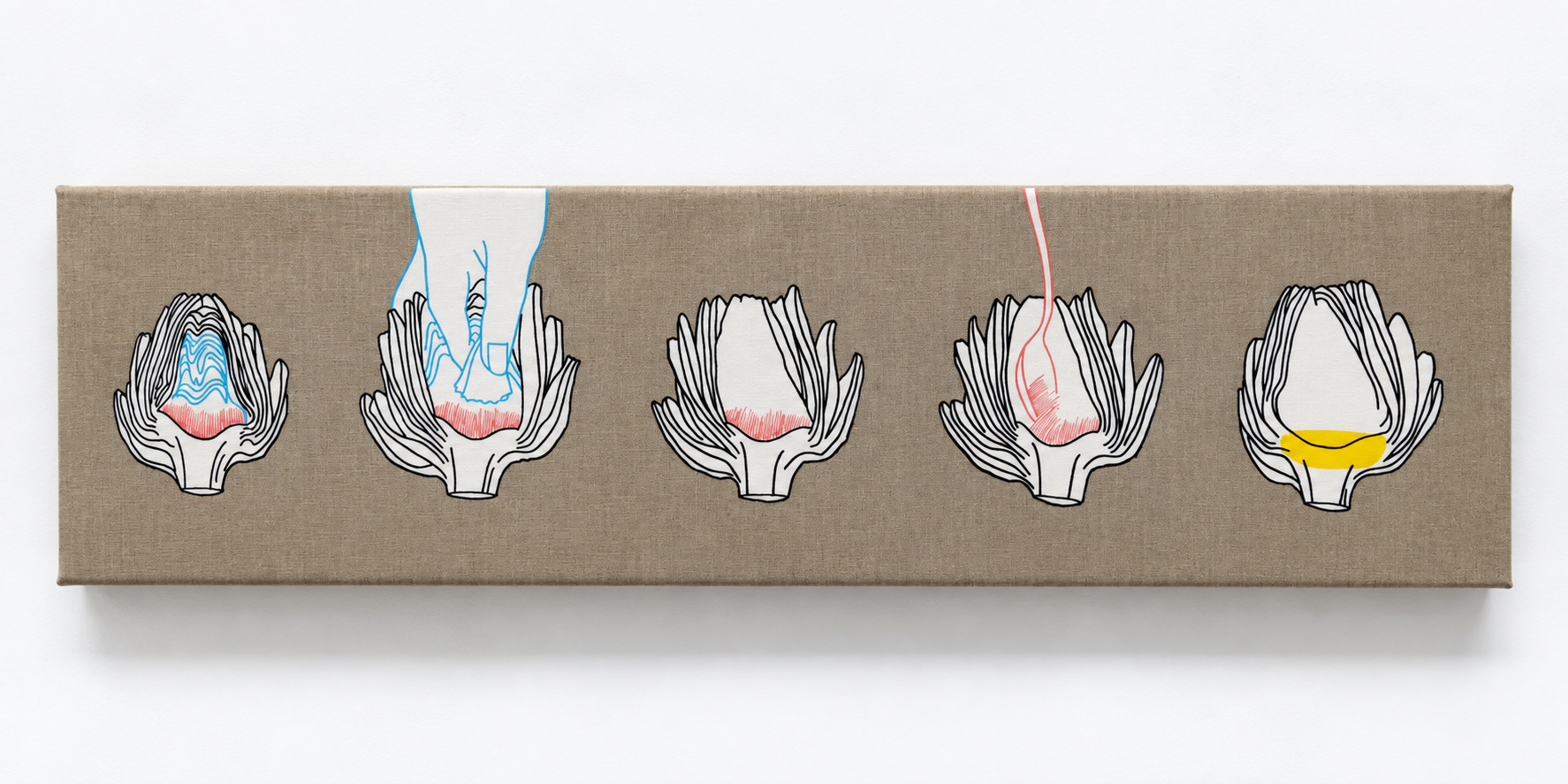
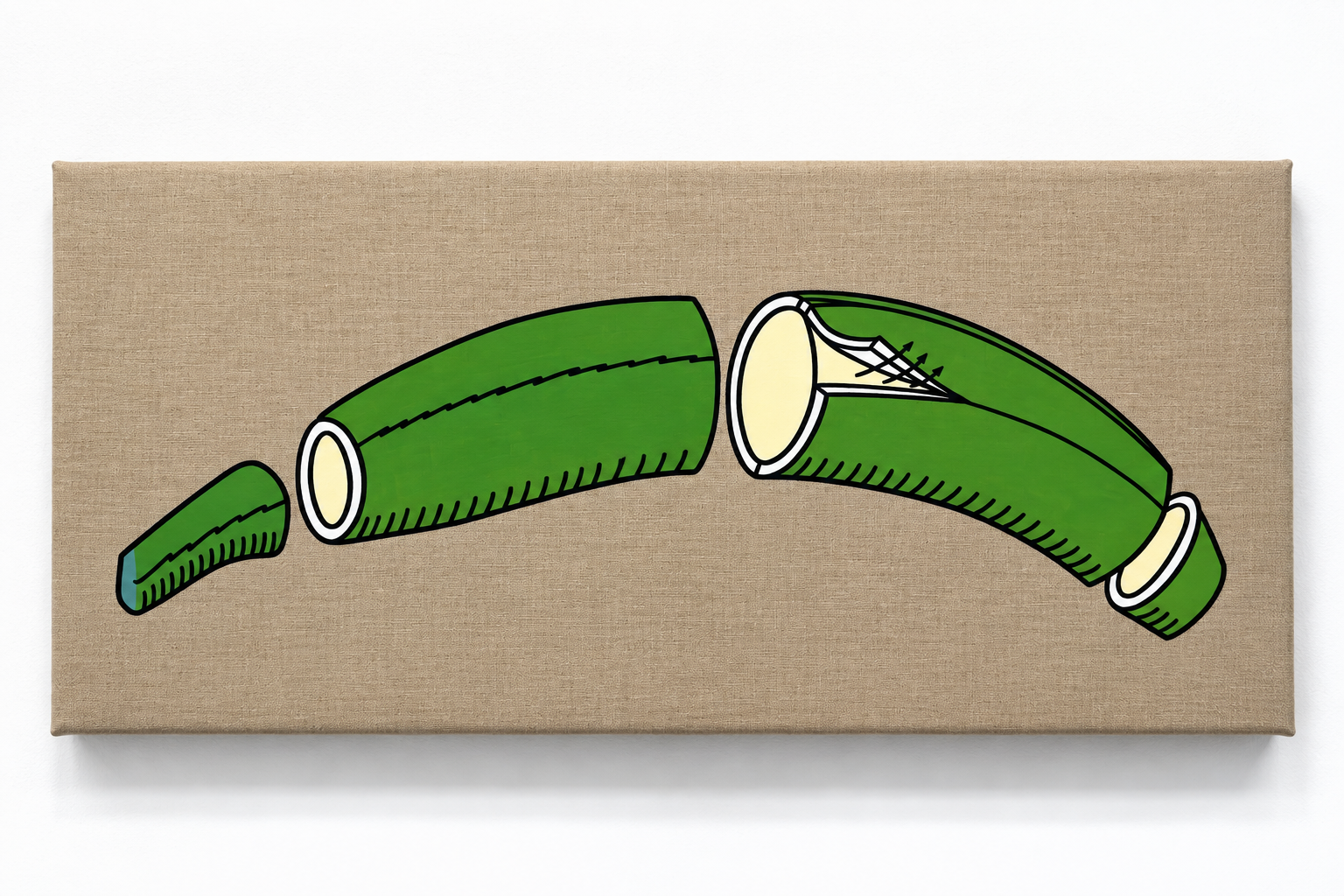
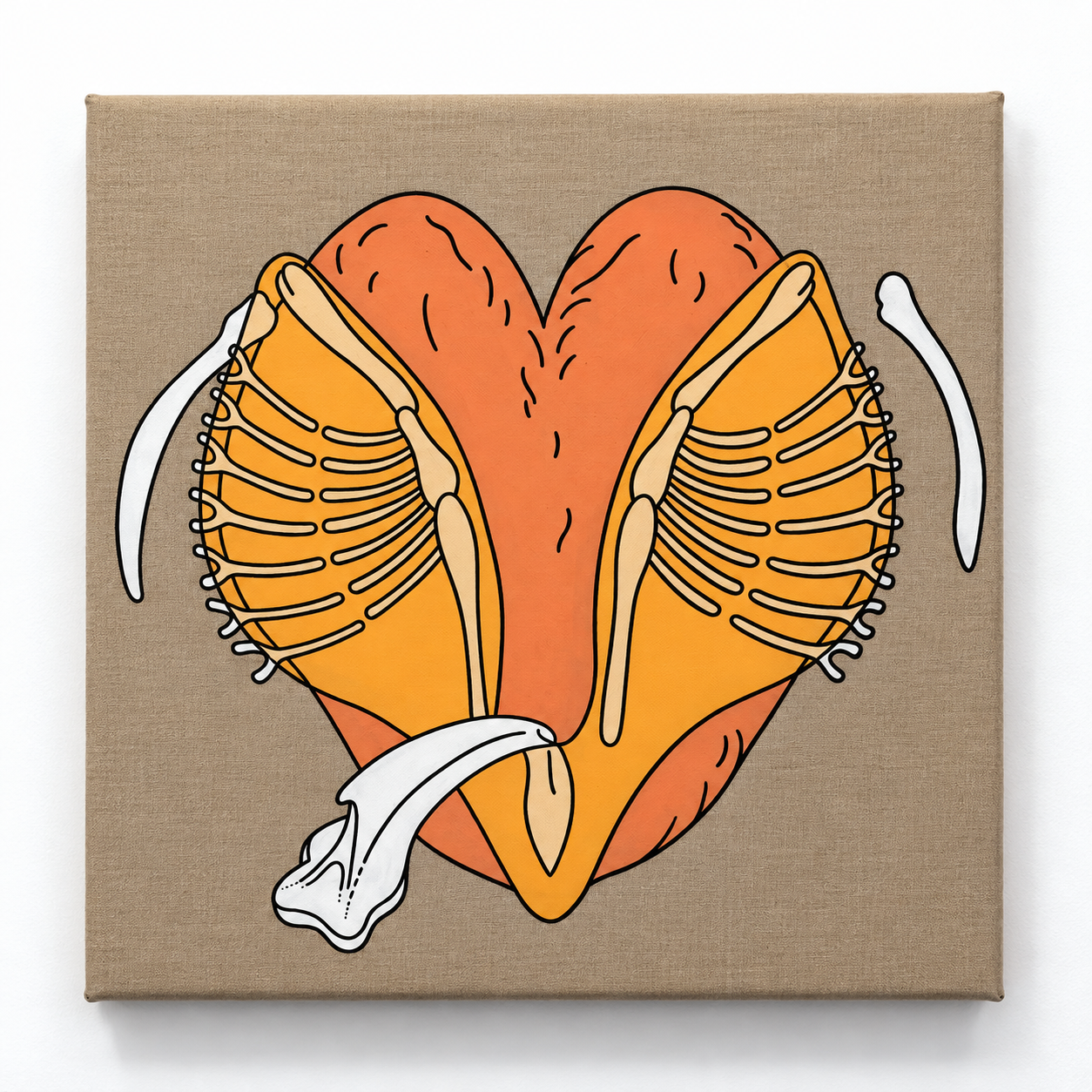
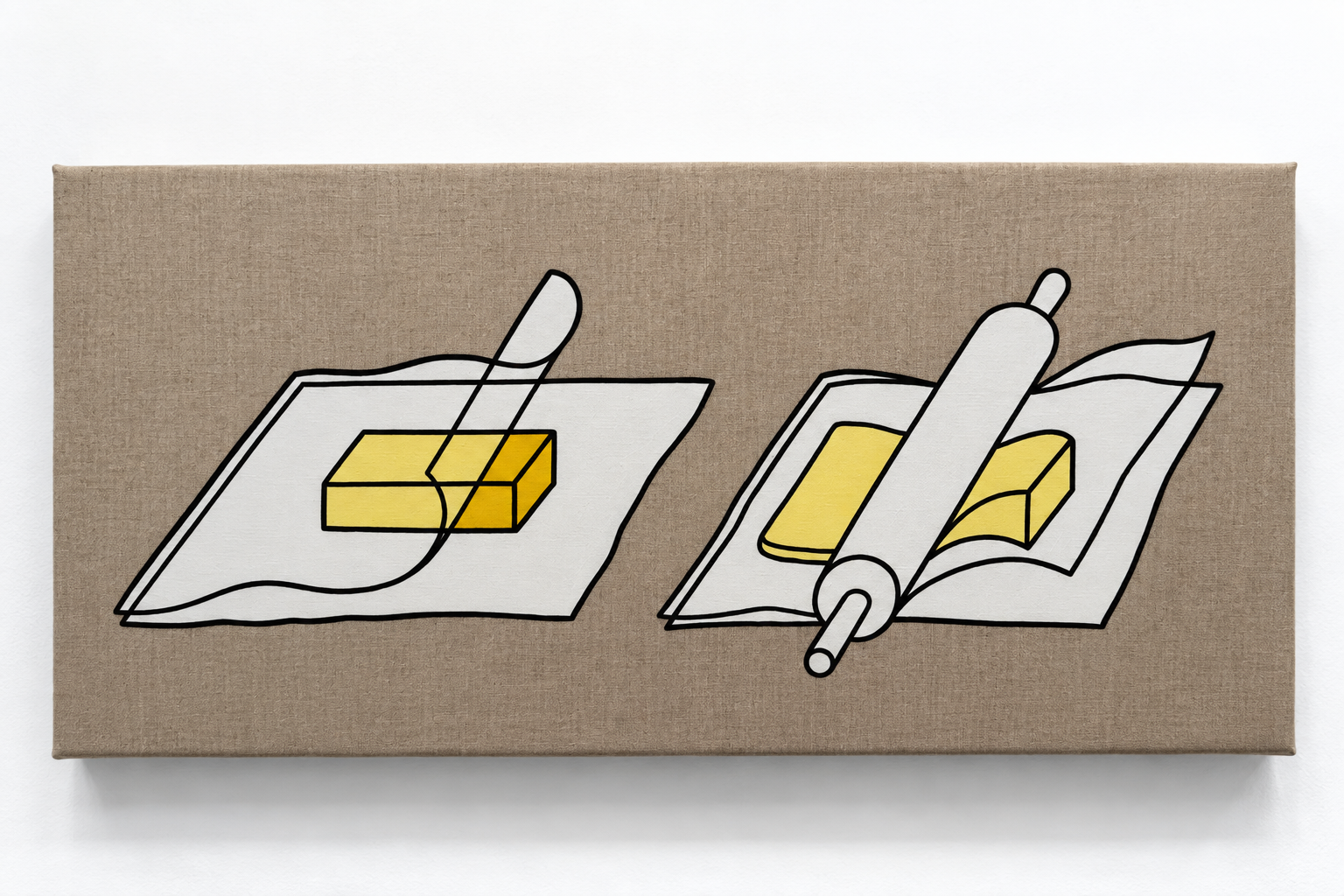
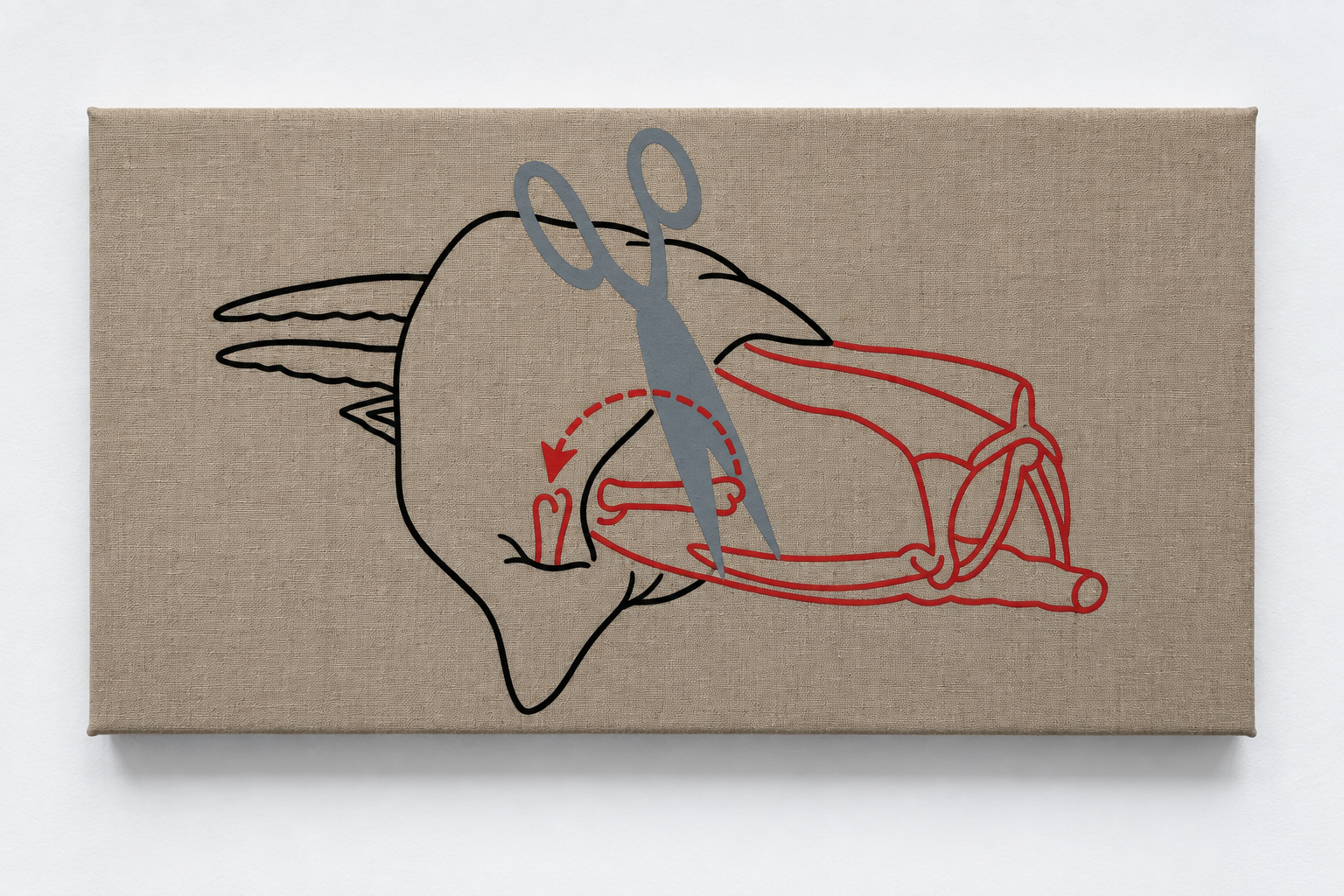
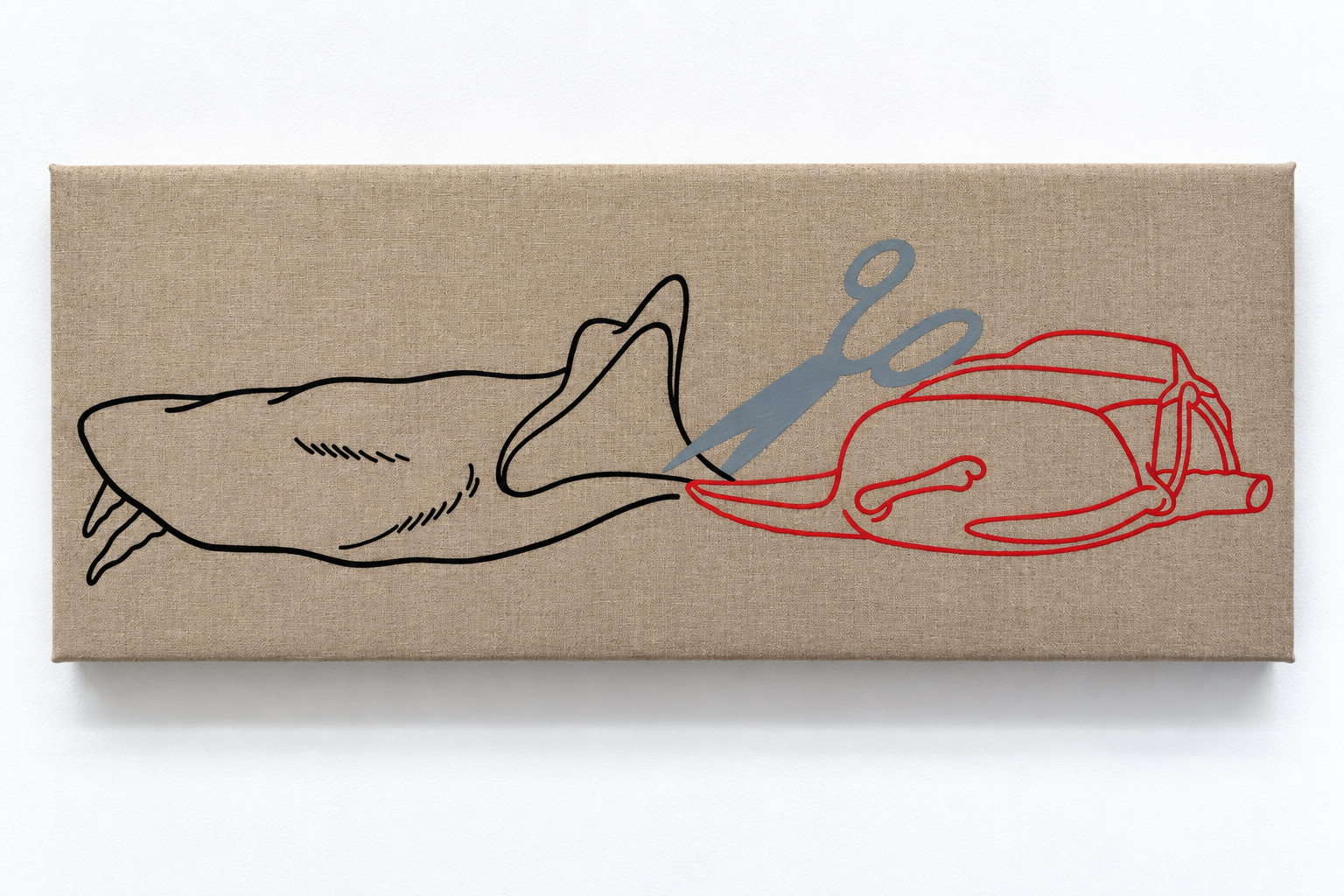
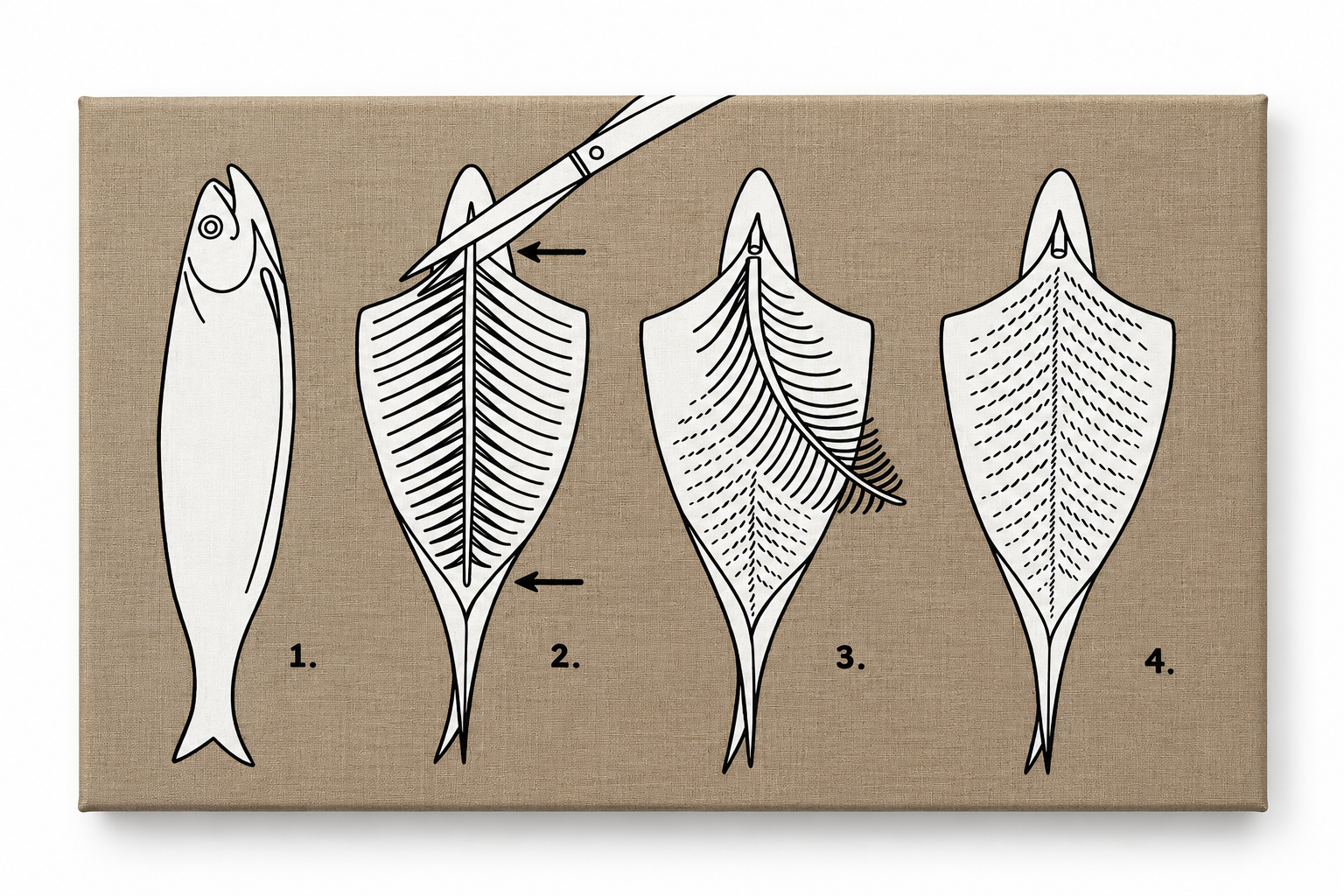
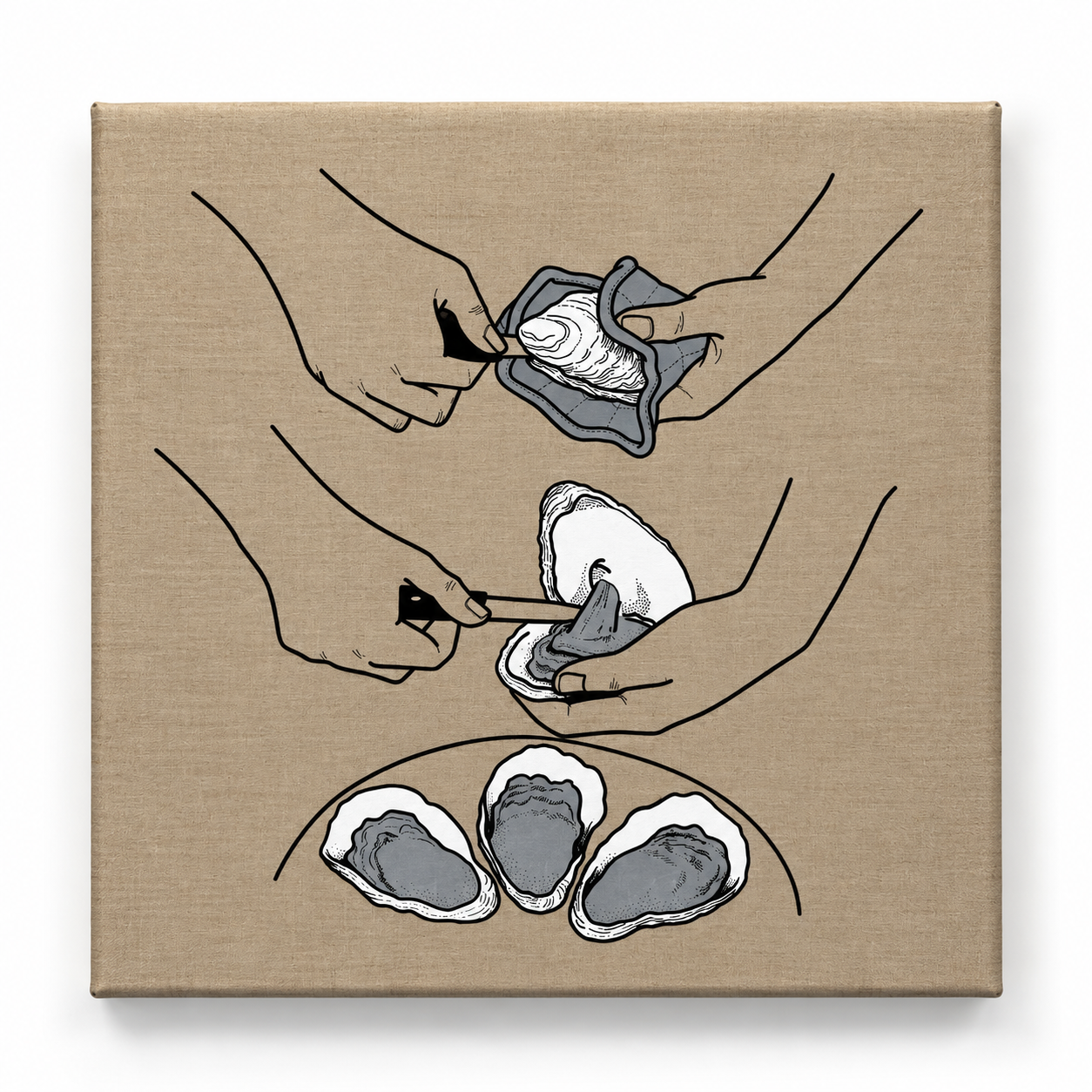
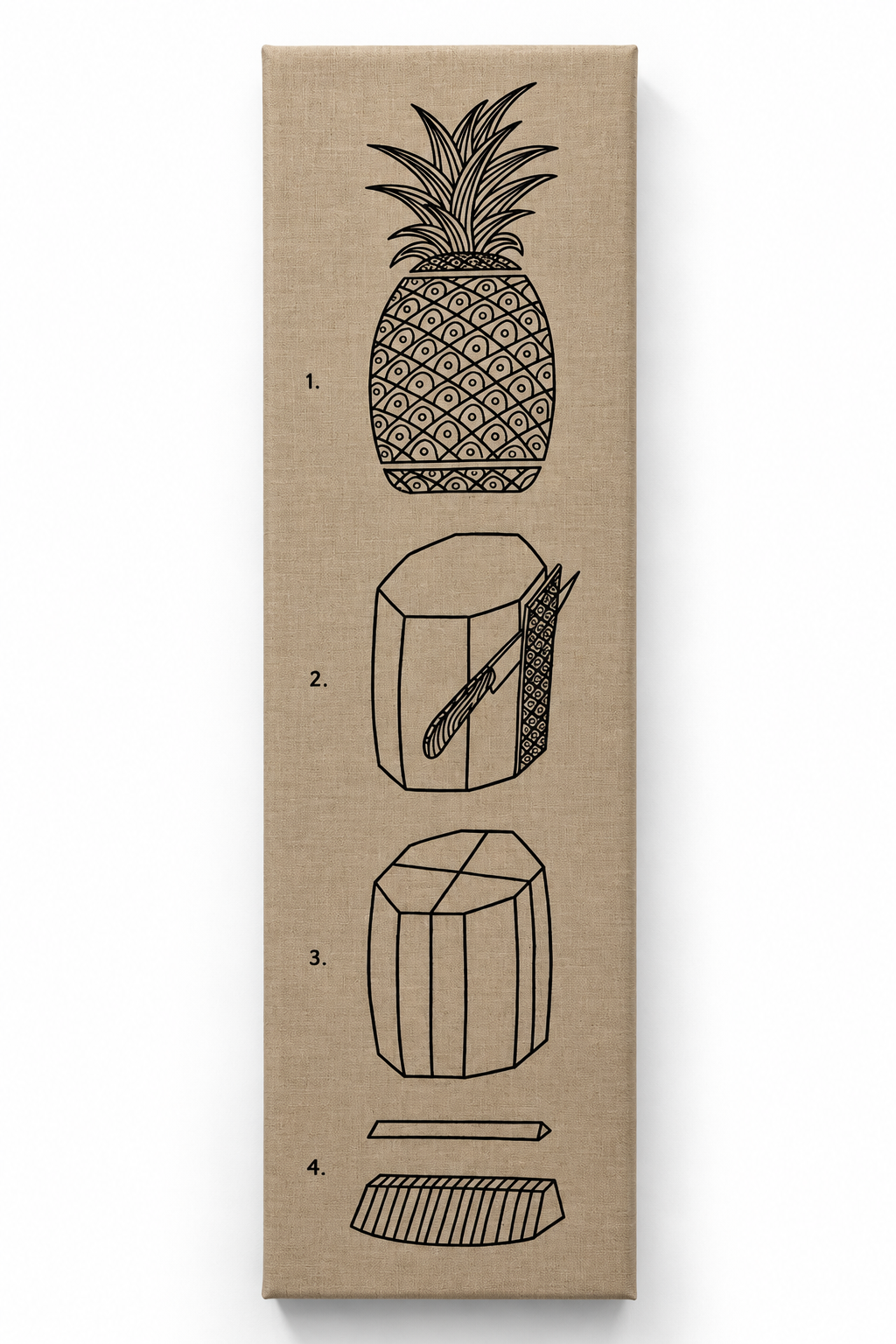
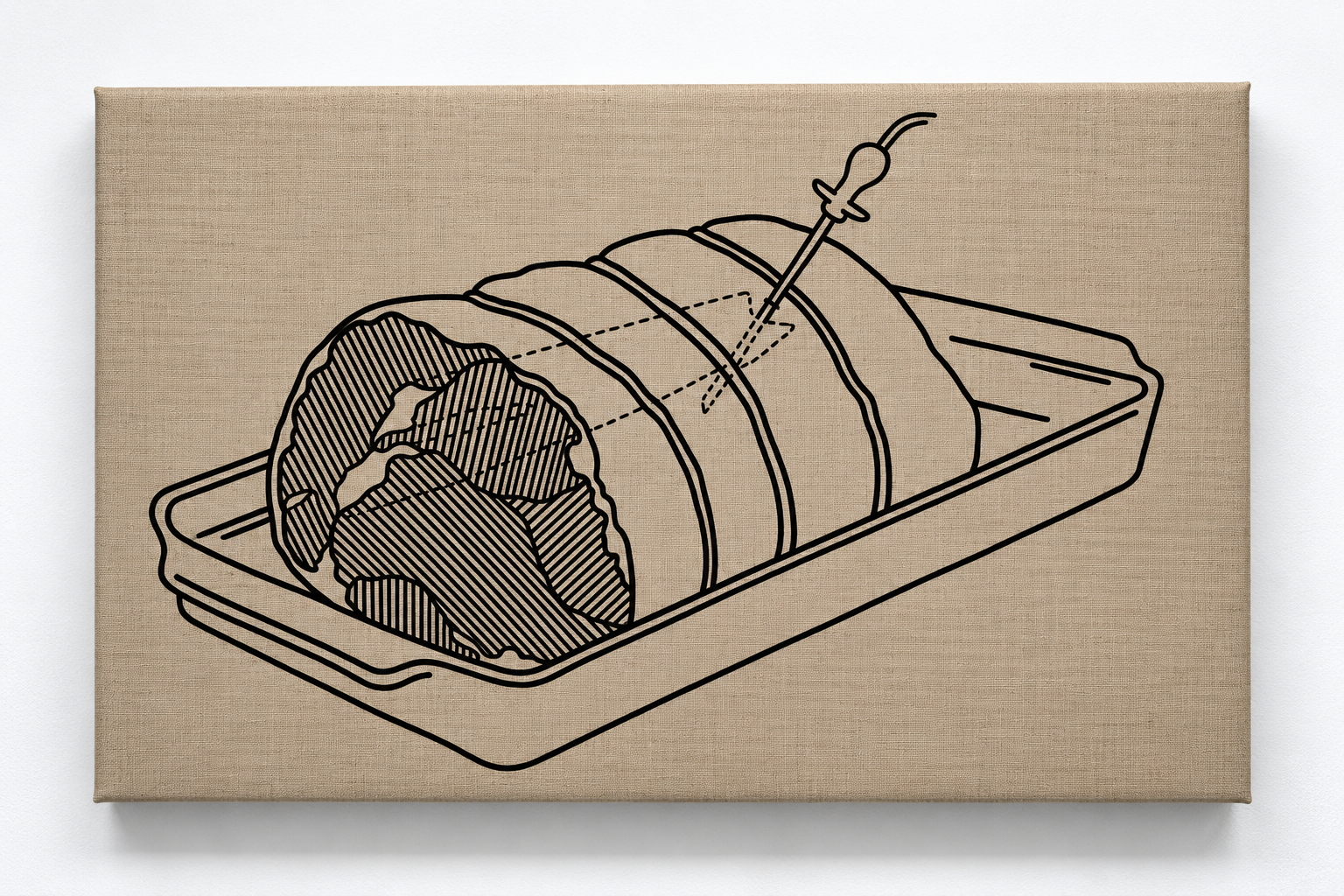
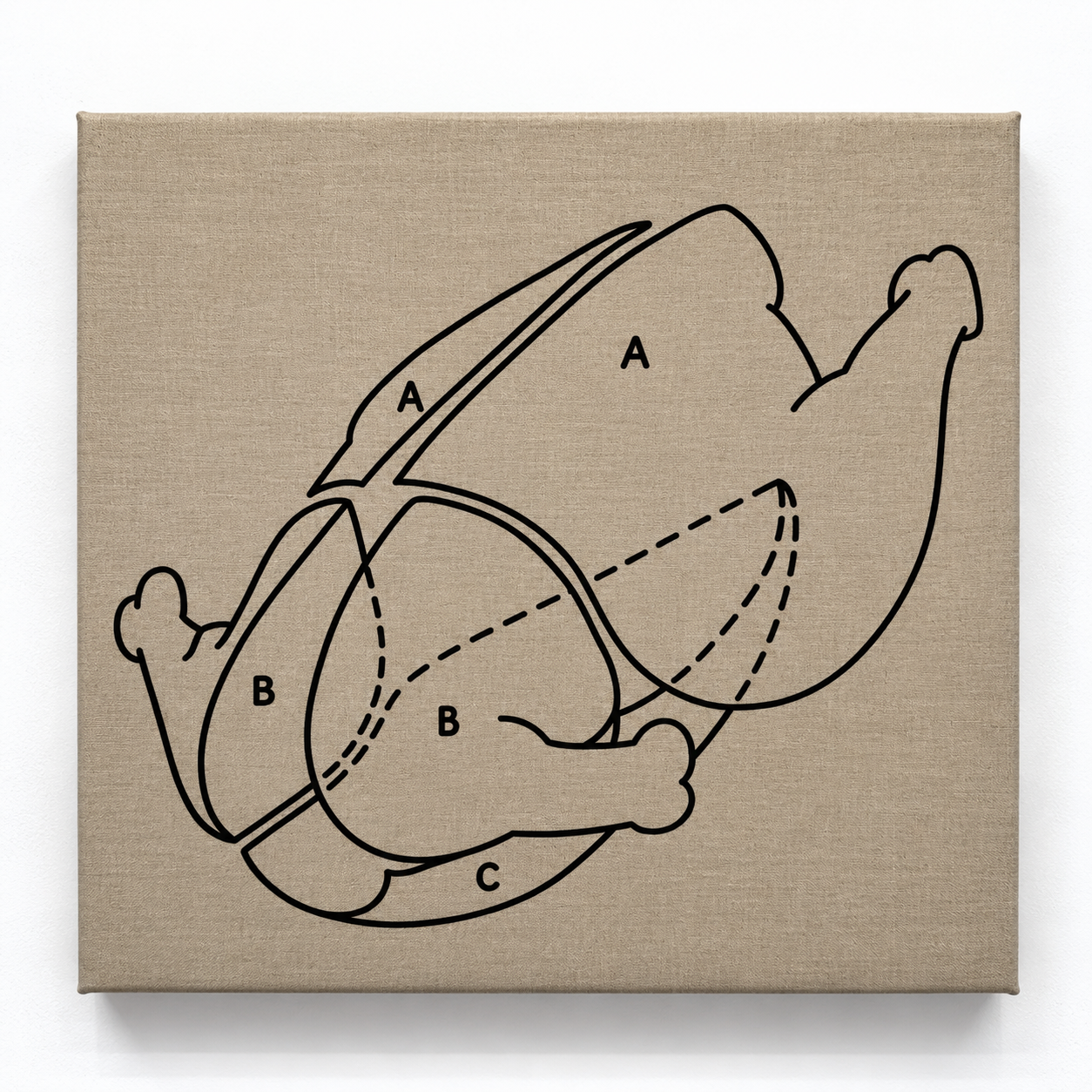
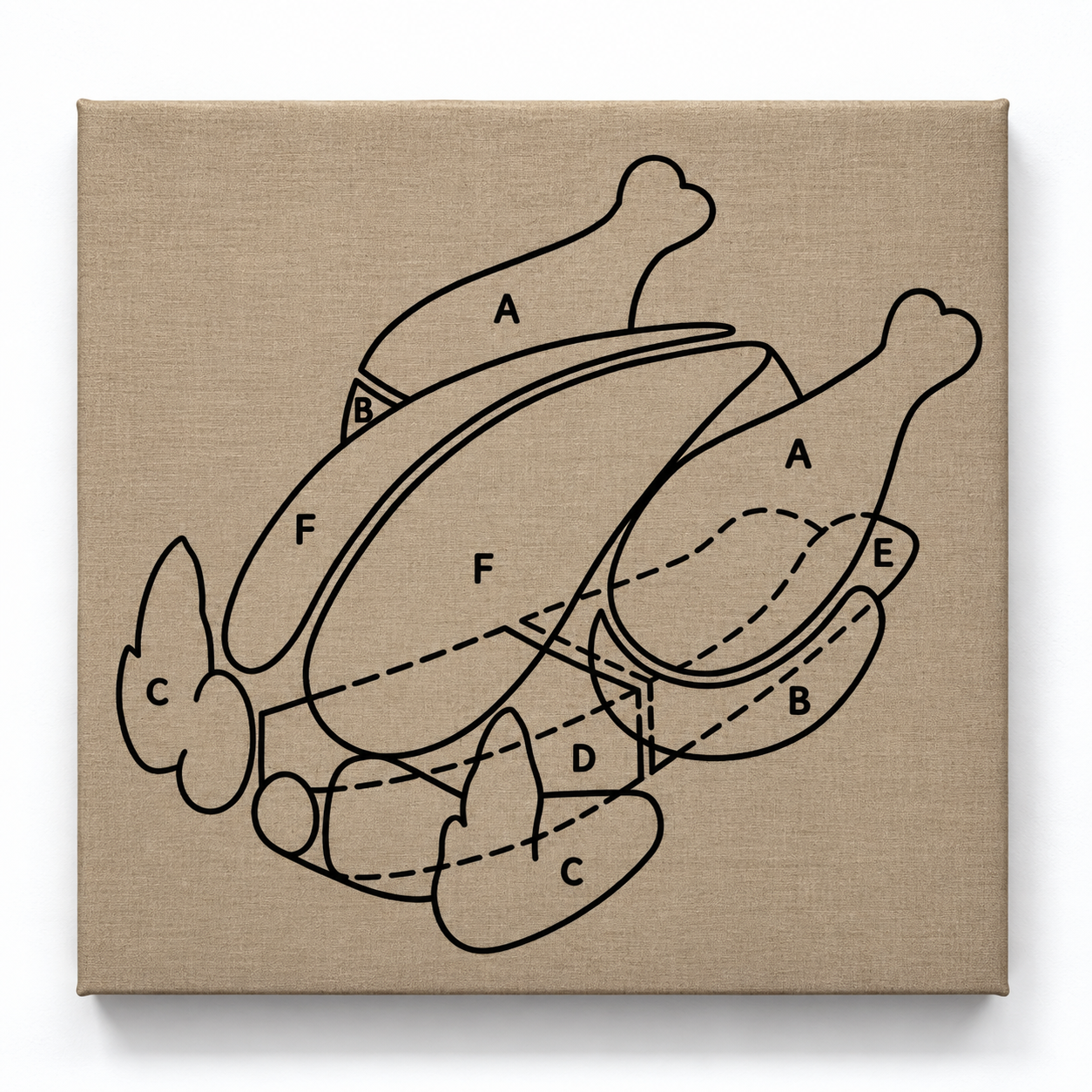
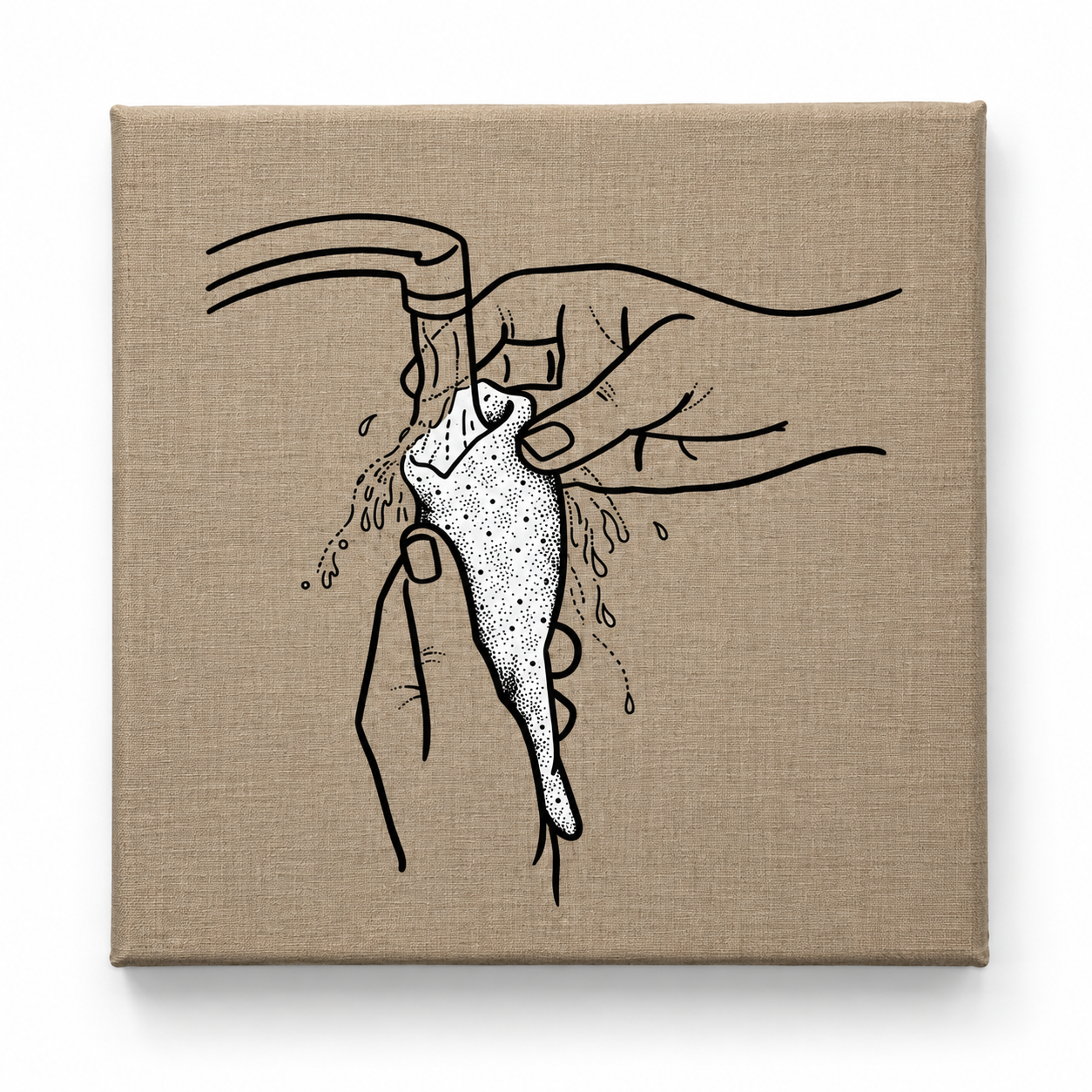
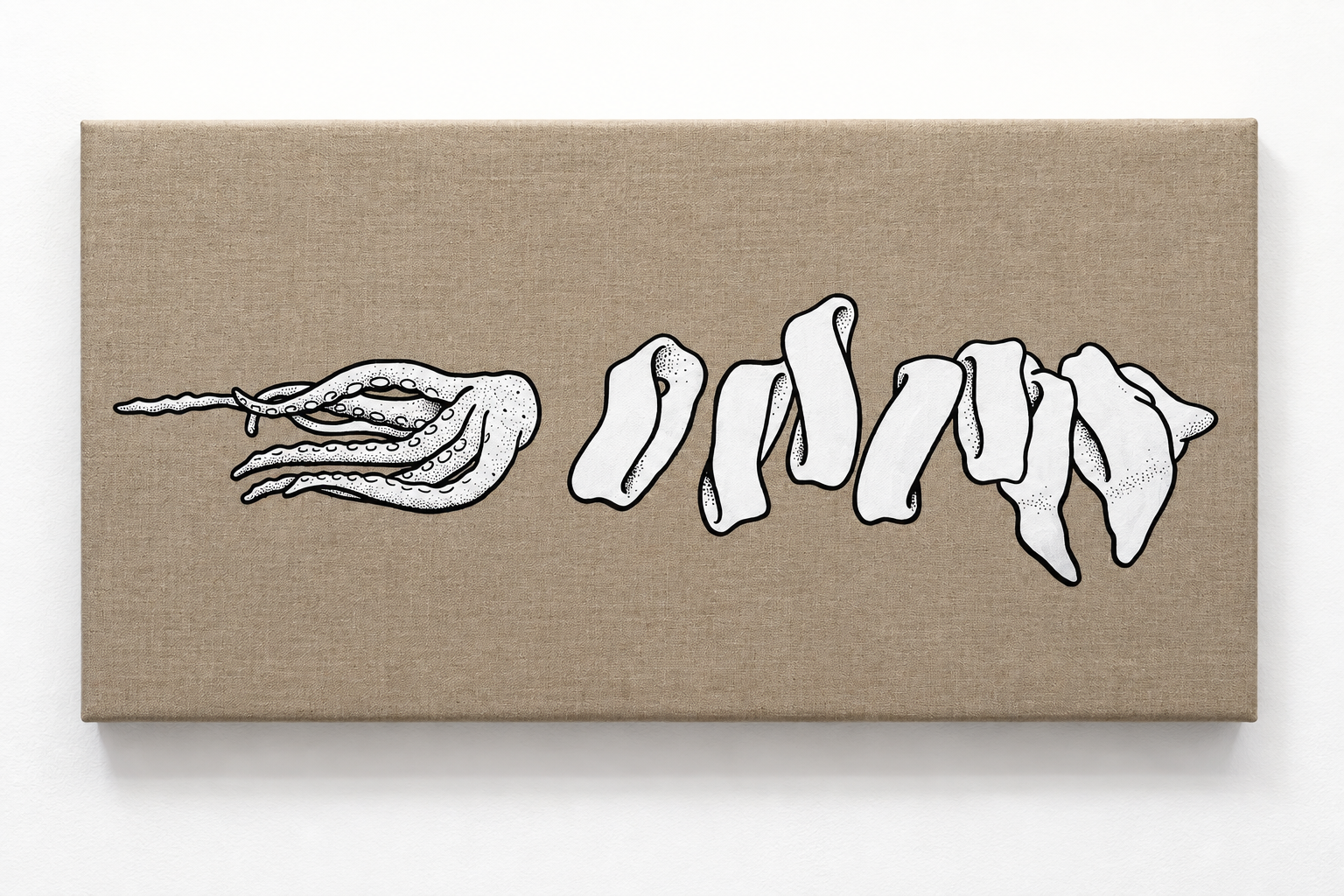
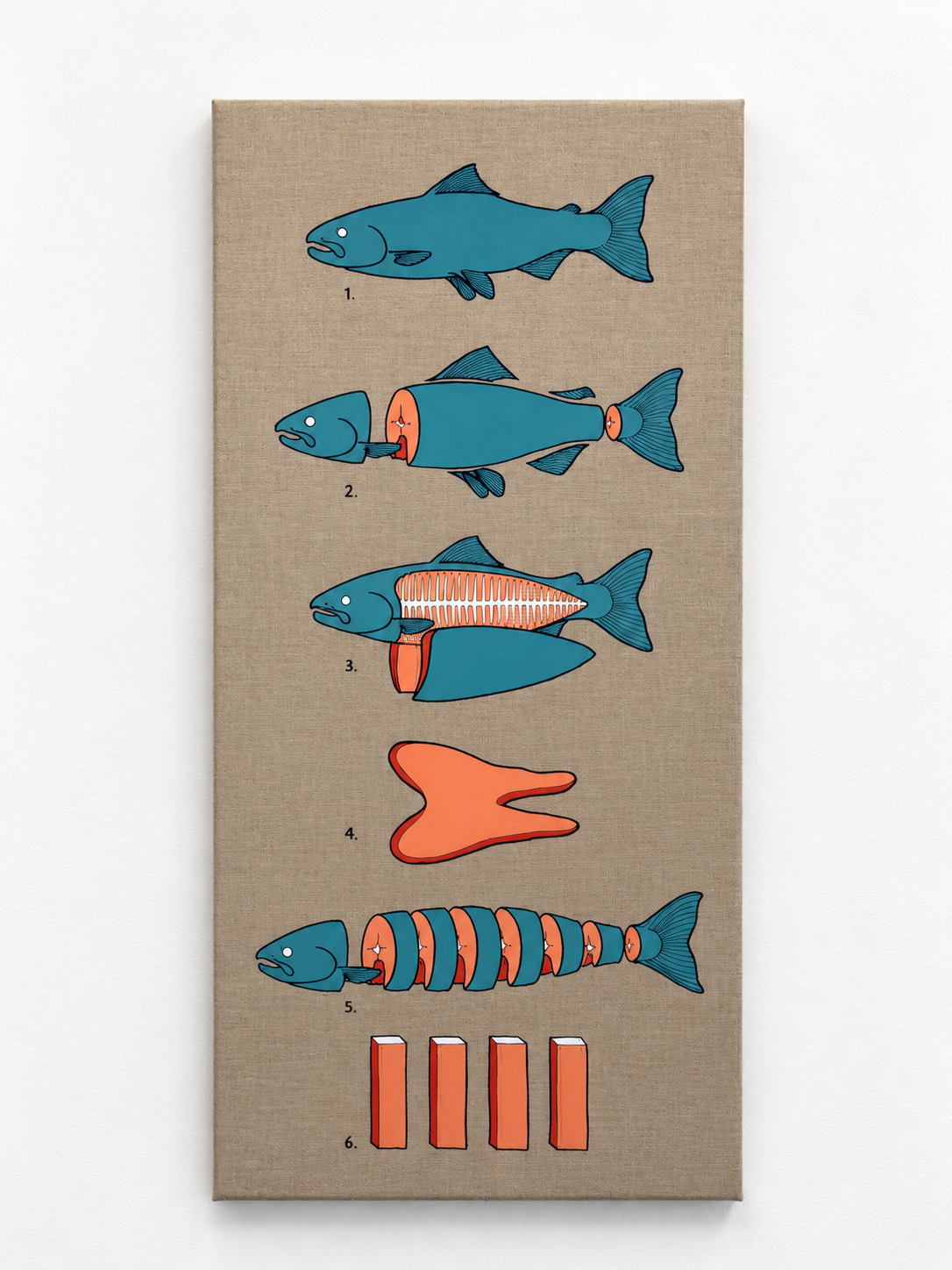
Process Paintings is an ongoing series of paintings depicting recontextualized processes and instructions sourced from vintage cookbooks. Removed from their original narrative and functional contexts, these instructions are translated into acrylic on linen, producing works that range from intimate studies to larger-scale paintings. What remains is all process and no product, direction without destination, labor without consumption.
Each canvas is stretched specifically for the selected instruction. The instruction determines the object’s physical limits. Fragments of instructional language or imagery are isolated and treated not as means to an end, but as cultural artifacts in their own right. By stripping away ingredients, outcomes, and completion, the work highlights the authority of instruction itself. The paintings are suspended in a state of perpetual becoming, action is implied but never fulfilled. Utility collapses.
As a process in its own right, Process Paintings operates as a mutable system. Works are added, removed, and rearranged with each exhibition, generating a new configuration every time the project is installed. Process Paintings effectively is composed in a different “recipe” for each site, one that is visually legible yet operationally nonsensical. Sequencing suggests progression while simultaneously undermining it.
Through this method, the project becomes a form of collage enacted across space and time rather than within a single frame. The reassembled instructions form a collection of gestures that can never be completed, cooked, or consumed. What emerges is a tension between control and failure, clarity and absurdity, productivity and interruption.
Here, the cookbook instruction functions as found material, not to parody it, but to expose the instability of its authority once separated from execution. What remains is directive language emptied of purpose. In this refusal of completion, Process Paintings operates in proximity to Marcel Duchamp’s linguistic readymades and Fluxus scores, where instruction itself becomes the work and failure is not an error, but a condition.