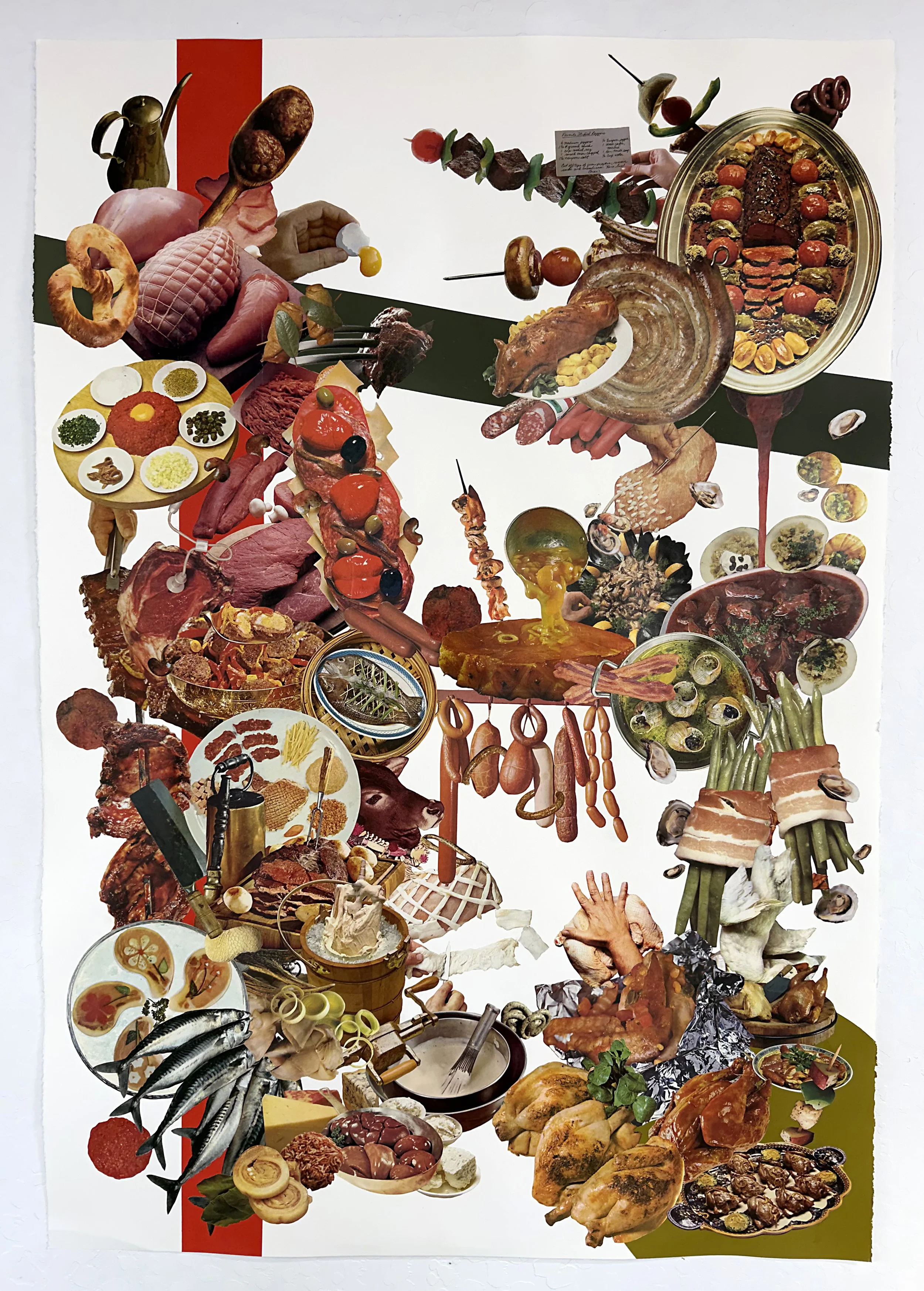
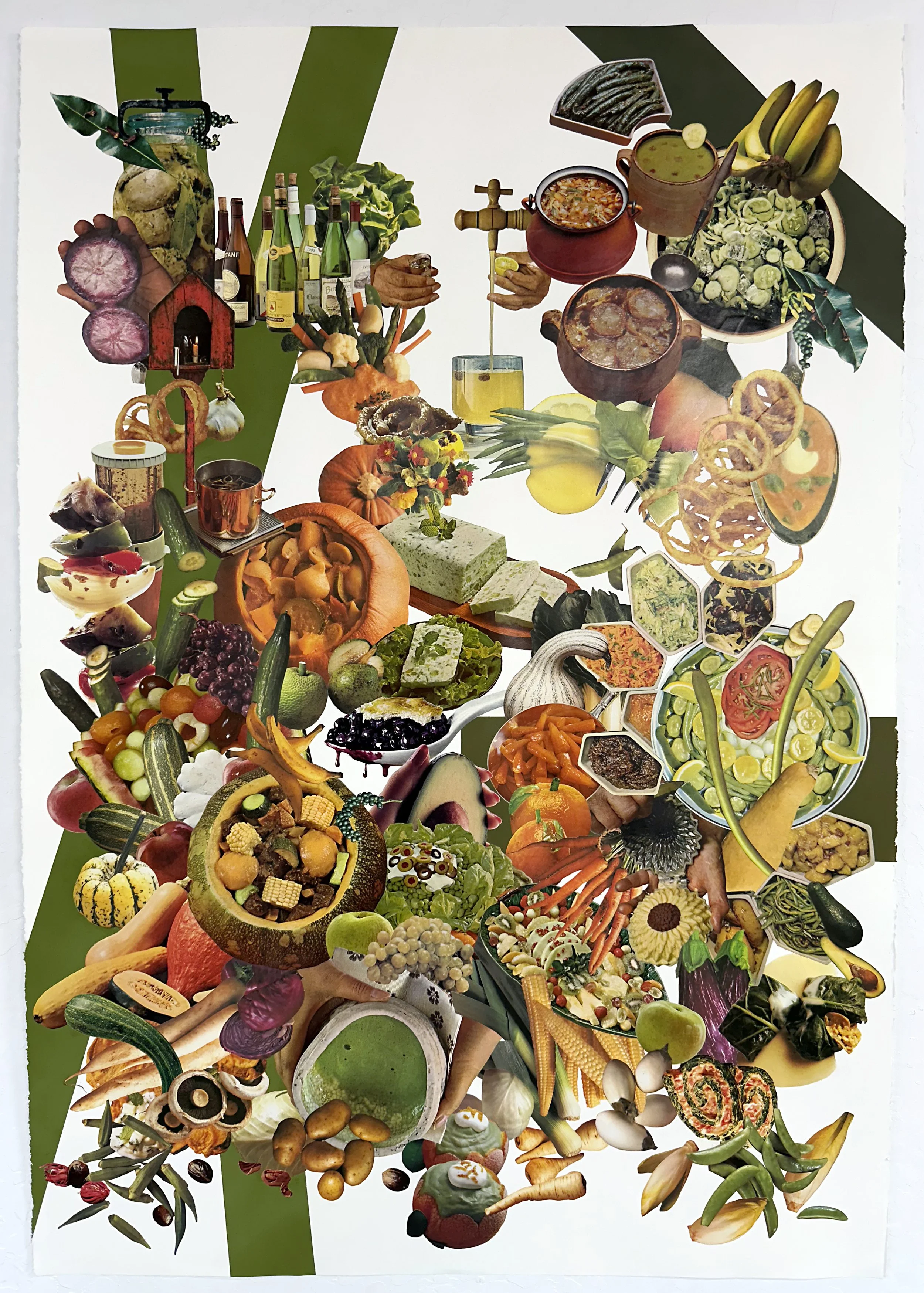
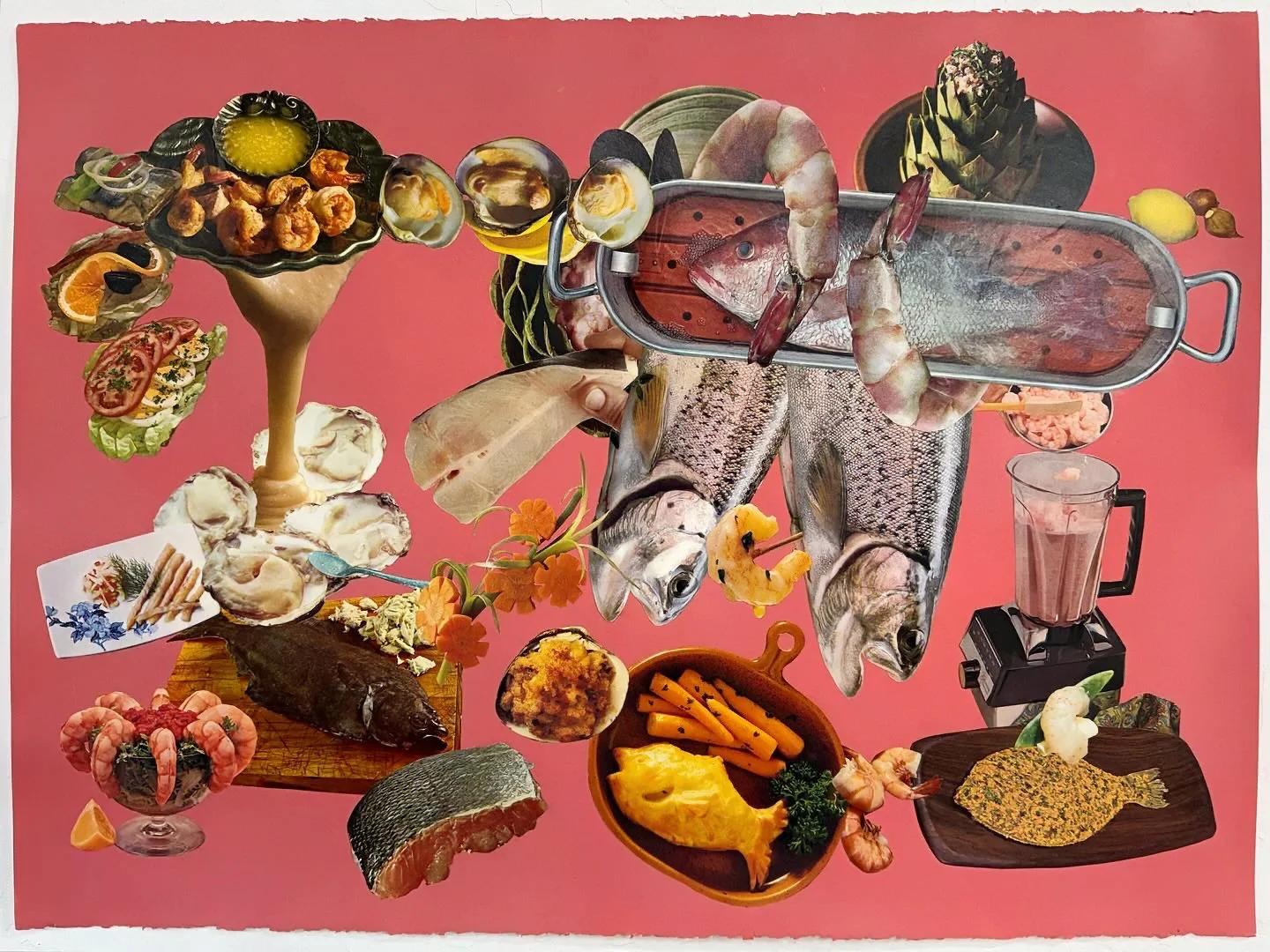
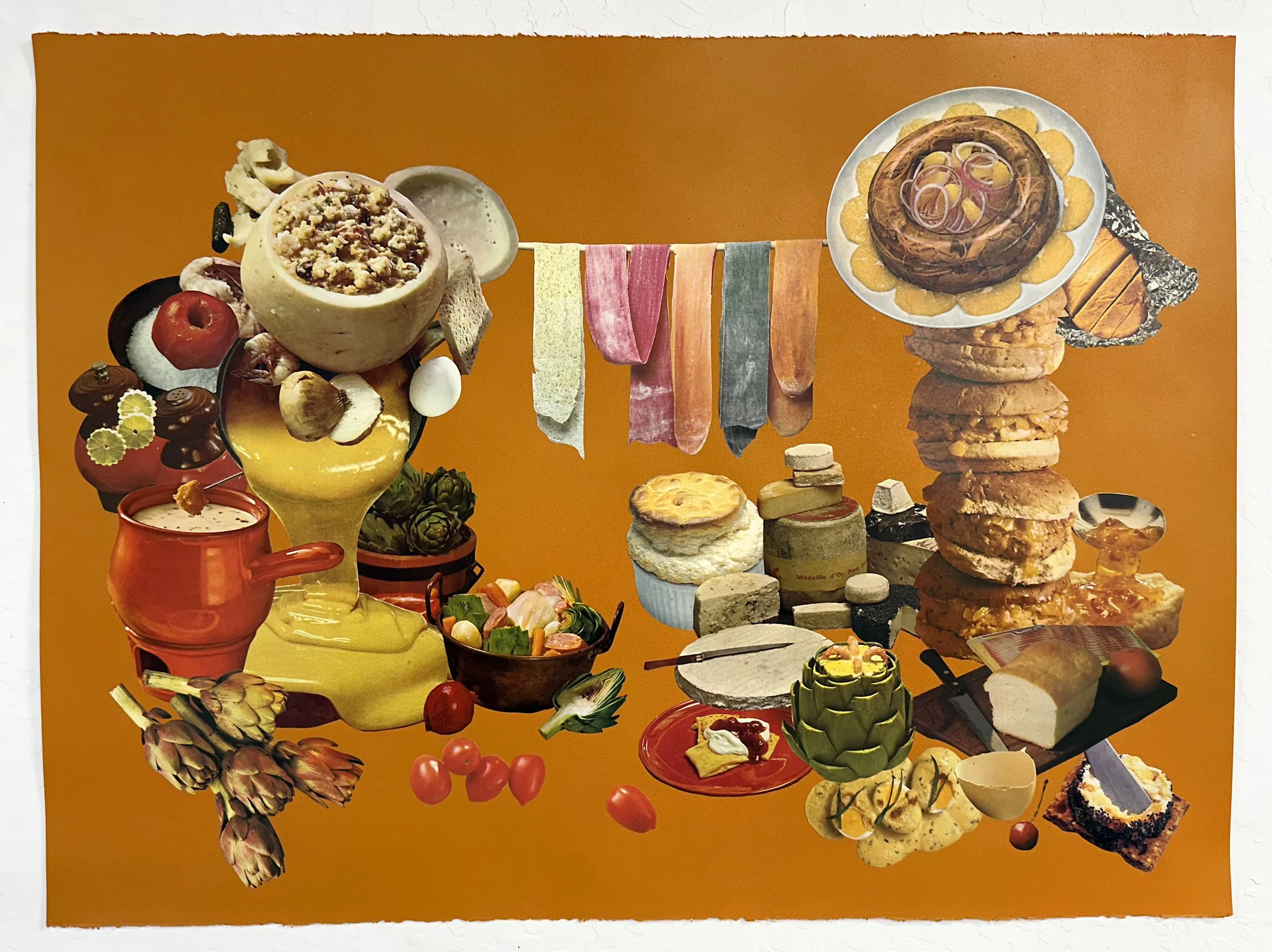
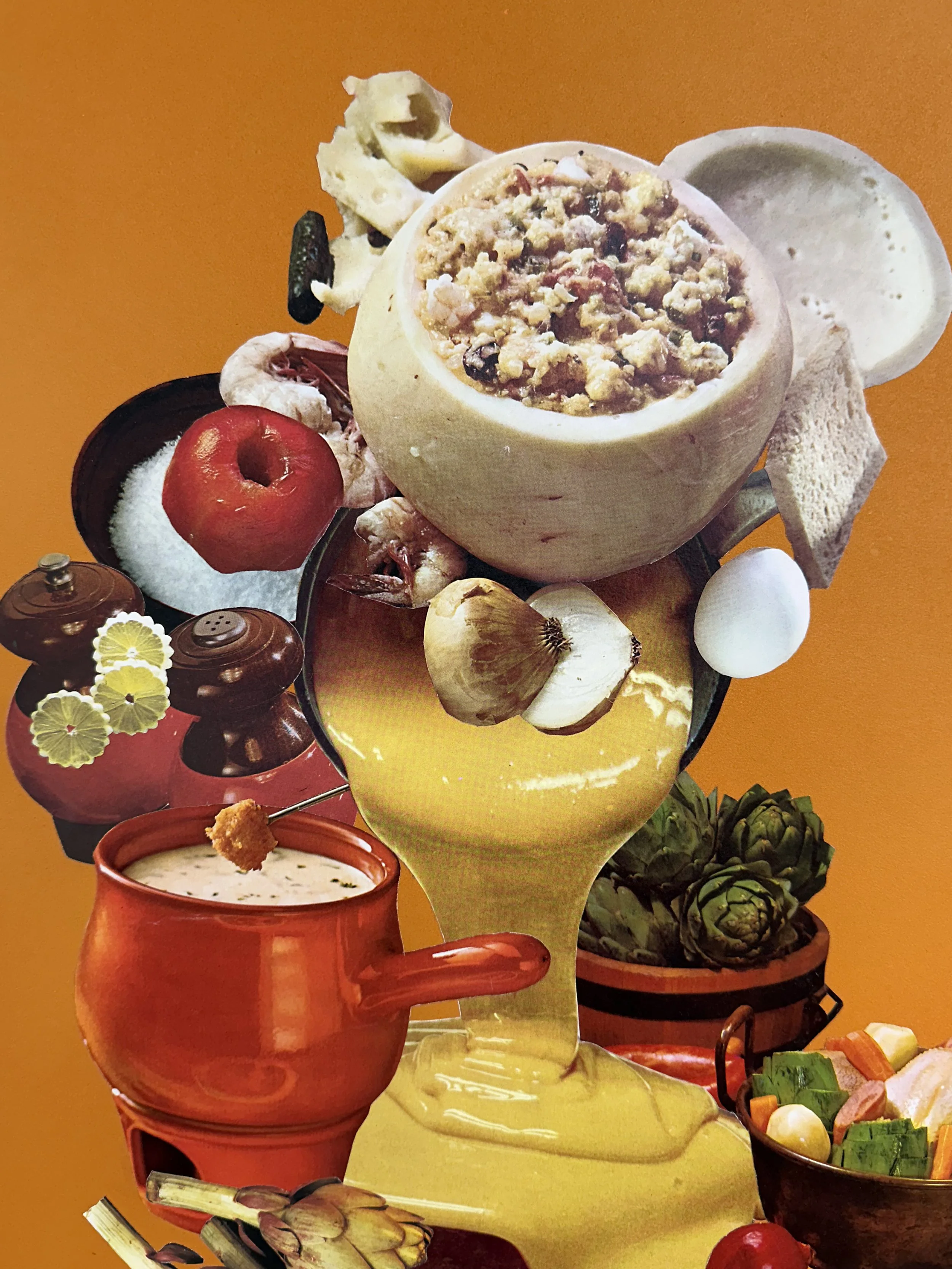
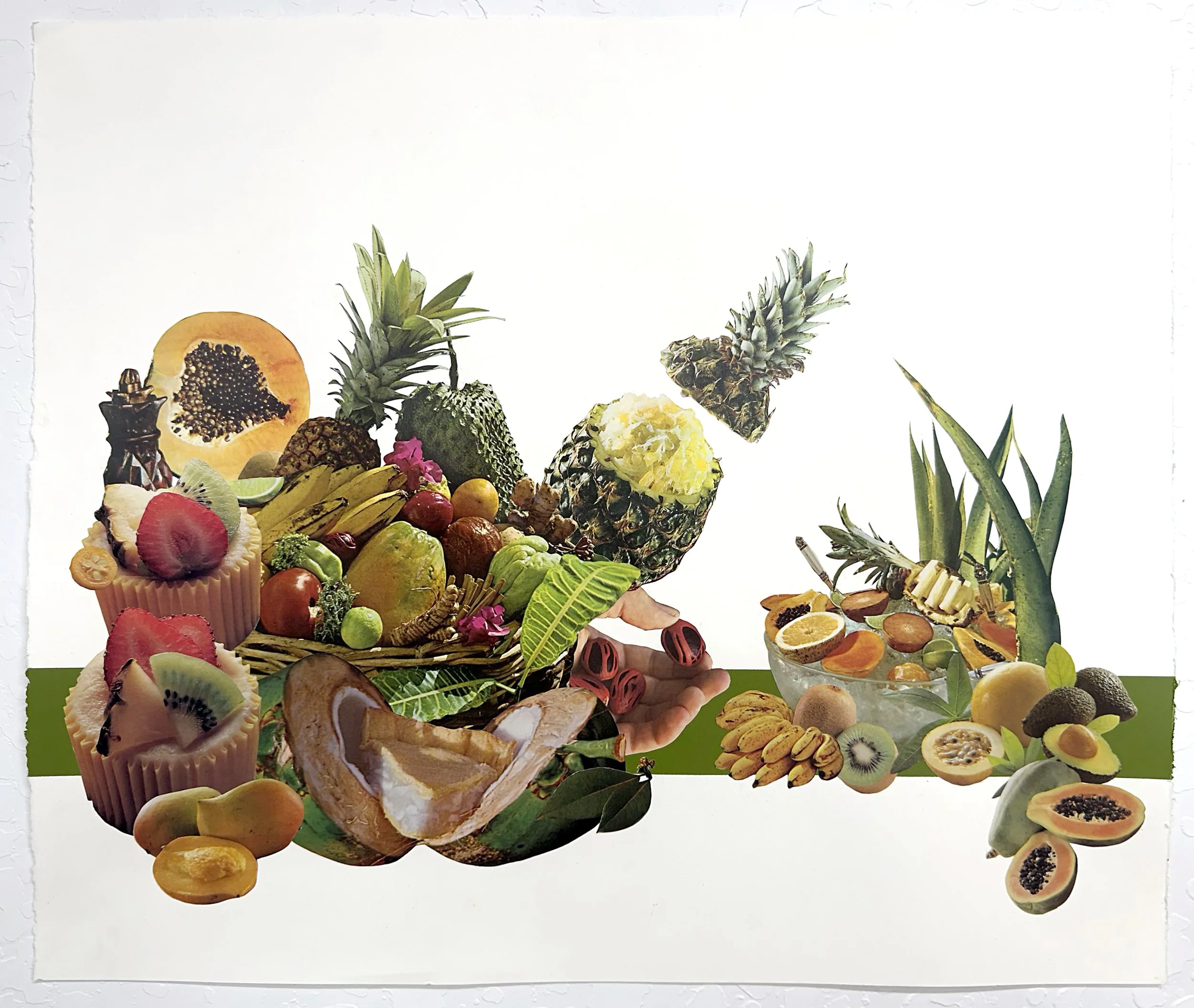
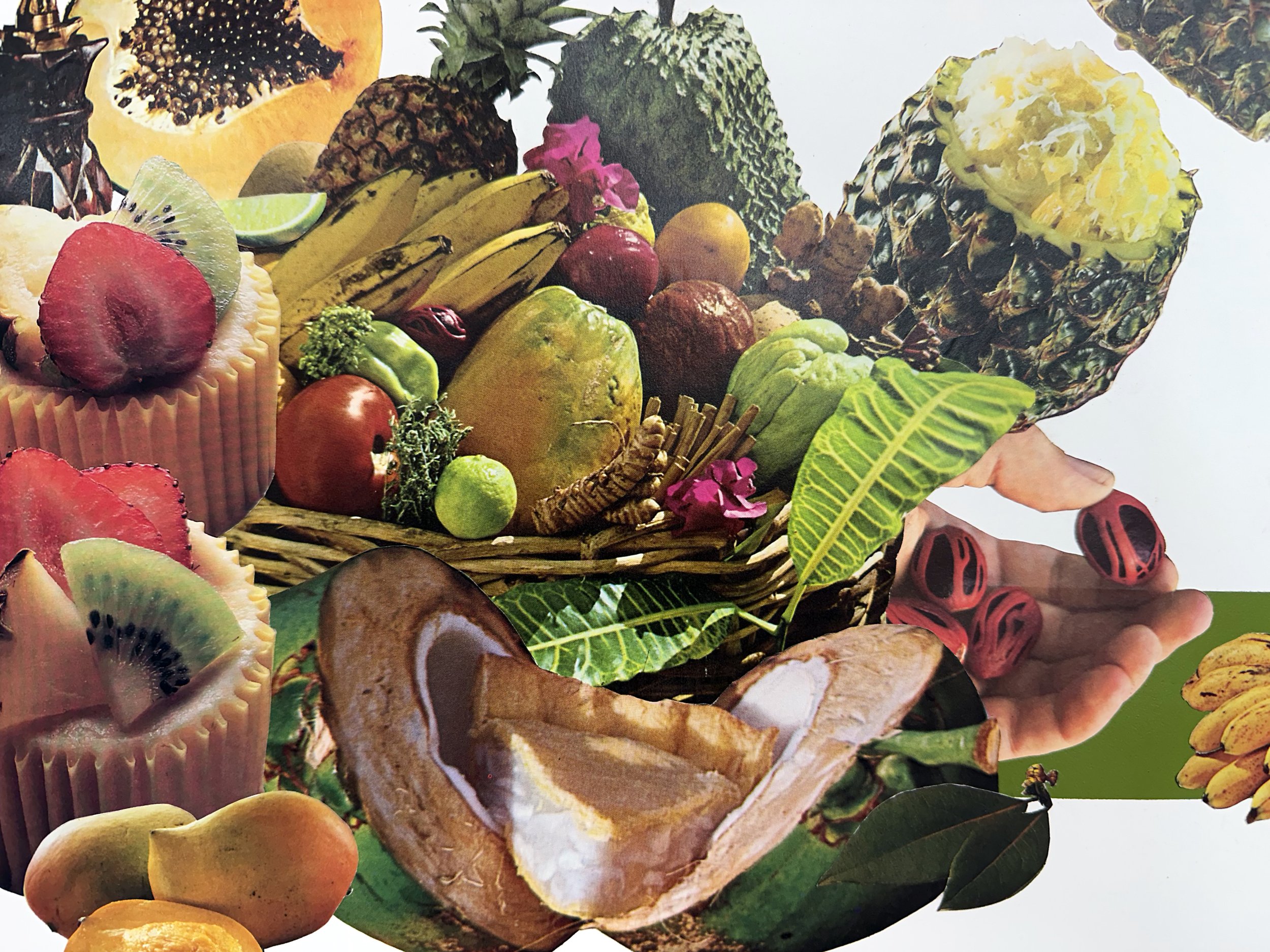
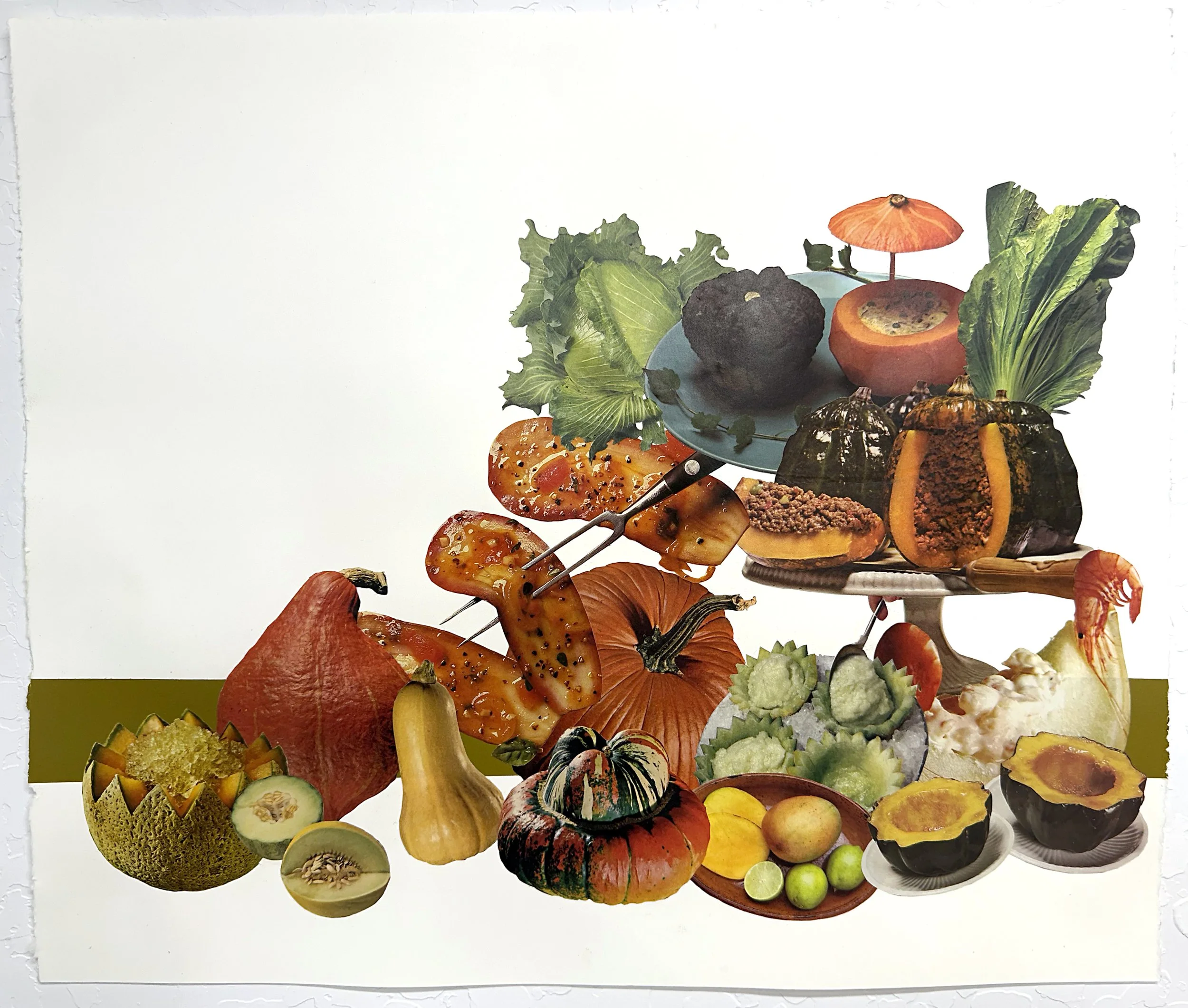
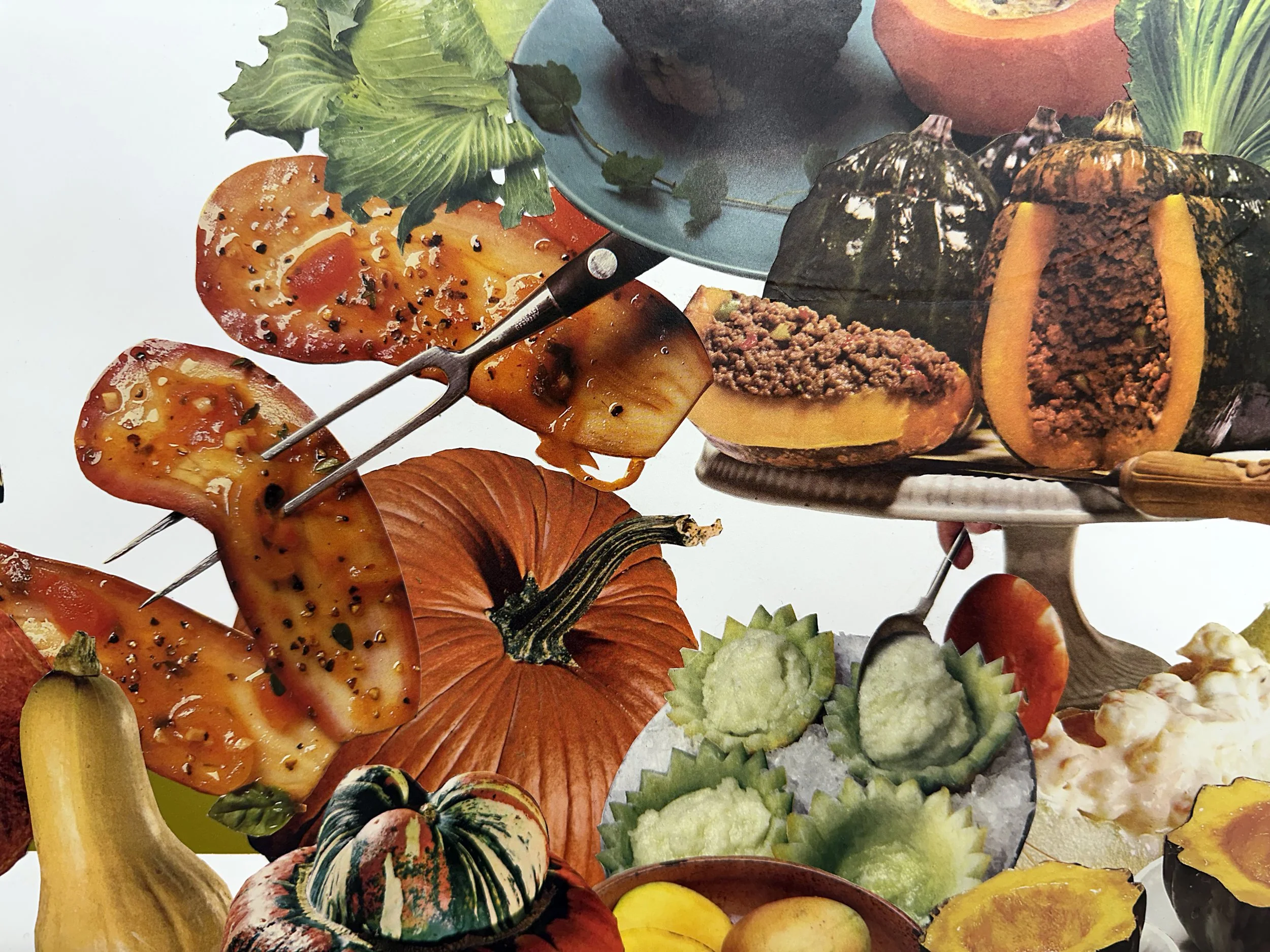
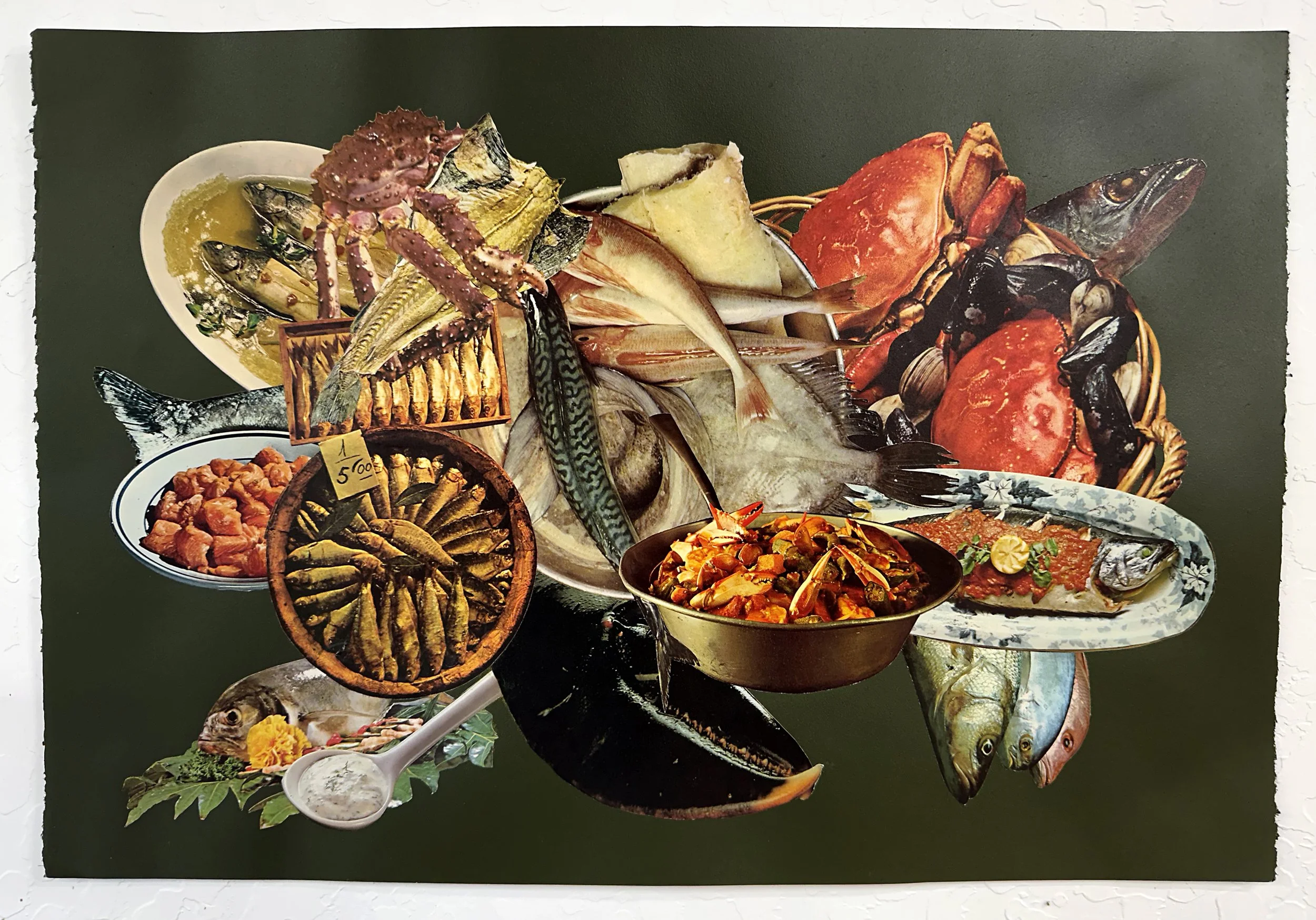
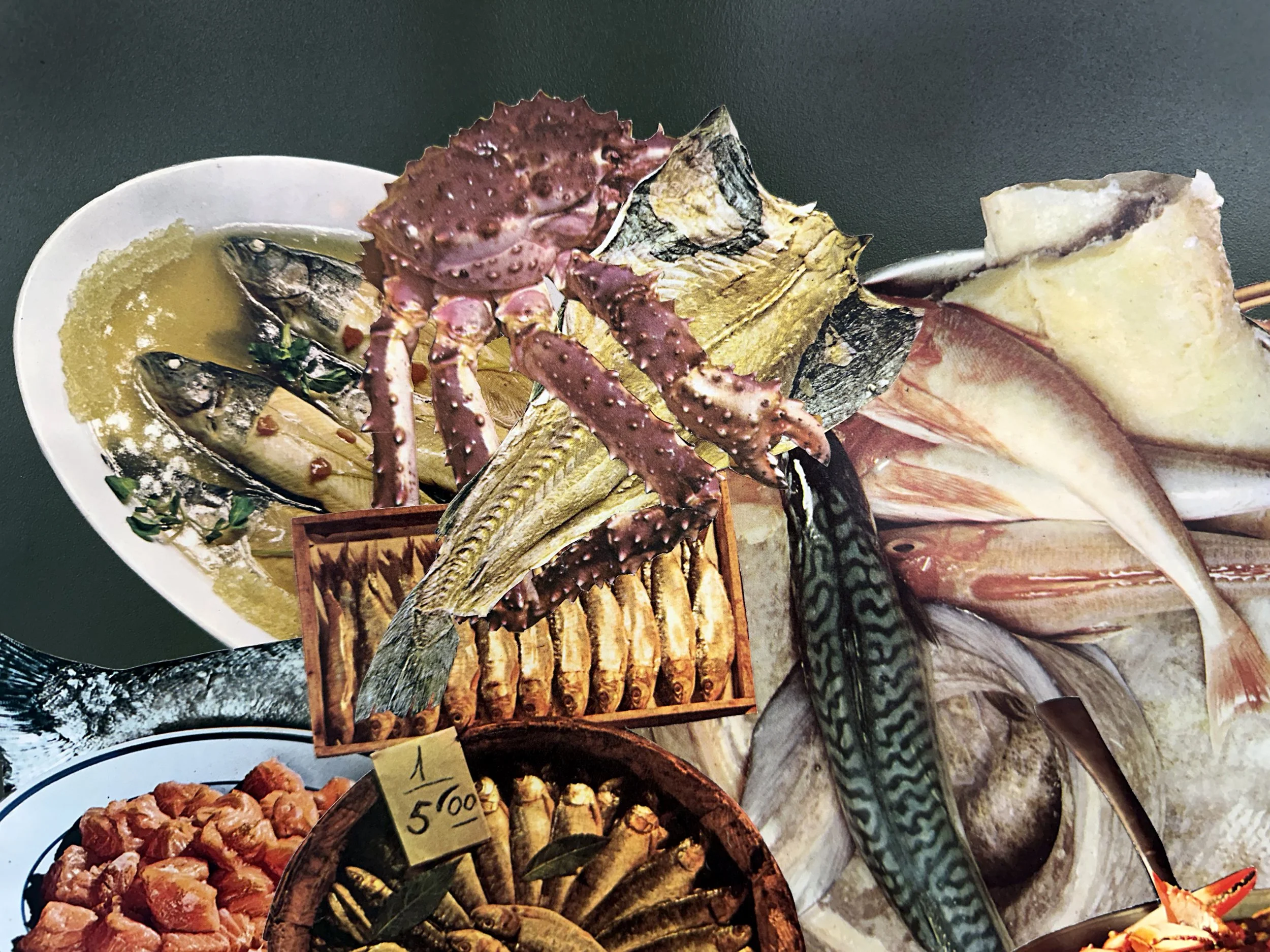
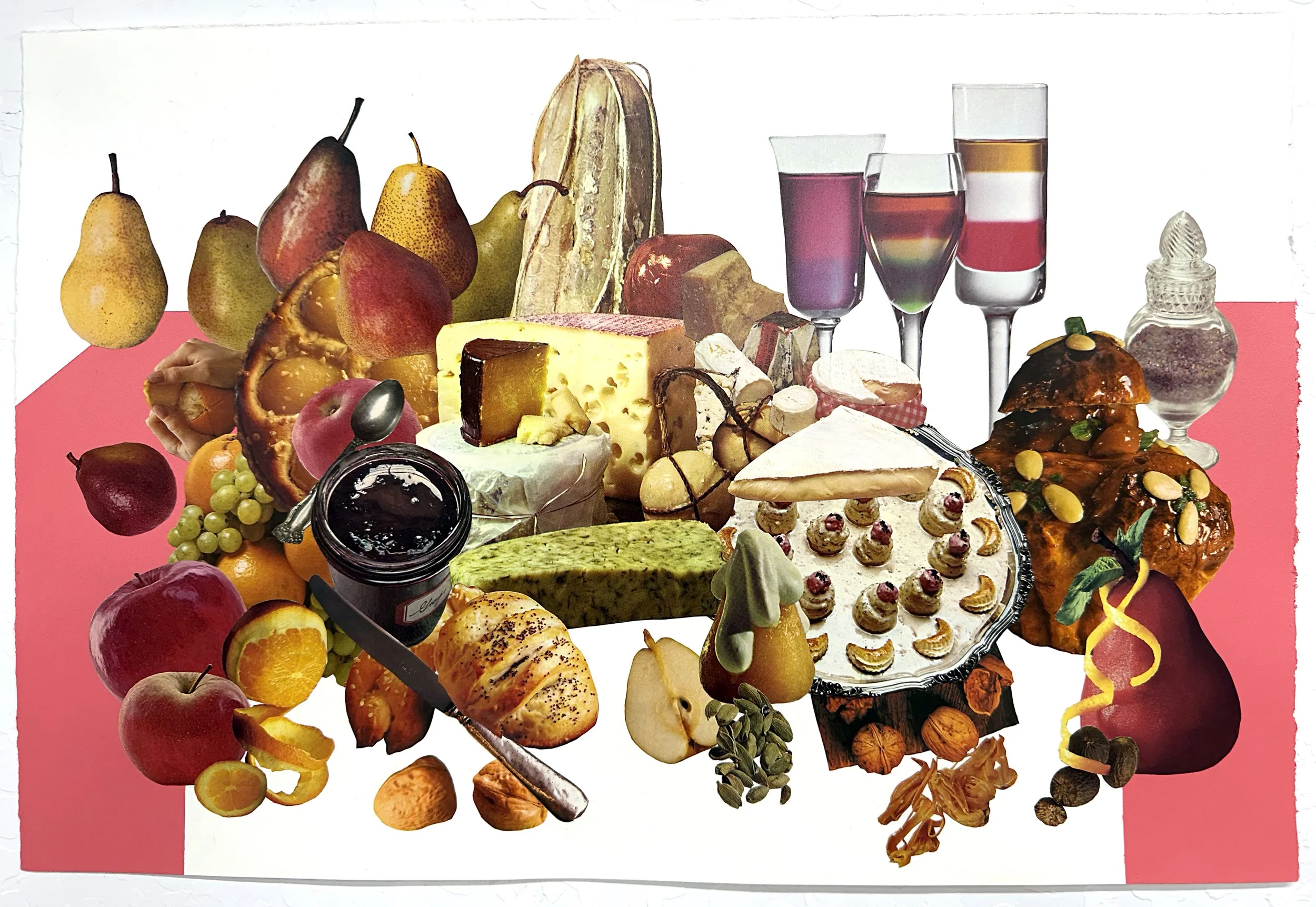
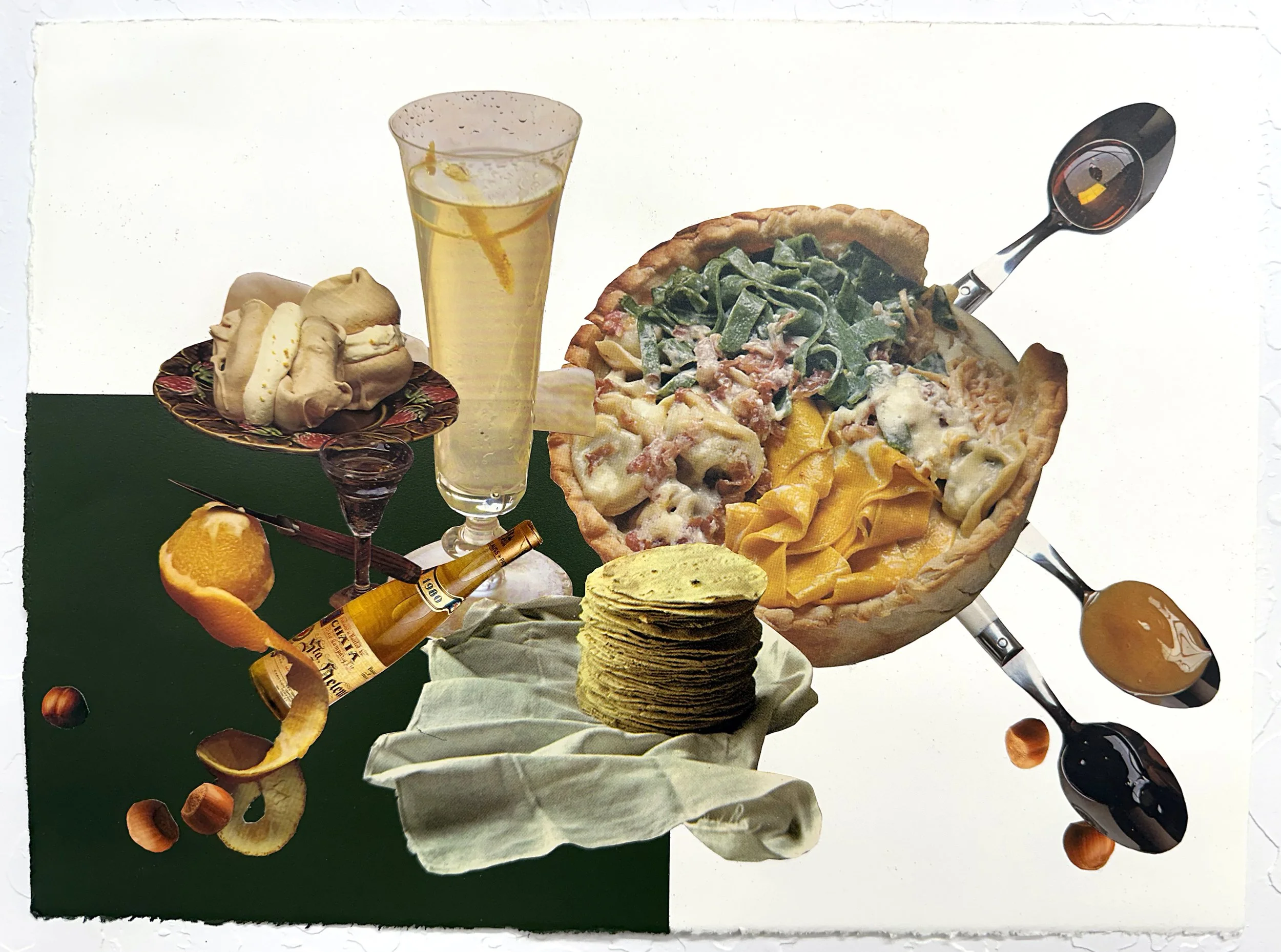
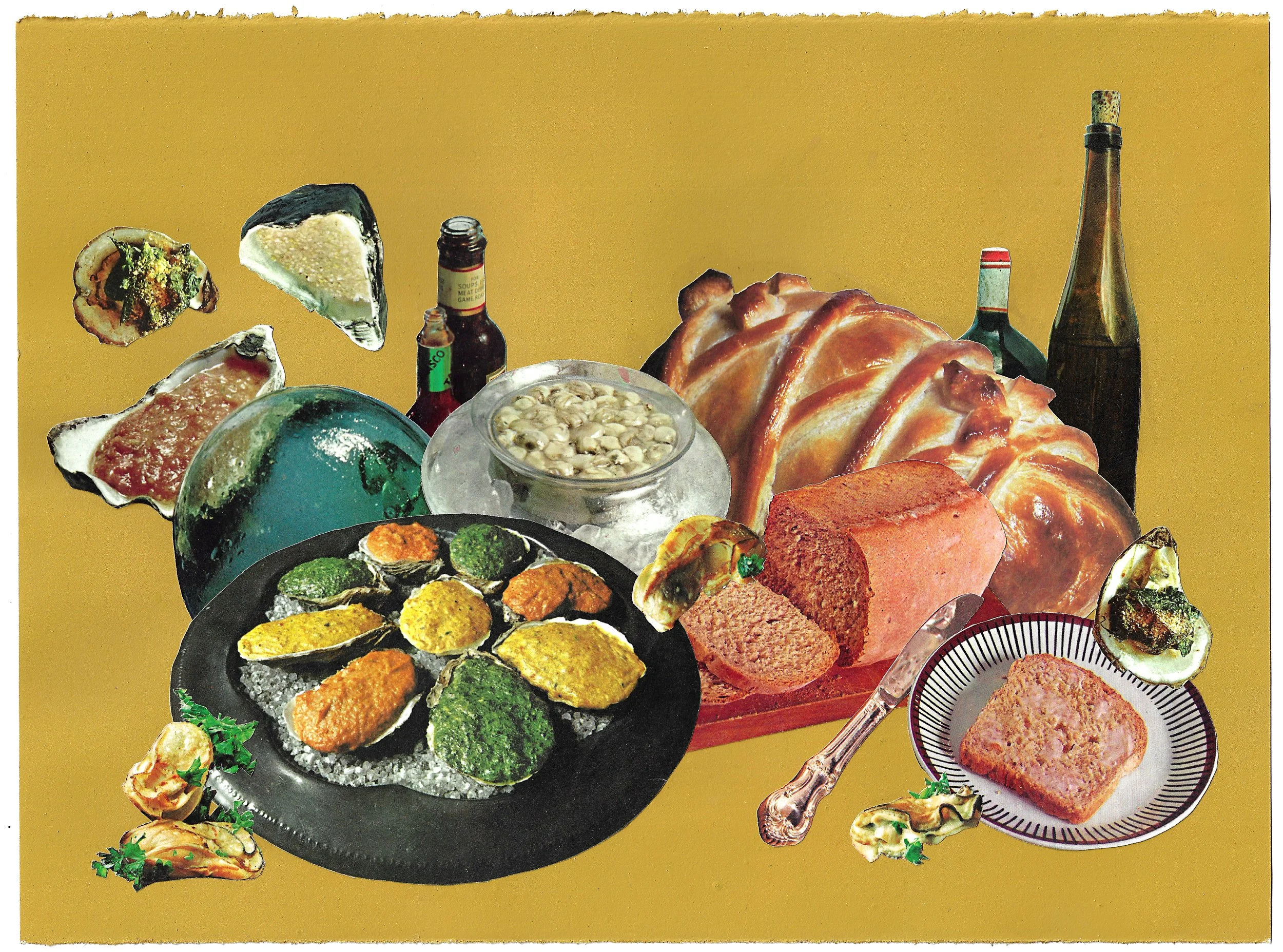
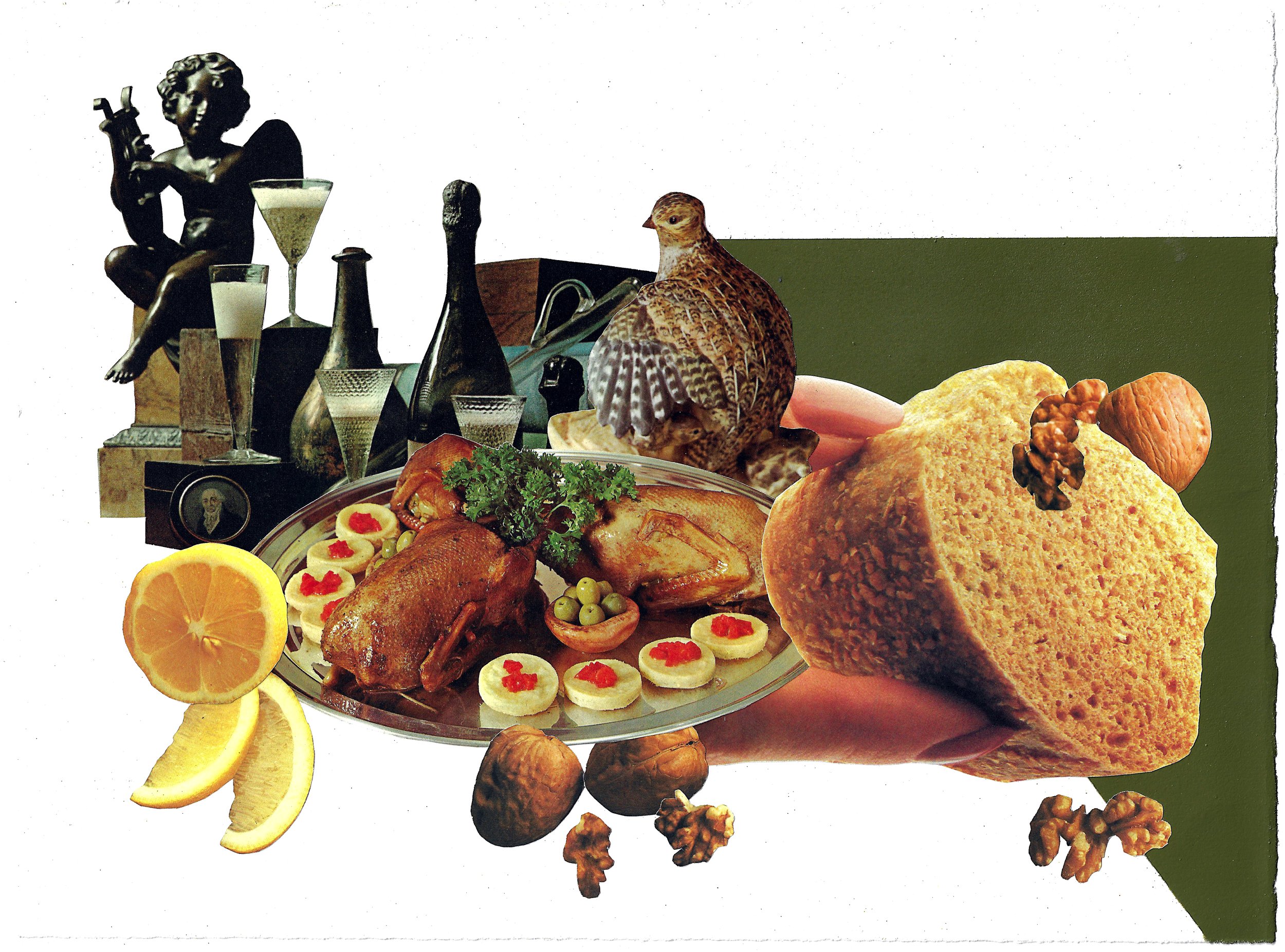
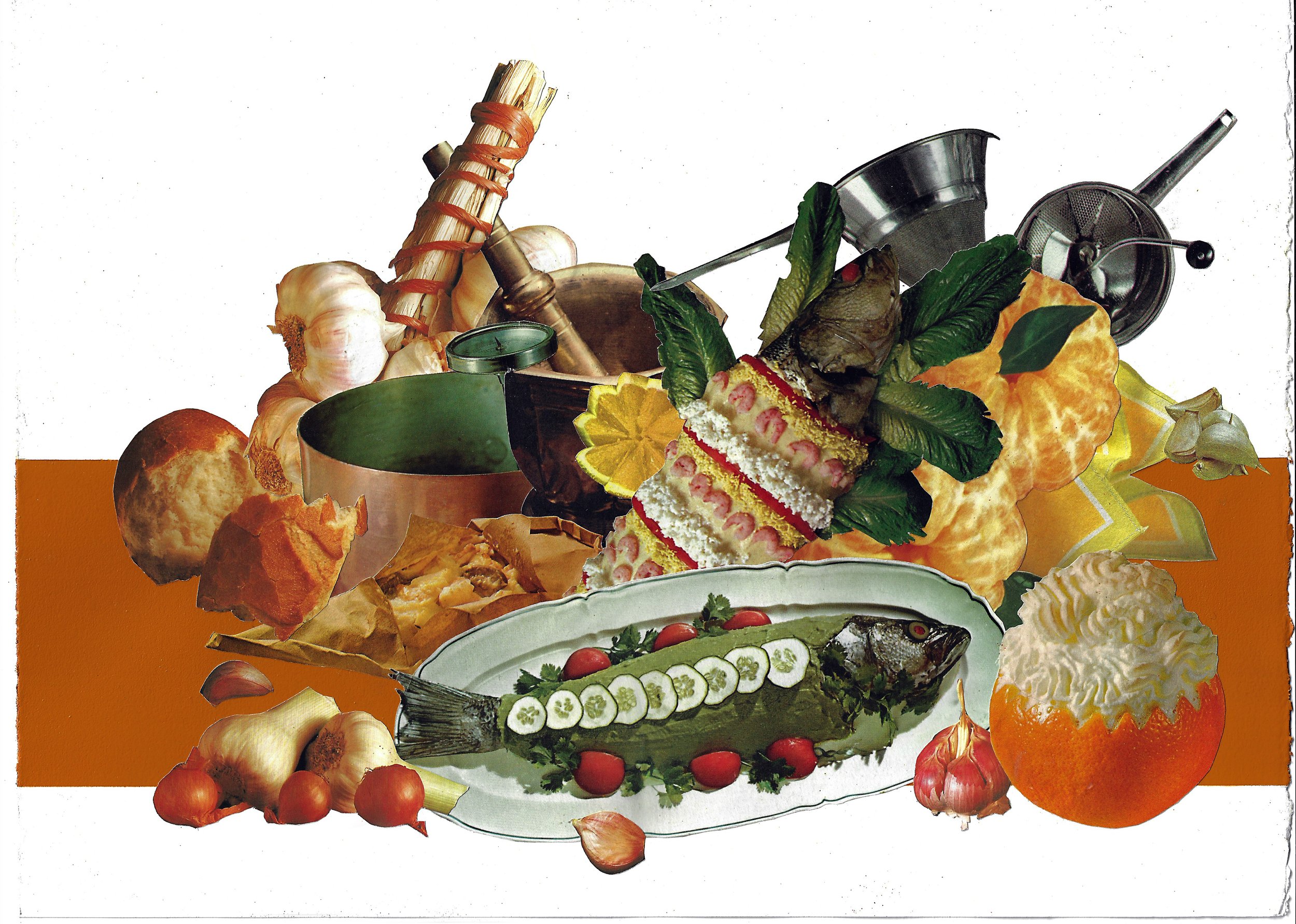
Pronkstillevens—Dutch translated as ostentatious, ornate, or sumptuous—takes its name from a sub-genre of Dutch Golden Age still life painting from the mid to late 17th century characterized by elaborate compositions, lavish table displays, and a theatrical sense of abundance. Historically, pronkstillevens also known as pronks brought together meat, fish, fruits, vegetables, imported luxuries, and household objects, often interwoven with animals and human figures. These vanitas paintings were never simple depictions of domestic bounty; they were meticulously constructed meditations on desire, prosperity, excess, and the seductions of material life.
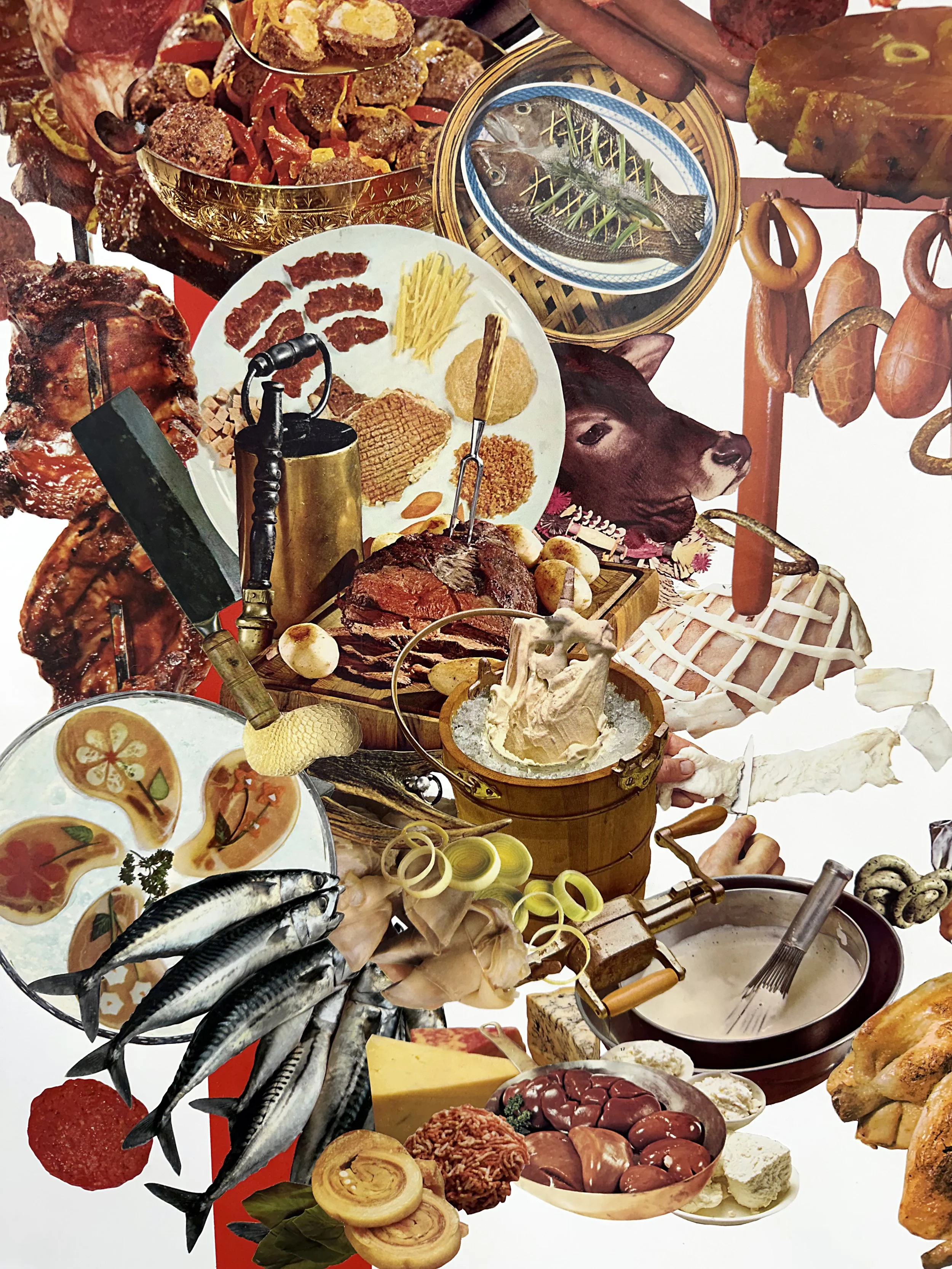
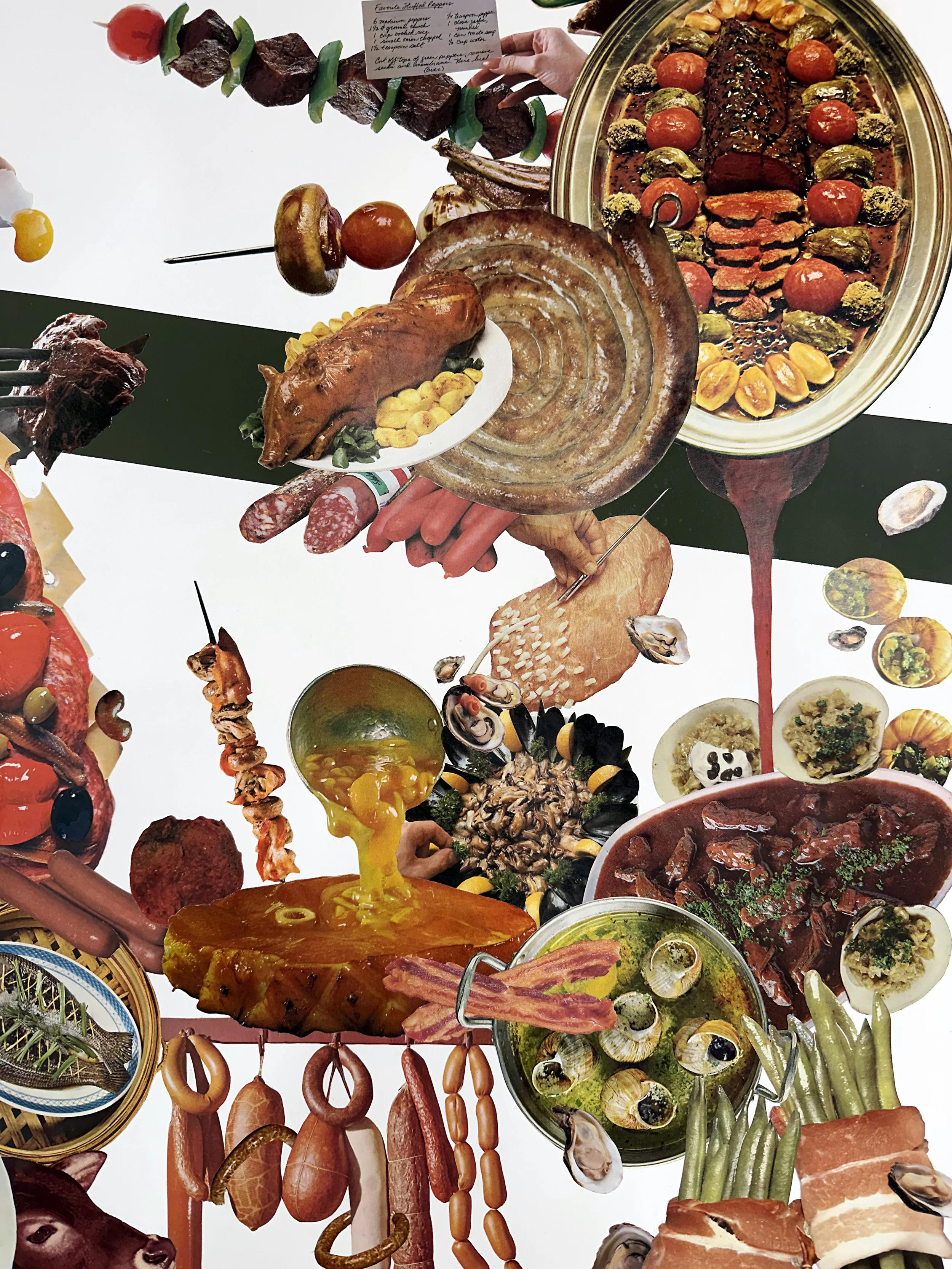
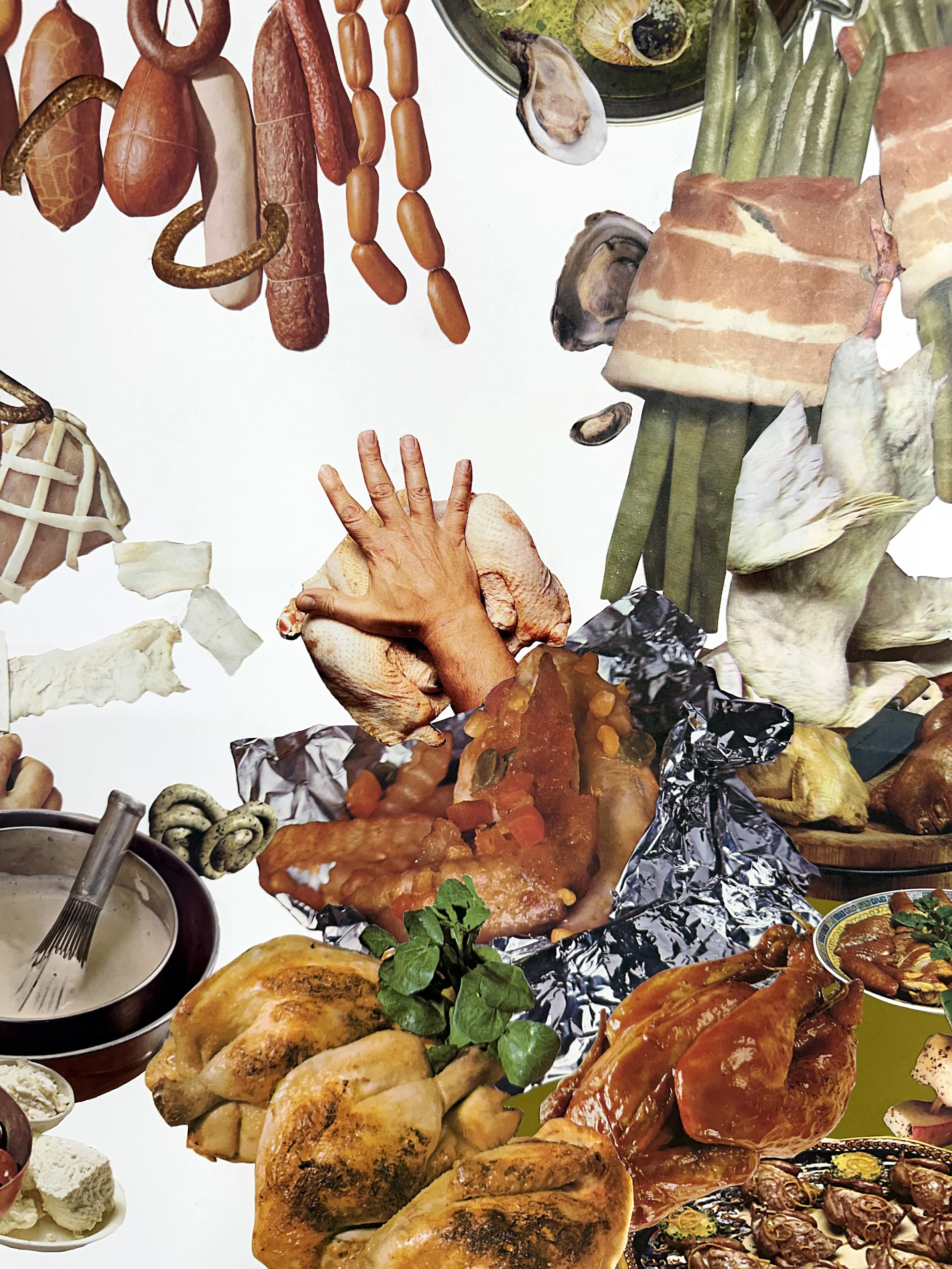
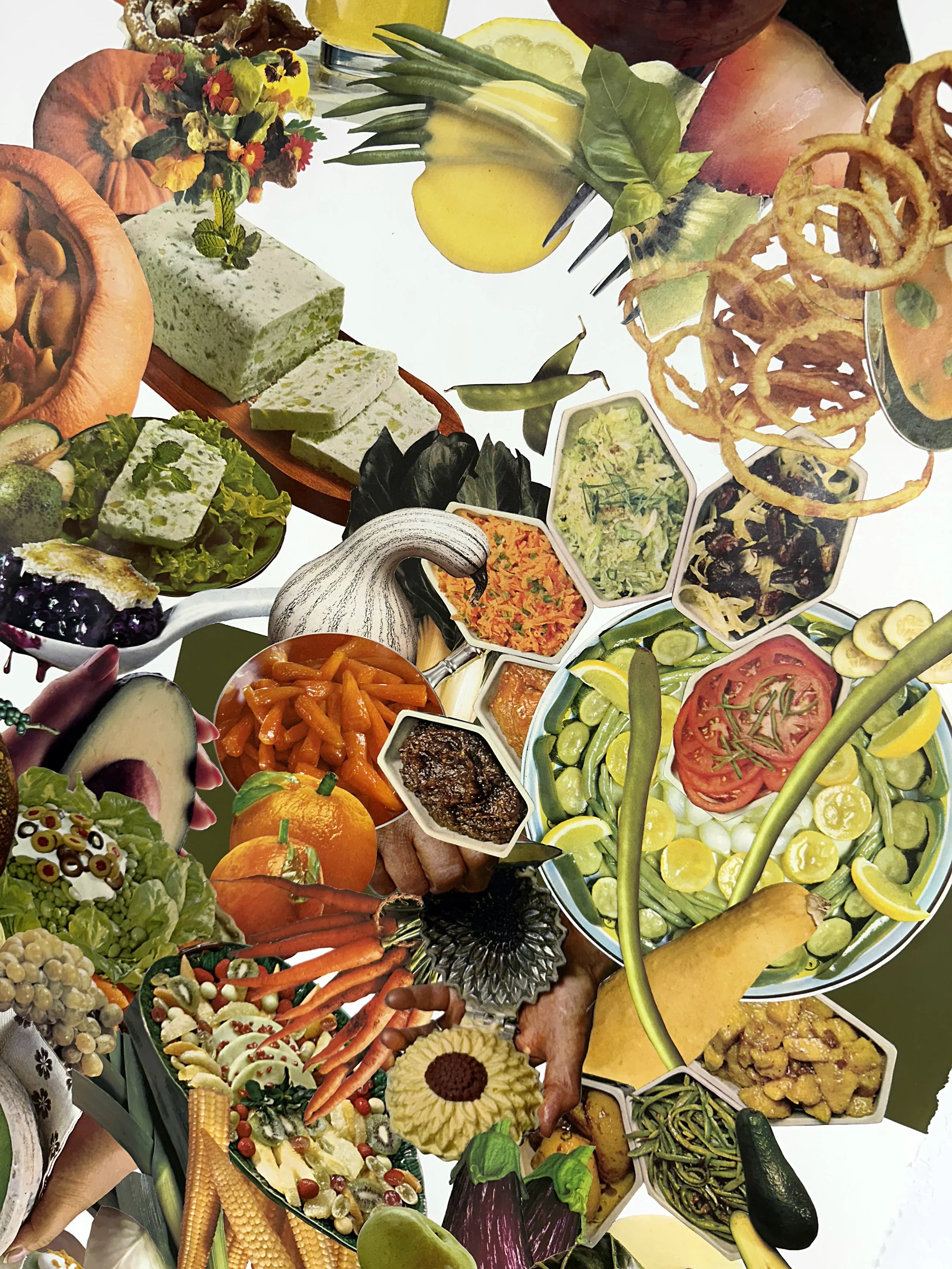
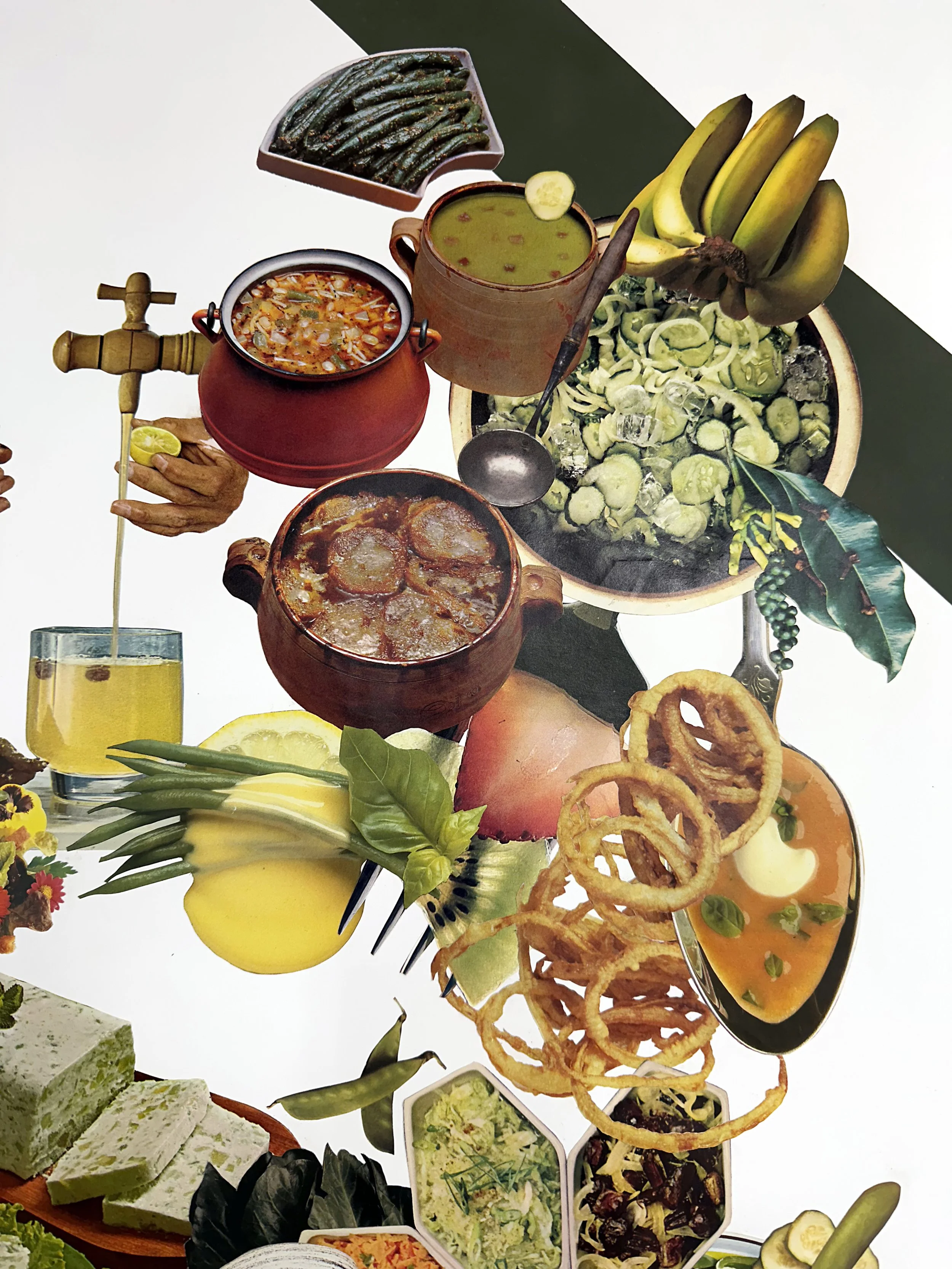
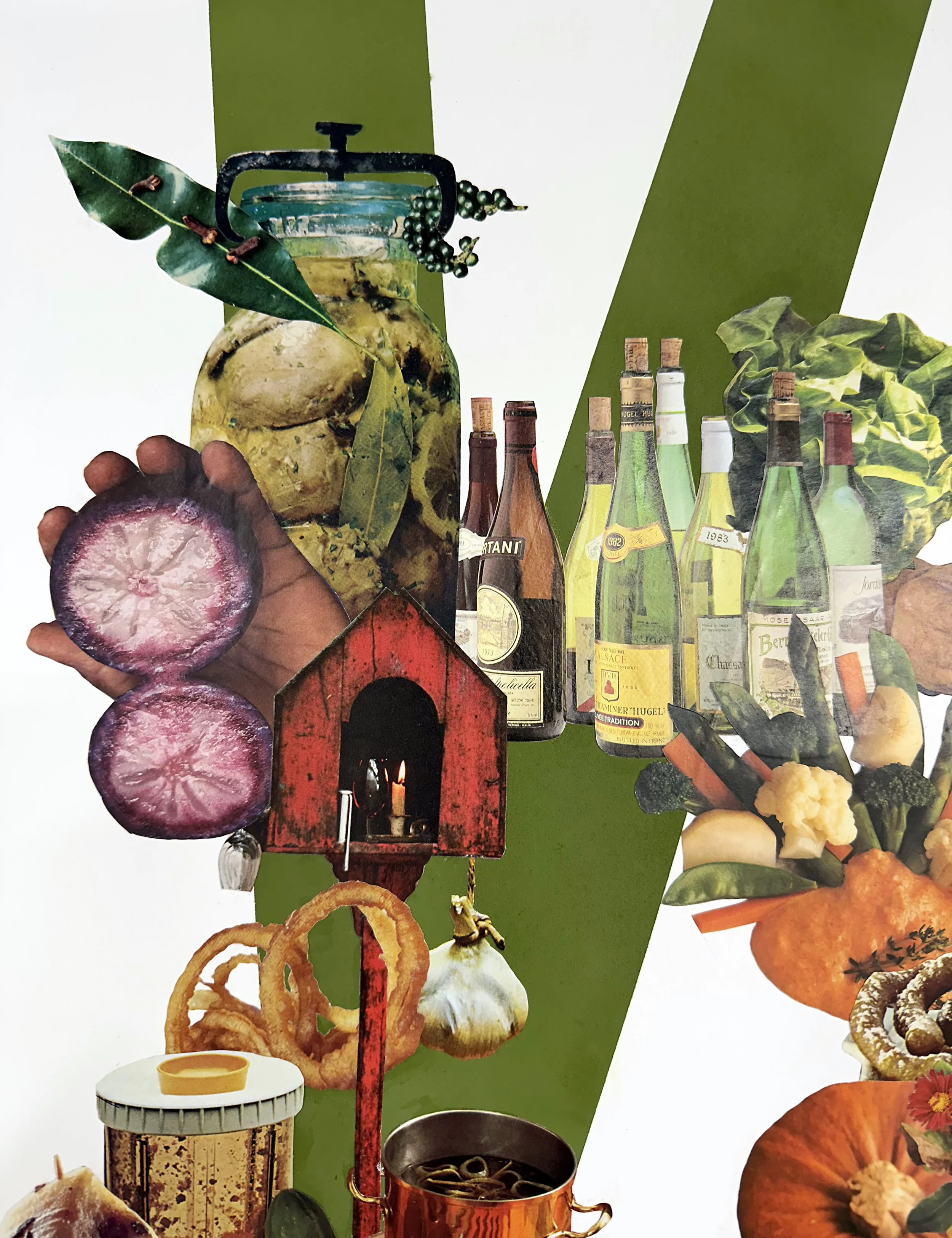
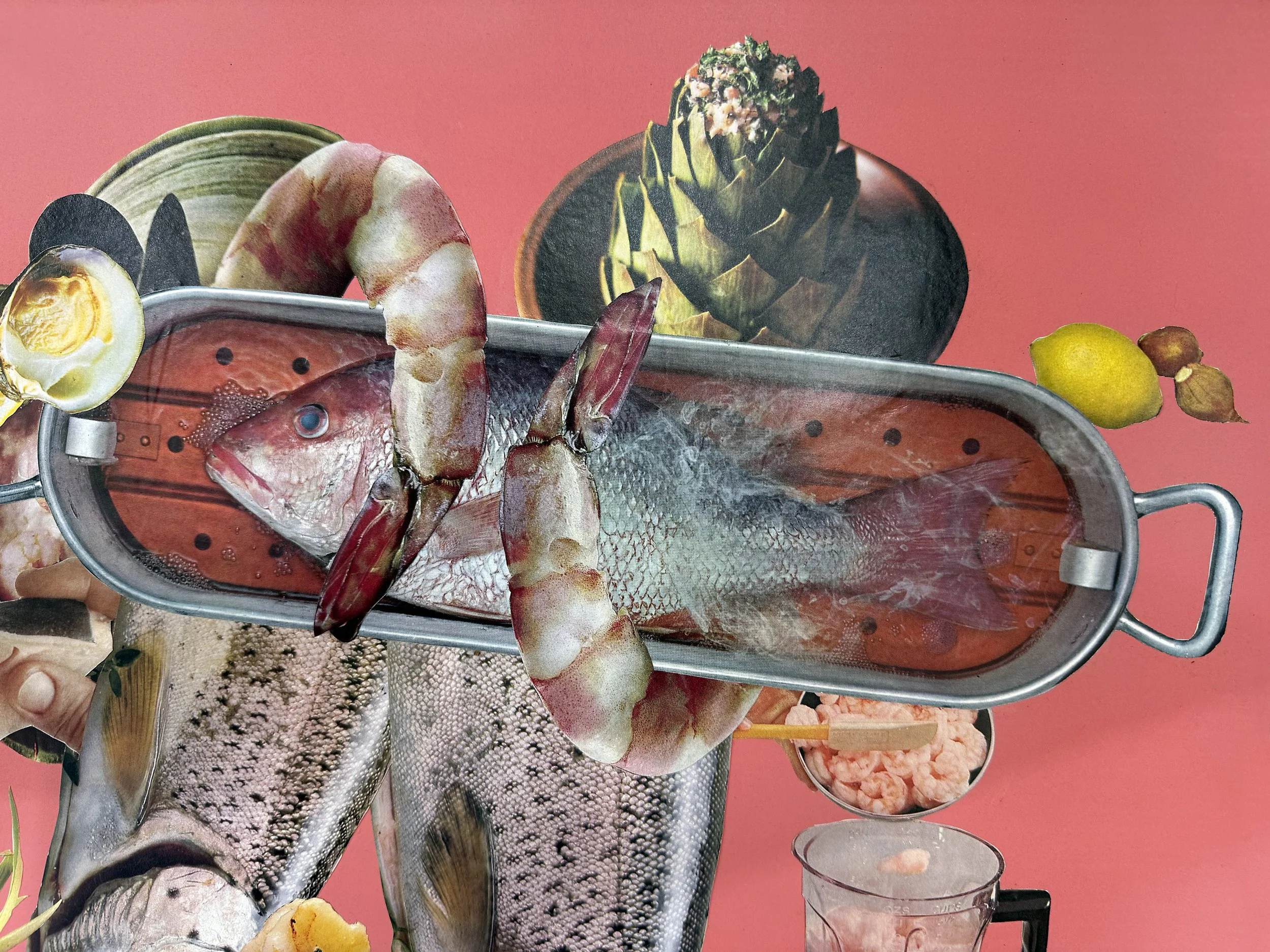
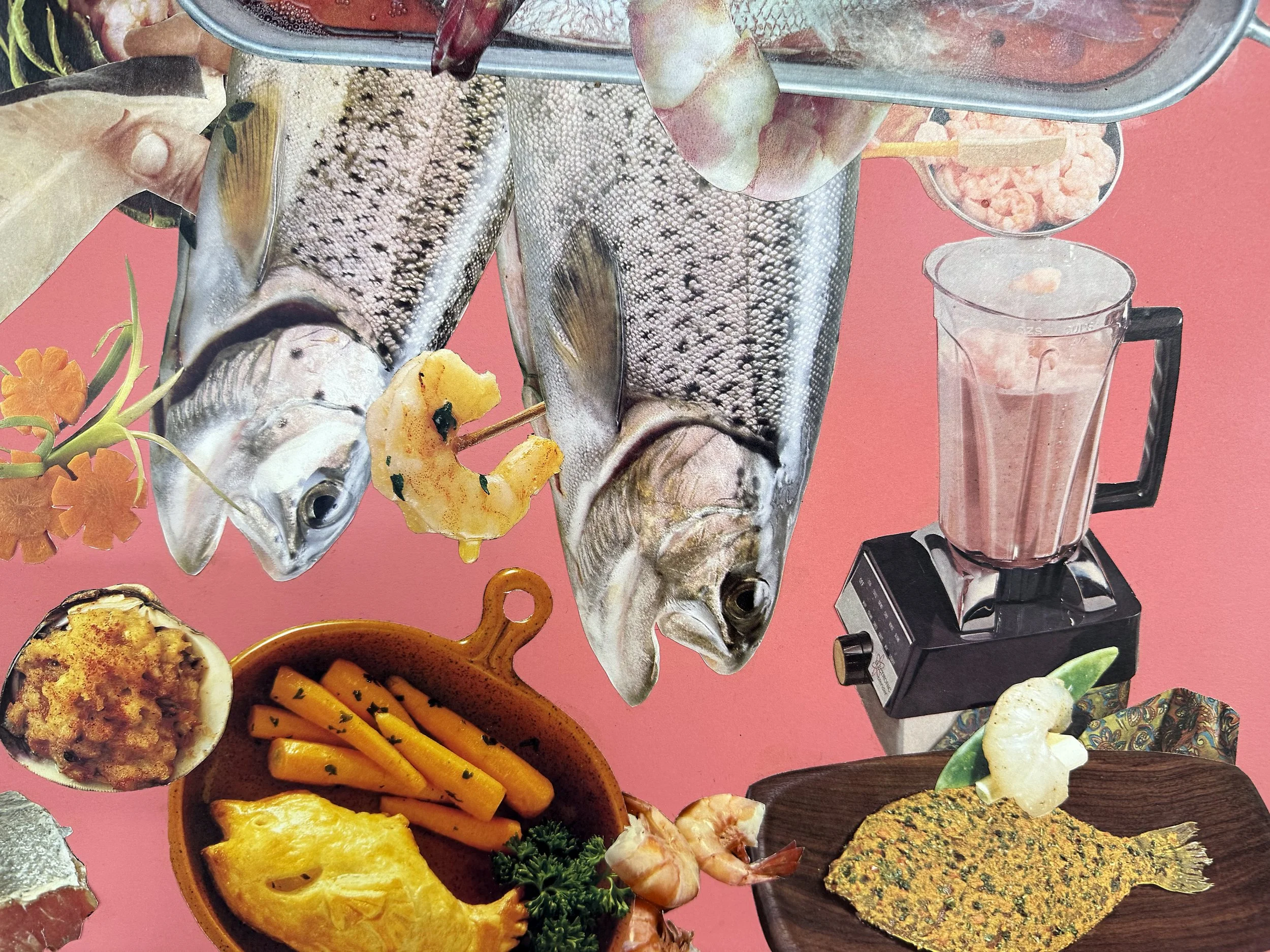
Christopher Reynolds’ new body of collage works directly compares this lineage with the image-saturation and exoticization of mid-century American food culture. Sourced from vintage cookbooks of the 1950s through the 1990s, the compositions ooze and drip with glossy meats, gleaming fish, molded aspics, cascading sauces, and colorful platters arranged in impossible aggregations. The exaggerated abundance and artificial perfection of commercial food photography echoes the spectacle of the historical staged pronkstillevens. In Reynolds’s version of Pronks, these two traditions—separated by centuries—reveal a shared cultural impulse to stage food as fantasy. The collages exaggerate the logic of Dutch still life paintings with overflowing tables and surreal abundance, hyperextending it into a maximalist uncanny form.
Beyond the direct connections to the still life work created in the Dutch Golden Age, Reynolds’s work also aligns itself with the Dada traditions of collage. Like Hannah Höch, and John Heartfield, Reynolds cuts and recombines the vintage printed matter to expose the ideological labor behind it. The visible seams, abrupt scale shifts, and improbable juxtapositions foreground the constructed nature of food imagery, turning the forced perfection of mid-century culinary photography into a site of critique. Dada loved the grotesque, the excessive, and the illogical. Pronkstillevens is overflowing piles of impossible banquets that embrace that same joyous, destabilizing overload. However, unlike the anti-aesthetic posture of Dada, Reynolds maintains a deliberate lushness and sensuality, creating compositions that are simultaneously seductive and repulsive.
Pronkstillevens invites viewers to reconsider the images that have shaped their appetites and ideals. By dissecting and reassembling these historical visual languages, Reynolds exposes the enduring mechanisms through which food imagery constructs identity, fantasy, and collective memory, revealing both the sumptuous allure and the seductive illusions that define the visual culture of consumption.
Reference images below.

Reference: Pronkstilleven #1 (after Pieter Aertsen, A Meat Stall with the Holy Family Giving Alms)

Reference: Pronkstilleven #2 (after Pieter Aertsen, Market Scene with Christ in the House of Martha and Mary)
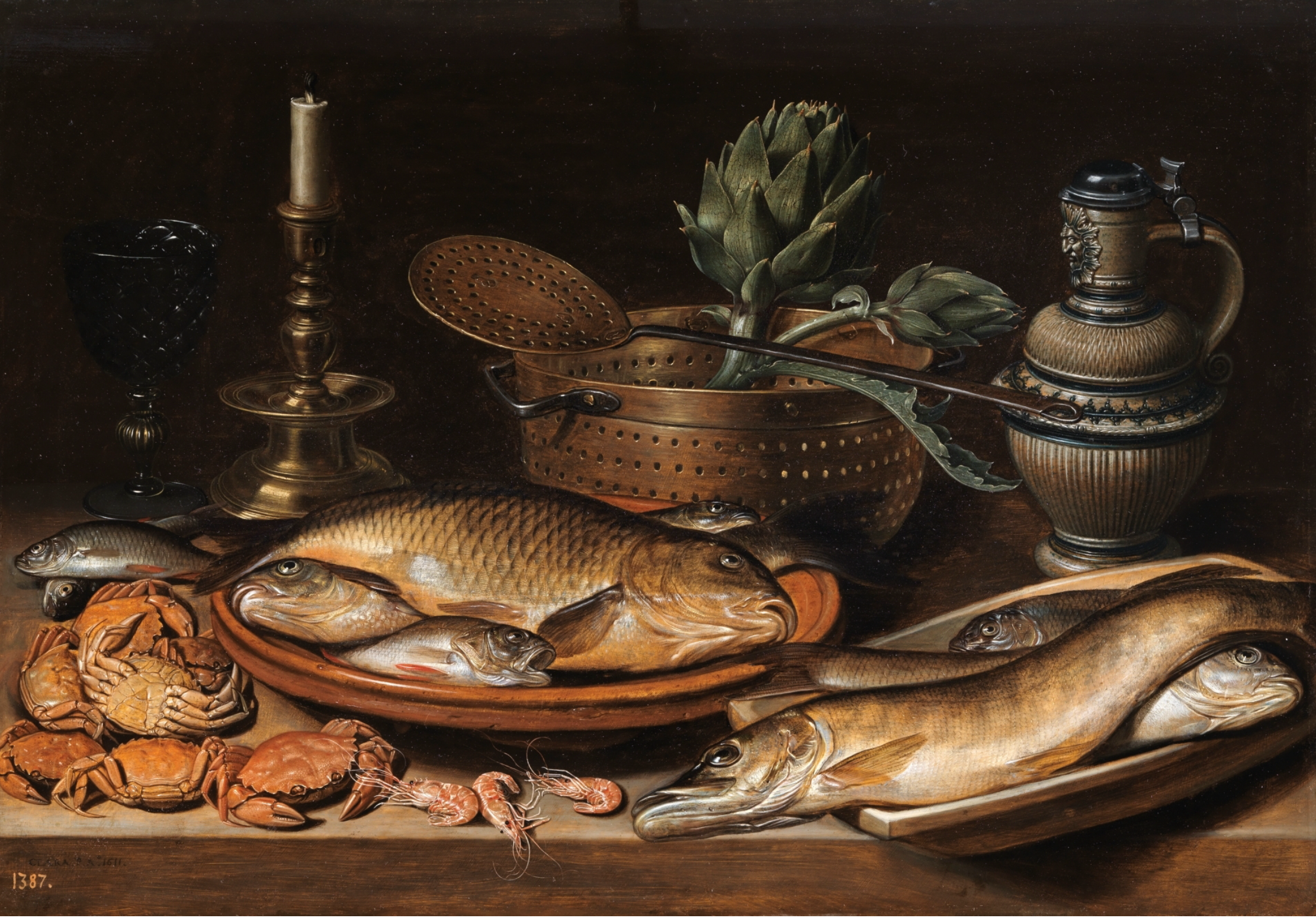
Reference: Pronkstilleven #3 (after Frans Snyders, Still Life with Fish and Artichokes)
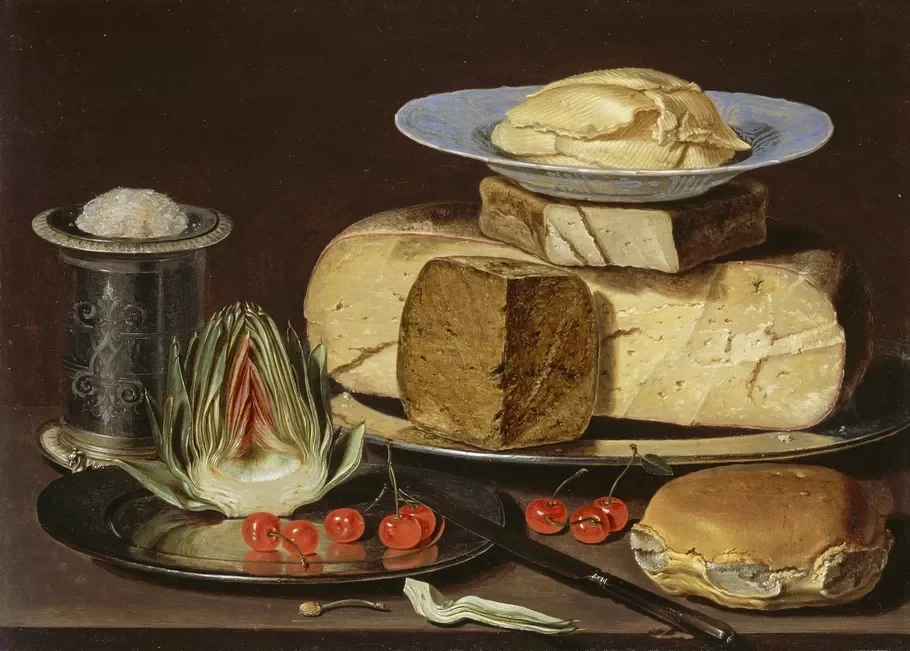
Reference: Pronkstilleven #4 (after Clara Peeters, Still Life with Cheeses, Artichokes, and Cherries)
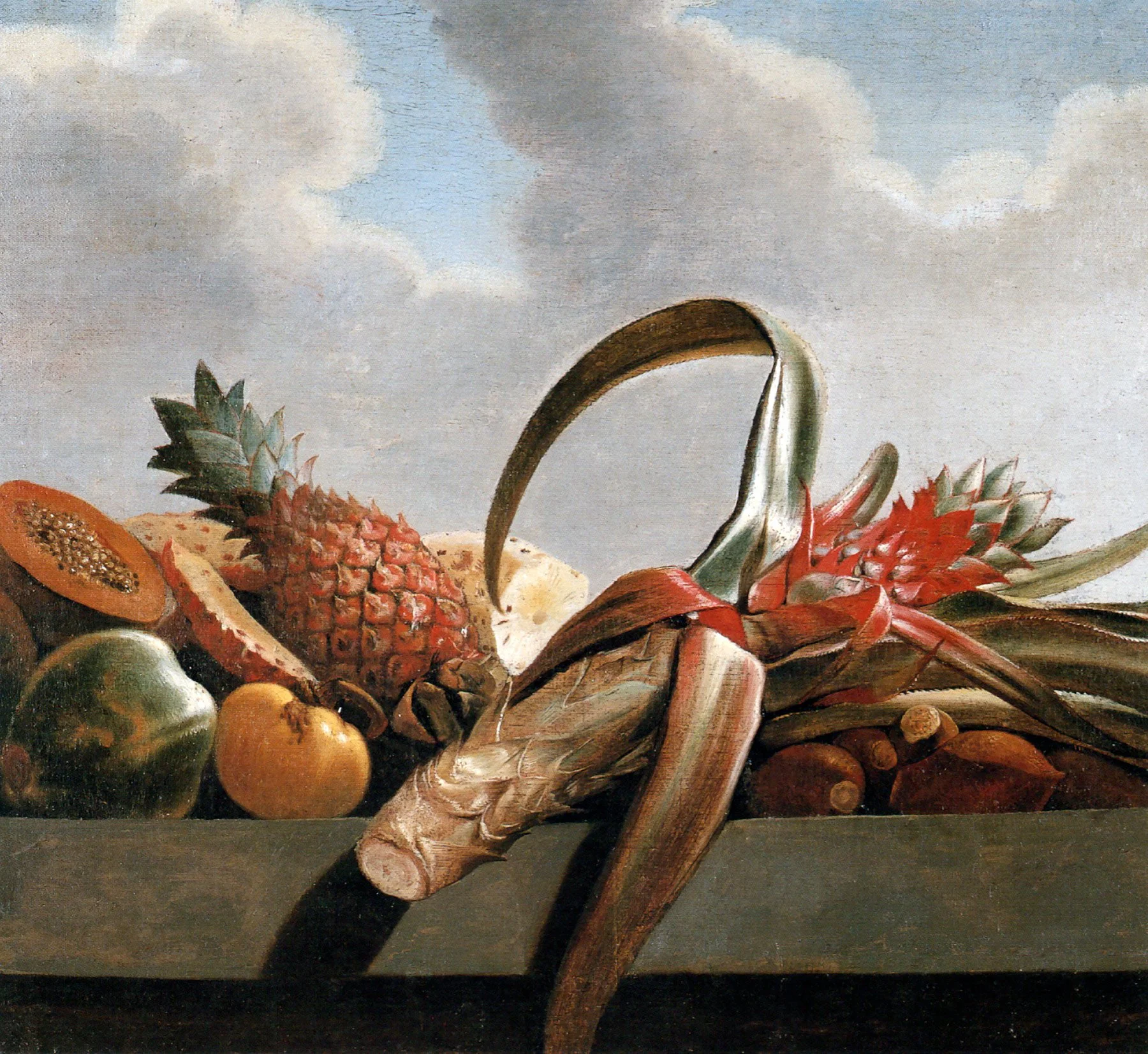
Reference: Pronkstilleven #5 (after Albert Eckhout, A Still Life with Pineapple, Papaya, and Other Fruits)
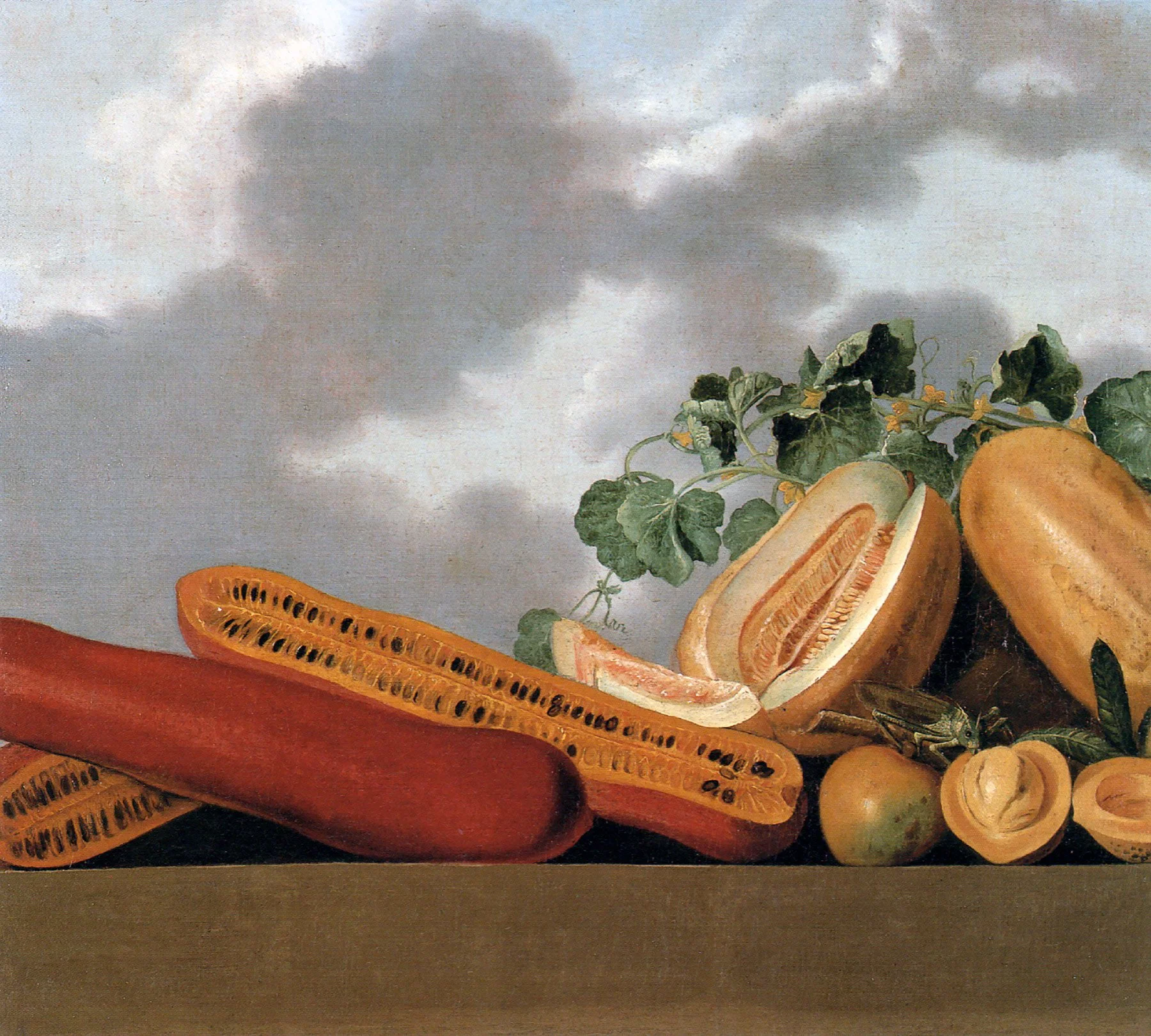
Reference: Pronkstilleven #6 (after Albert Eckhout, Still Life with Squashes and Melons)
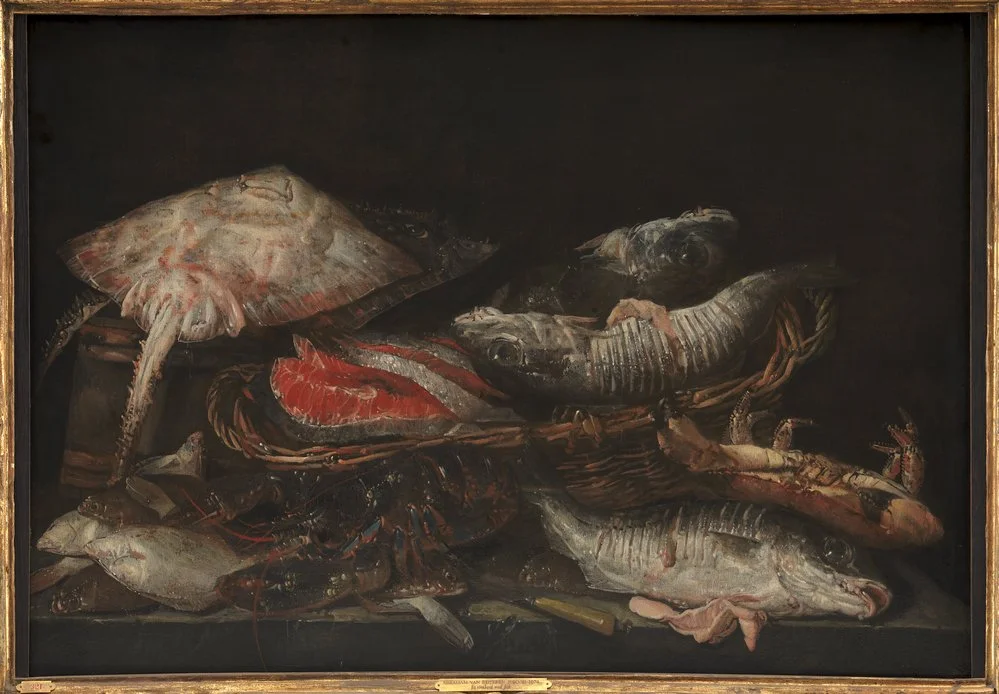
Reference: Pronkstilleven #7 (after Abraham Van Beijern, Still Life with Fish on a Stone Table)
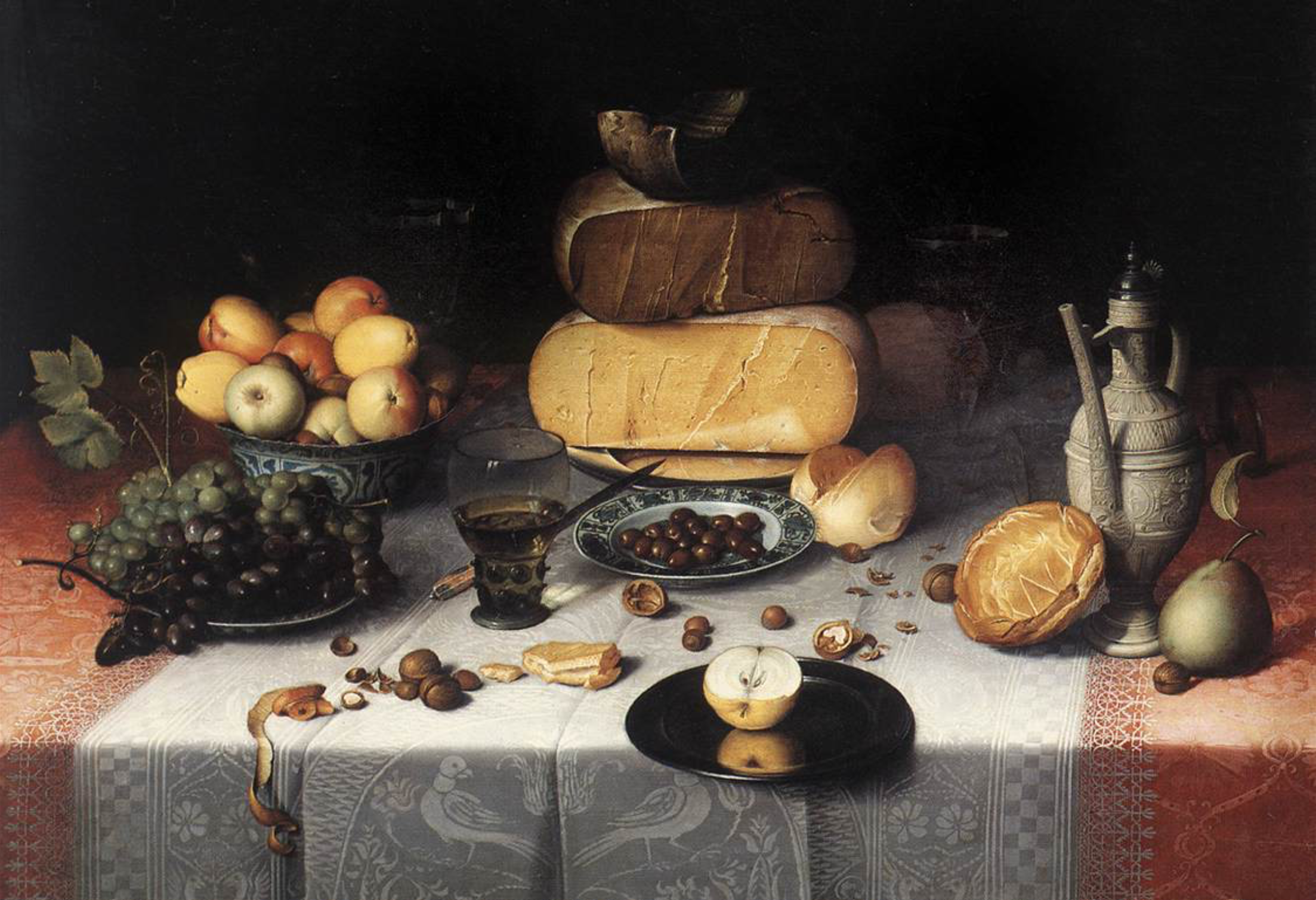
Reference: Pronkstilleven #8 (after Floris van Dijck, Still Life with Cheeses)
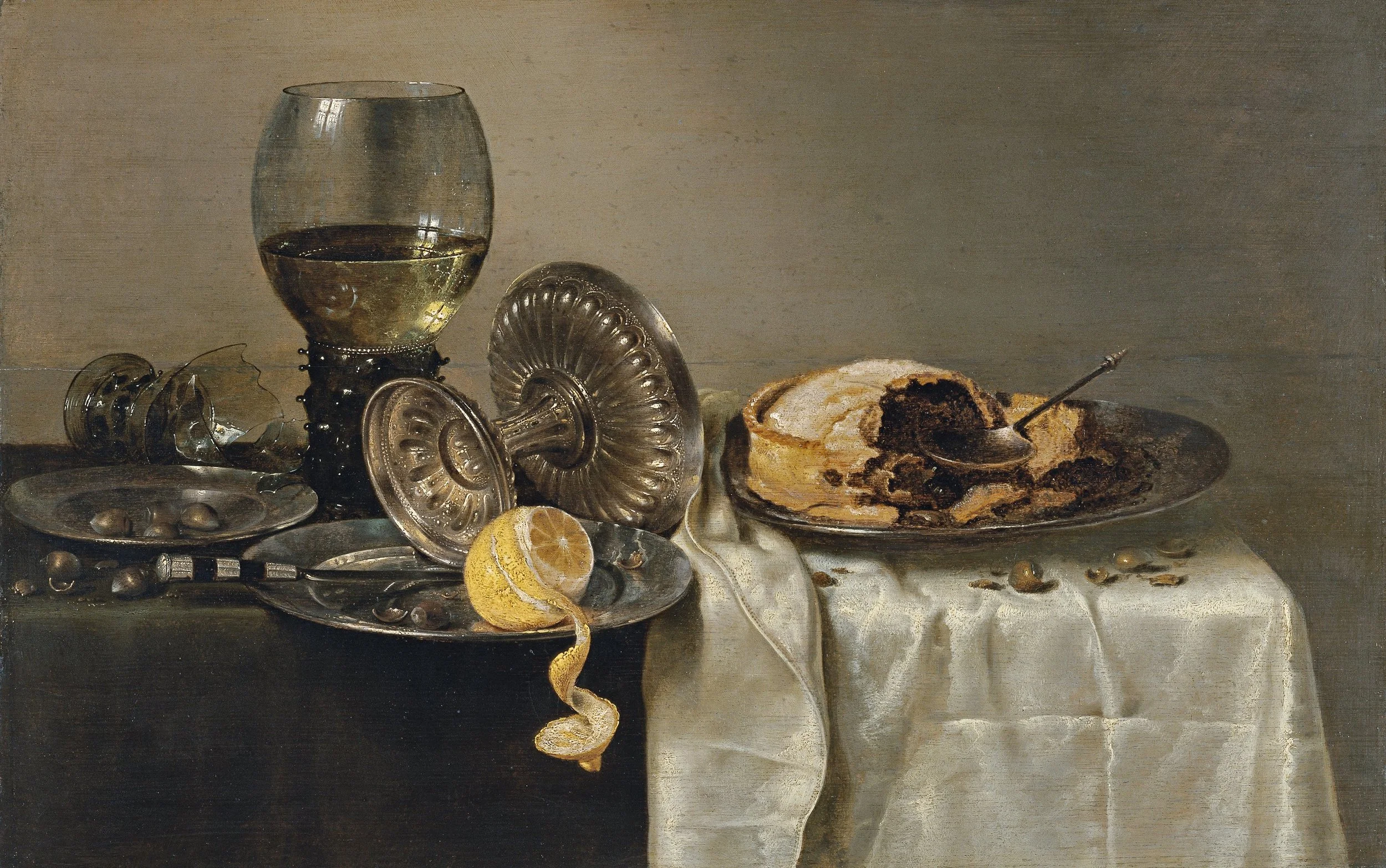
Reference: Pronkstilleven #9 (after Willem Claeszoon Heda, Still Life with Fruit Pie and Various Objects)
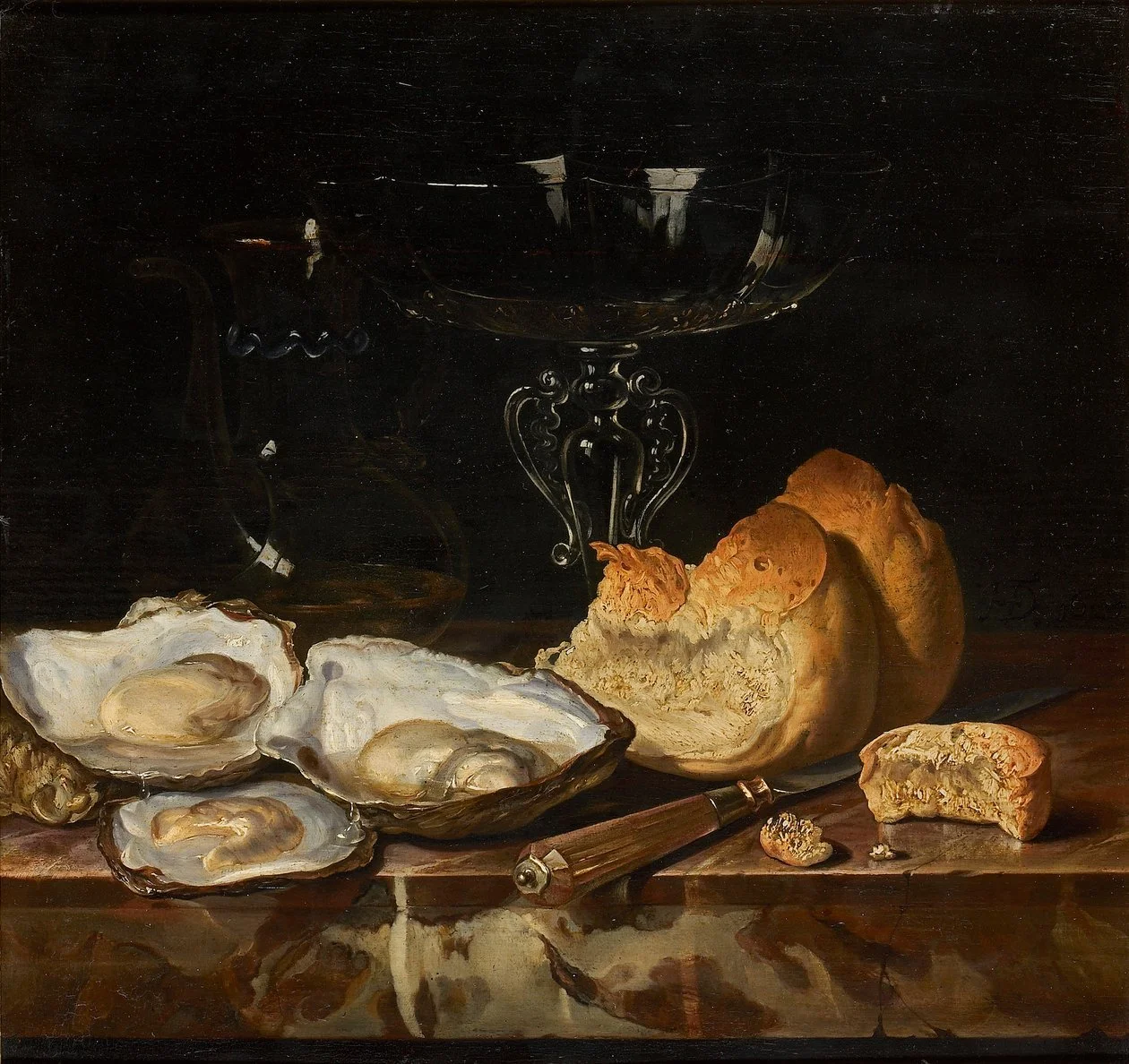
Reference: Pronkstilleven #10 (after Hendrik de Fromantiou, Still Life with Oysters, Bread, and Venetian Wine Glass)
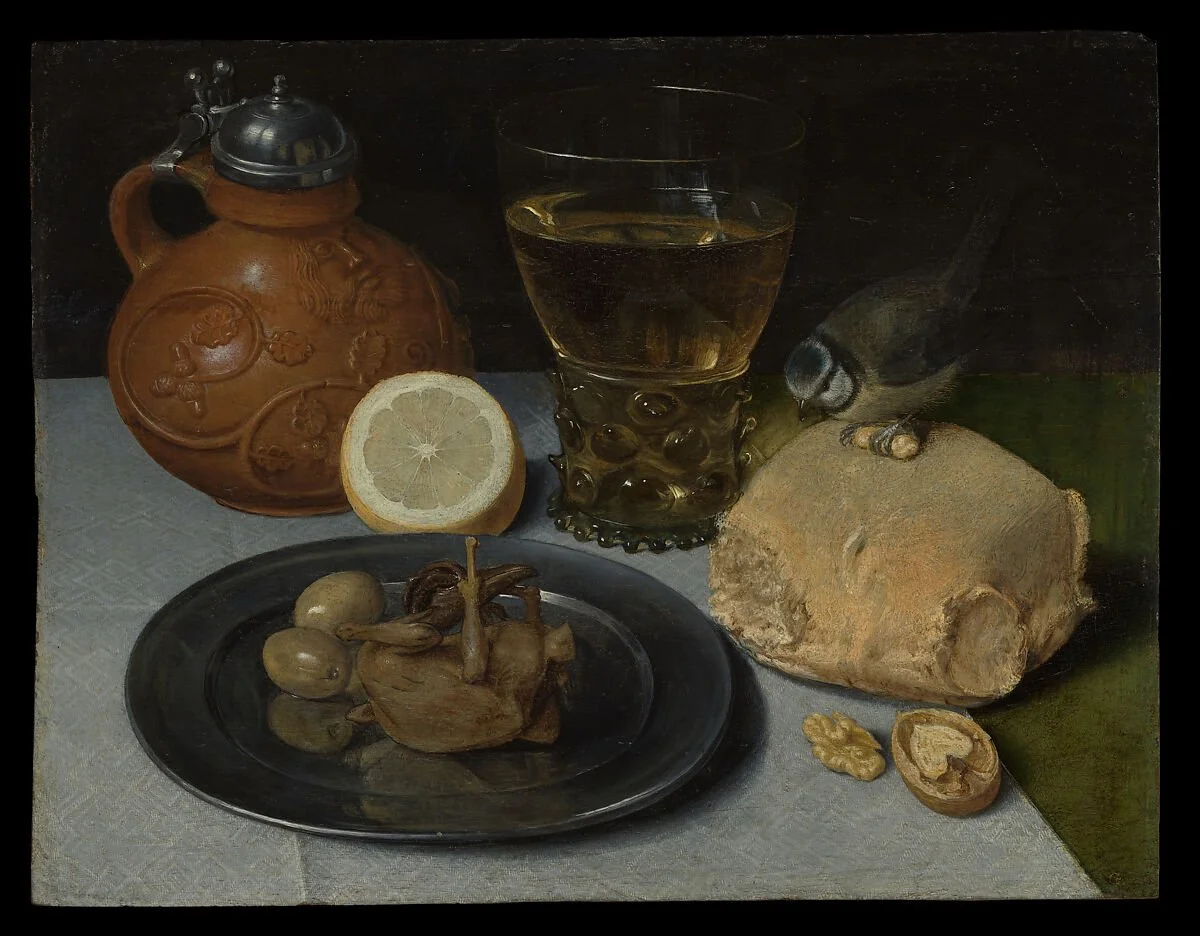
Reference: Pronkstilleven #11 (after Georg Flegel, Still Life with Bird, Bread, Lemon, and a Roemer)
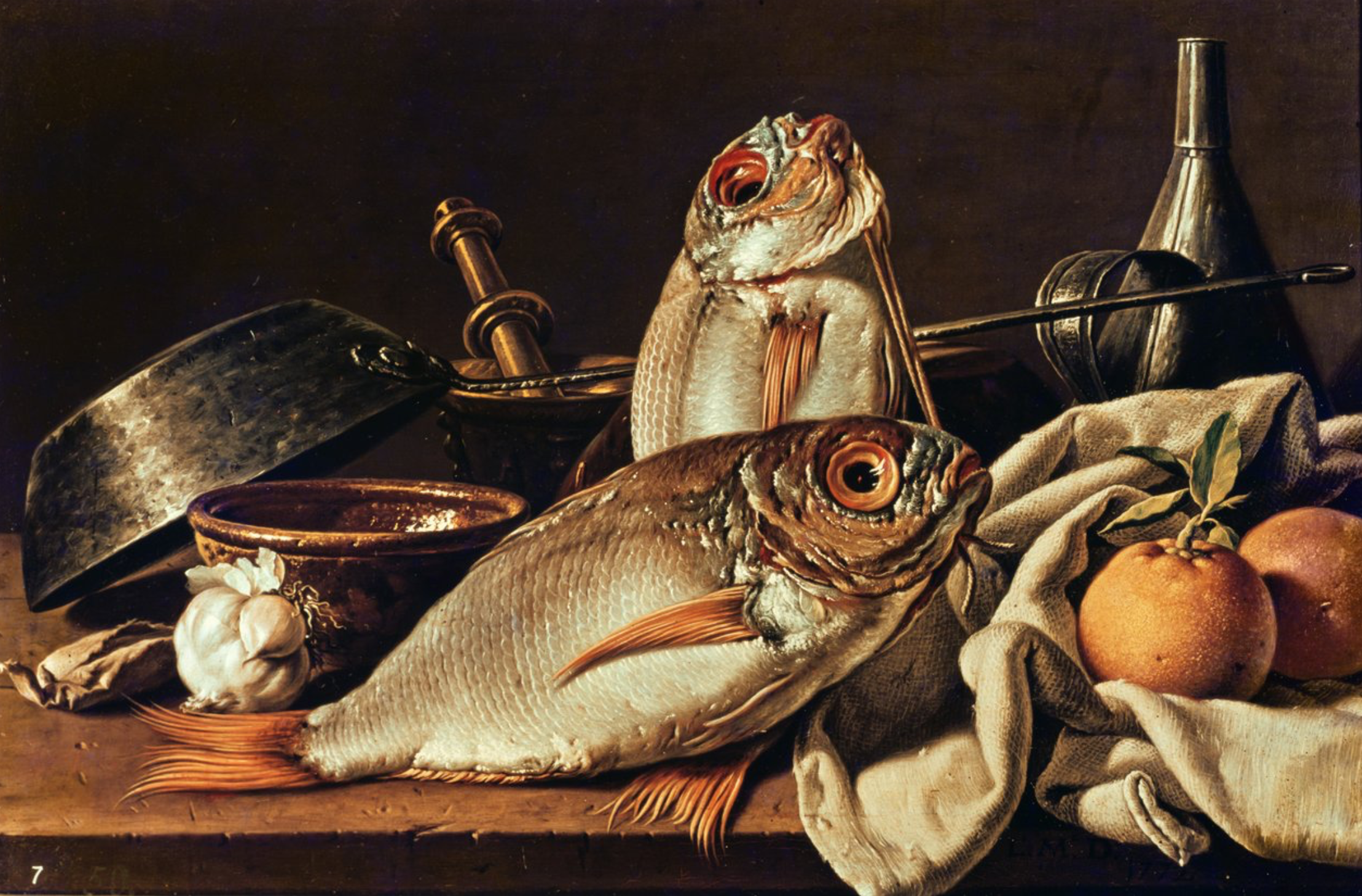
Reference: Pronkstilleven #12 (after Luis Egidio Meléndez, Still Life with Fish, Oranges, Garlic, and a Bowl)