

Appetite Apparatus is an interactive sculptural project by Christopher Reynolds that investigates the complex relationship between food, sensory perception, and biological manipulation. While food and consumption are often framed as inherently communal experiences, this body of work shifts the focus inward toward the personal, physiological, and psychological mechanisms that shape individual appetites and behaviors.
Drawing on the pervasive influence of advertising, package design, additives, preservatives, and food manufacturing, Appetite Apparatus examines how external forces consciously and more critically, subconsciously condition consumers to indulge in or abstain from particular foods. Through the suggestive use of color in marketing or the strategic deployment of flavor enhancers such as monosodium glutamate (MSG), modern food systems exploit biological responses to engineer desire and regulate consumption.
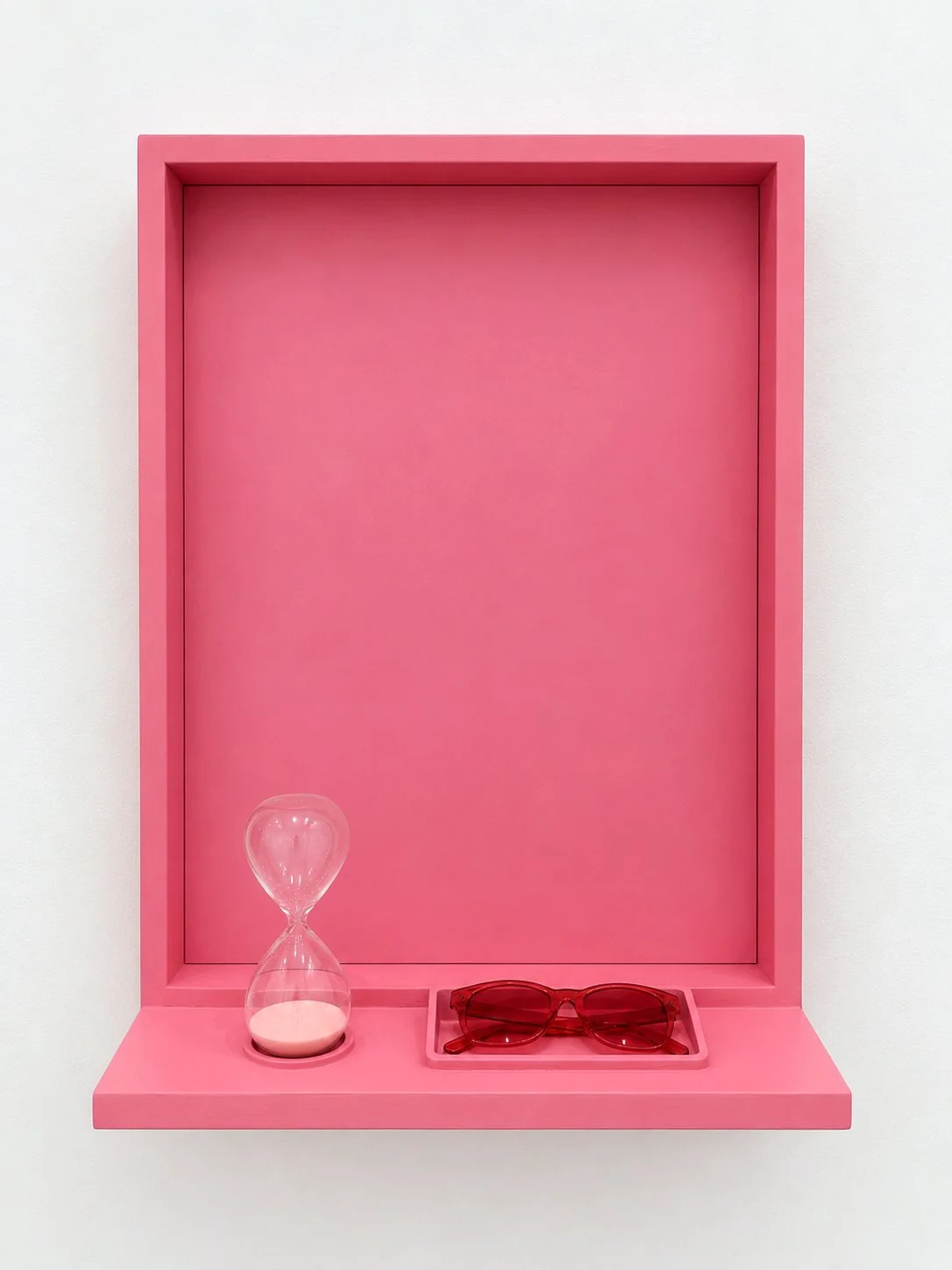
The series comprises a collection of deceptively simple sculptural apparatuses that critically engage with processed food marketing and the everyday realities of consumer culture. Appetite Apparatus #1 (Baker-Miller Pink, Suppressant) serves as a central example: a wall-mounted installation featuring an 18 × 24 inch framed poster coated in the precise shade of Baker-Miller Pink. This color is scientifically proven to suppress aggression and appetite. Mounted in front of the poster is a small shelf holding weight-loss color therapy glasses tinted to match, alongside a fifteen-minute timer.
Participants are invited to don the glasses and fix their gaze on the pink field for the full duration. Over this period, a subtle but measurable biological shift occurs: appetite diminishes. Through this sustained visual and temporal engagement, Reynolds highlights the often invisible ways external stimuli can reprogram the senses and the brain.
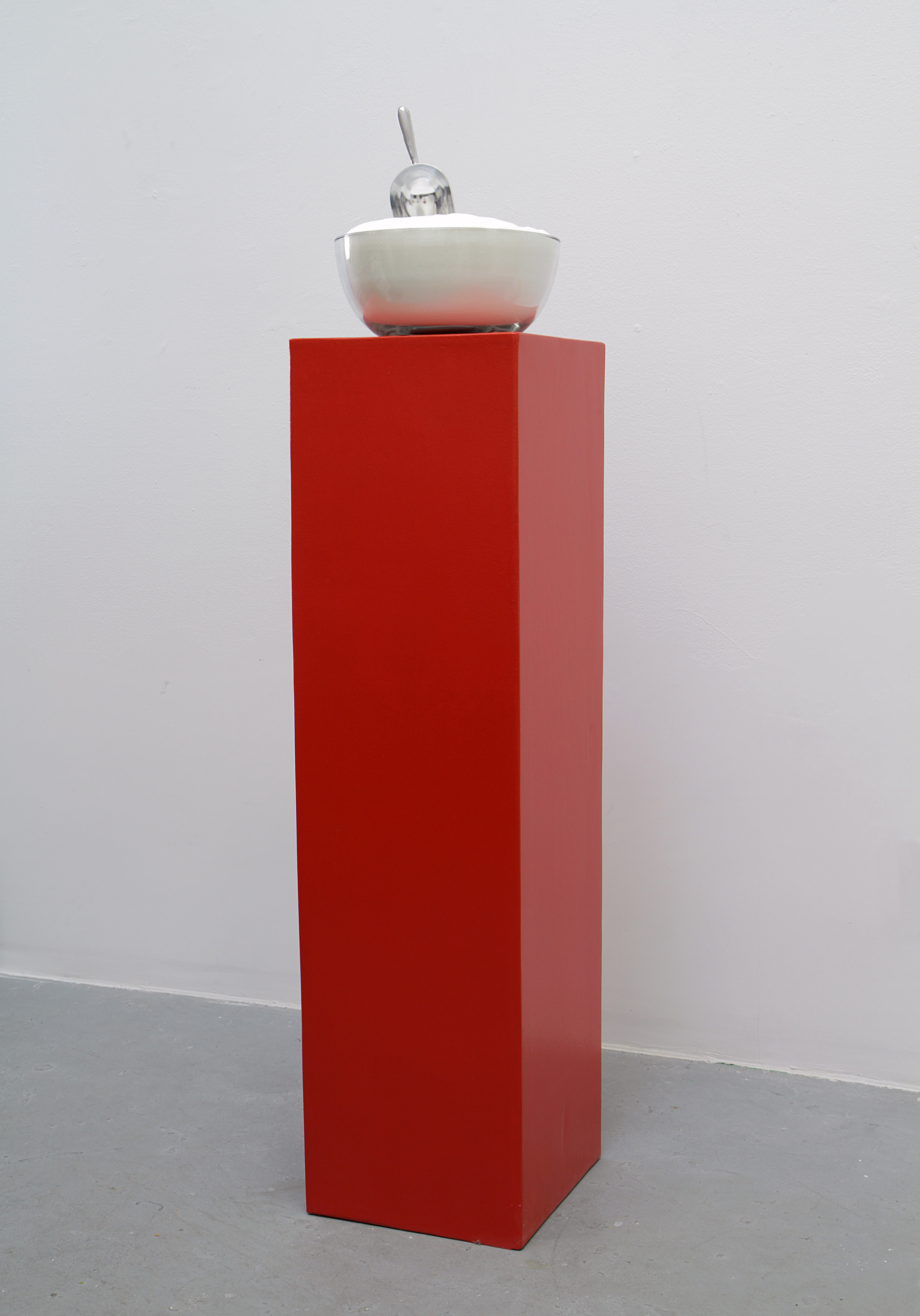
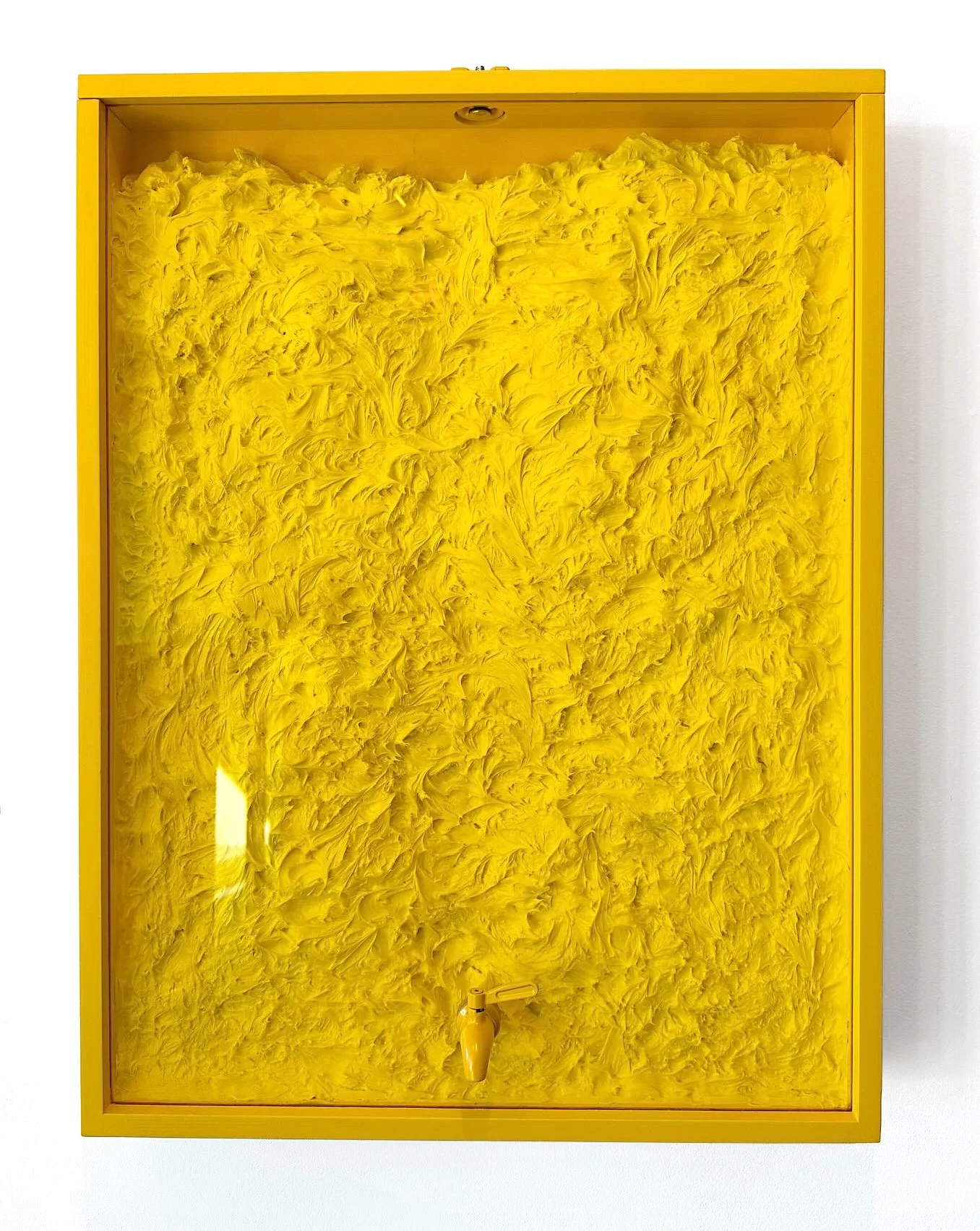
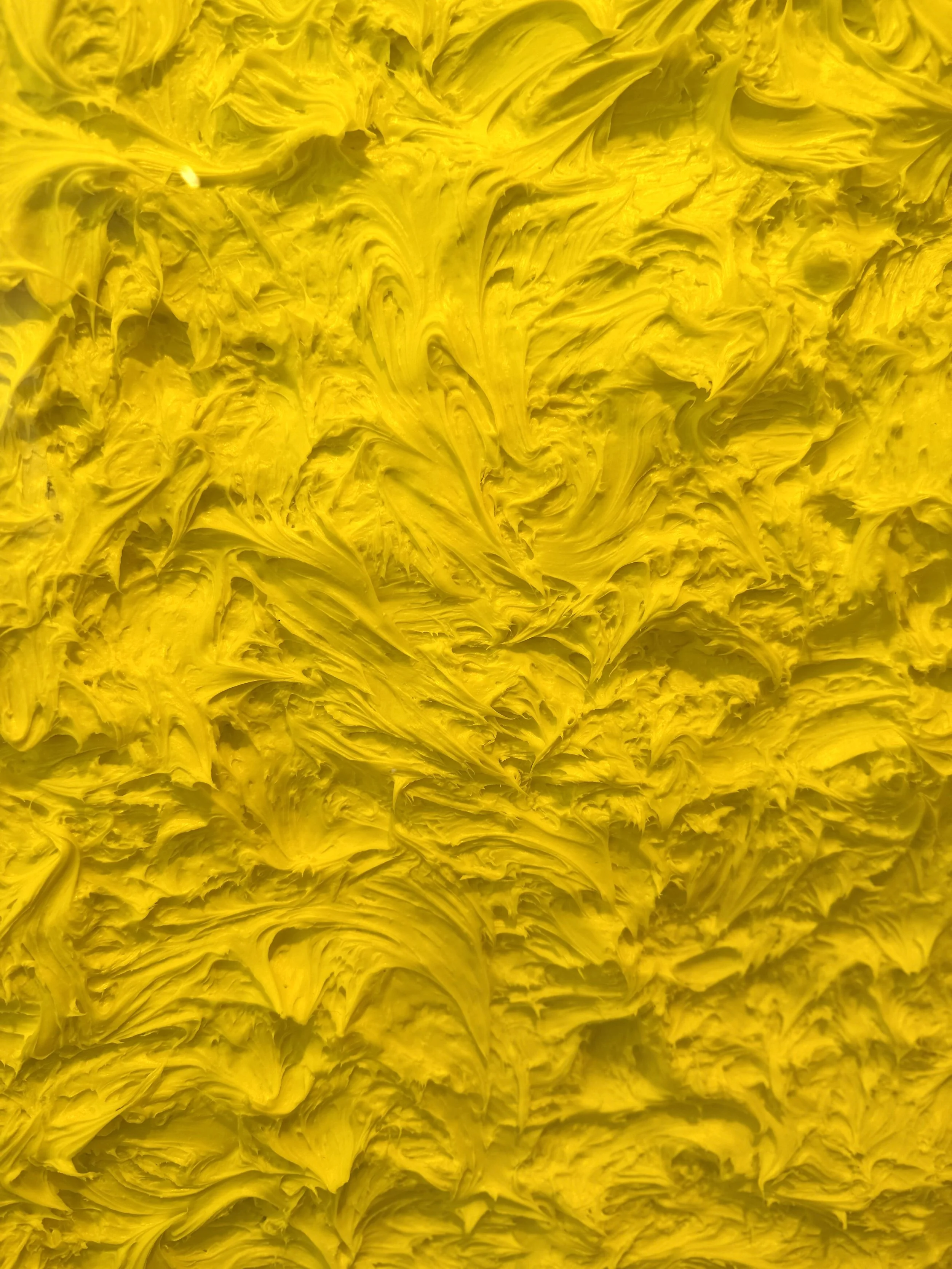
Vacillating between stimulants and suppressants, Appetite Apparatus #2 (Monosodium Glutamate, Stimulant) confronts viewers with thirteen pounds of pure MSG presented in a glass bowl with an oversized scoop, placed atop a stimulant-red plinth. In Appetite Apparatus #4 (Food-Grade Lubricant, Stimulant), Reynolds introduces an oversized, industrial-yellow “dispenser” filled with commercial food-safe grease—an essential yet largely unseen component of food manufacturing. Both stimulants operate as silent actors. MSG permeates countless foods, activating taste receptors, while food-grade lubricant remains an ever-present agent within processing systems.
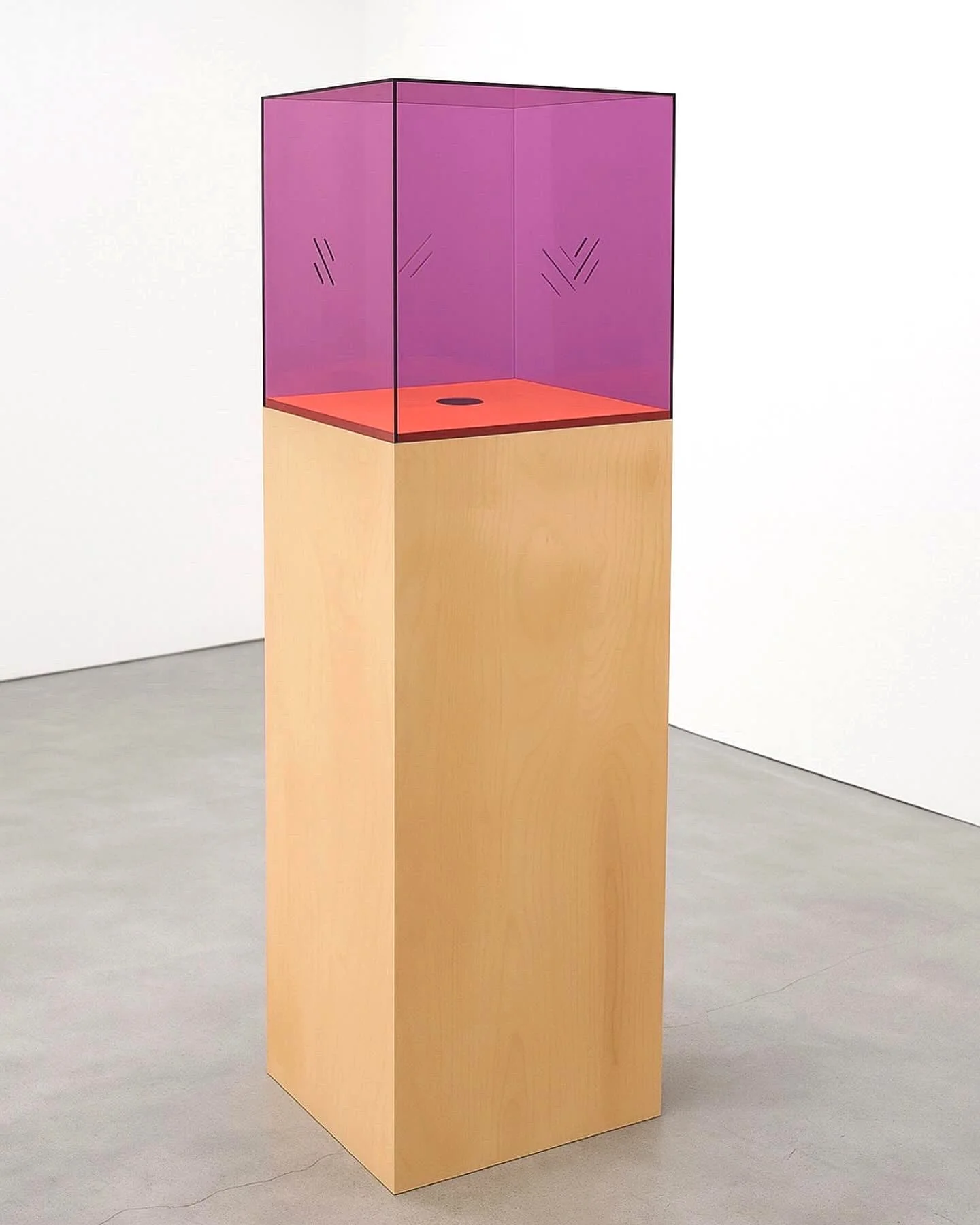
On the suppressant end of the spectrum, Reynolds presents Appetite Apparatus #3 (Scent Sculpture #1, Grapefruit & Fennel, Suppressant) and Appetite Apparatus #5 (Desiccants & Bariatric Tableware, Suppressant). In the former, scent becomes object. A custom plinth and plexiglass structure houses a commercial scent nebulizer, displaying the aroma as a museum artifact. Echoing scent-marketing tactics used in hospitality and retail environments, the gallery is infused with grapefruit and fennel, aromas scientifically linked to sensations of fullness and appetite suppression.
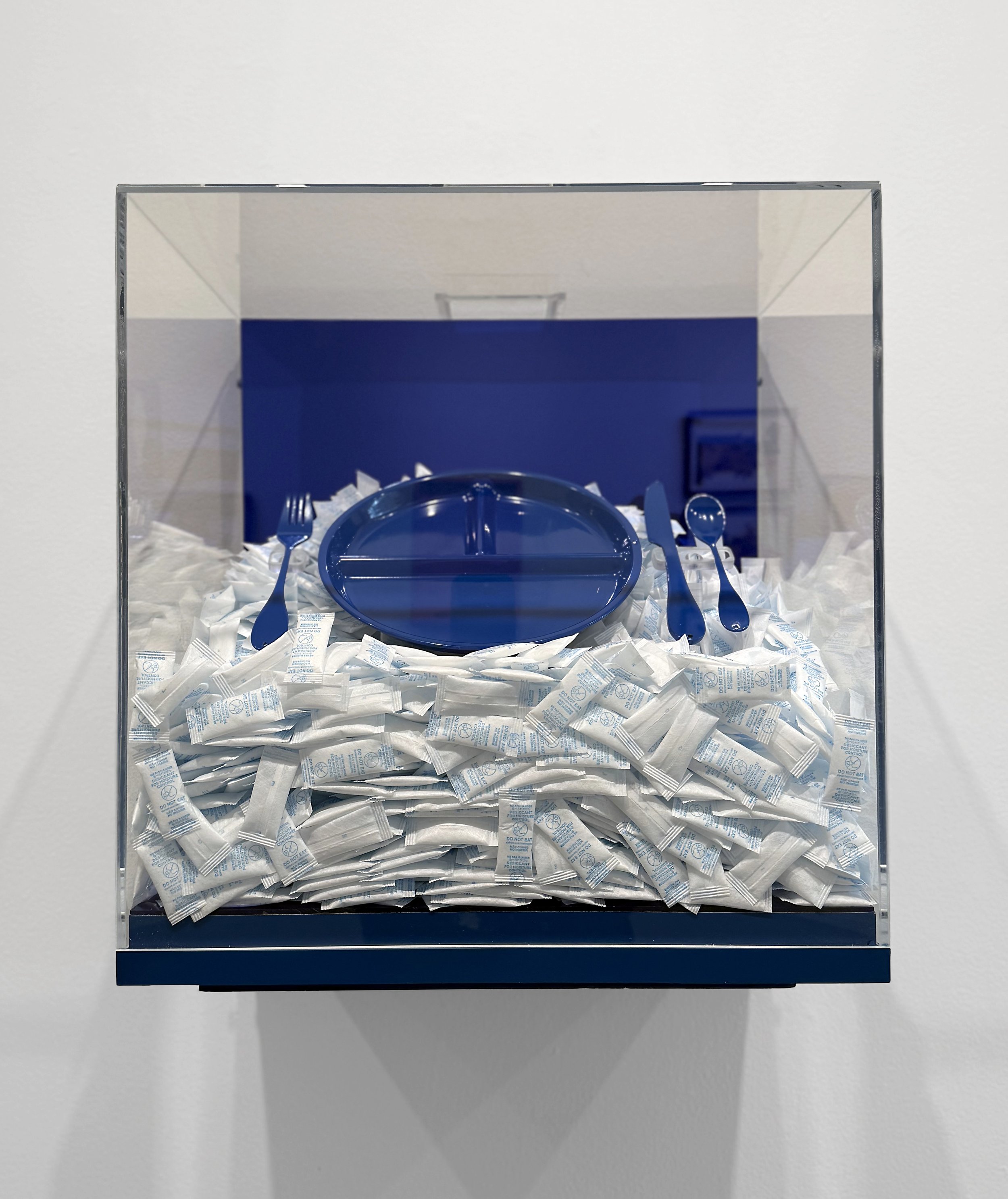
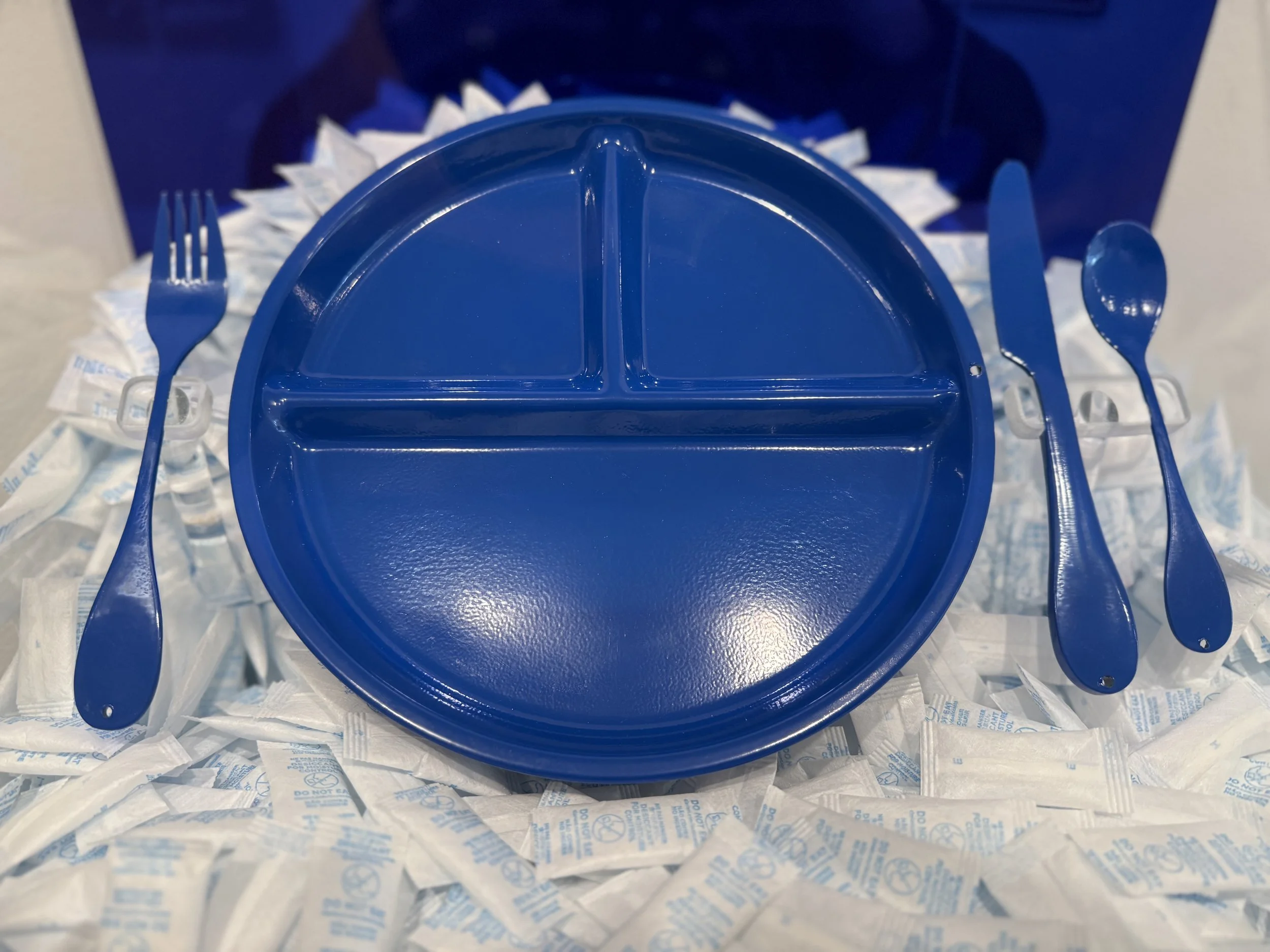
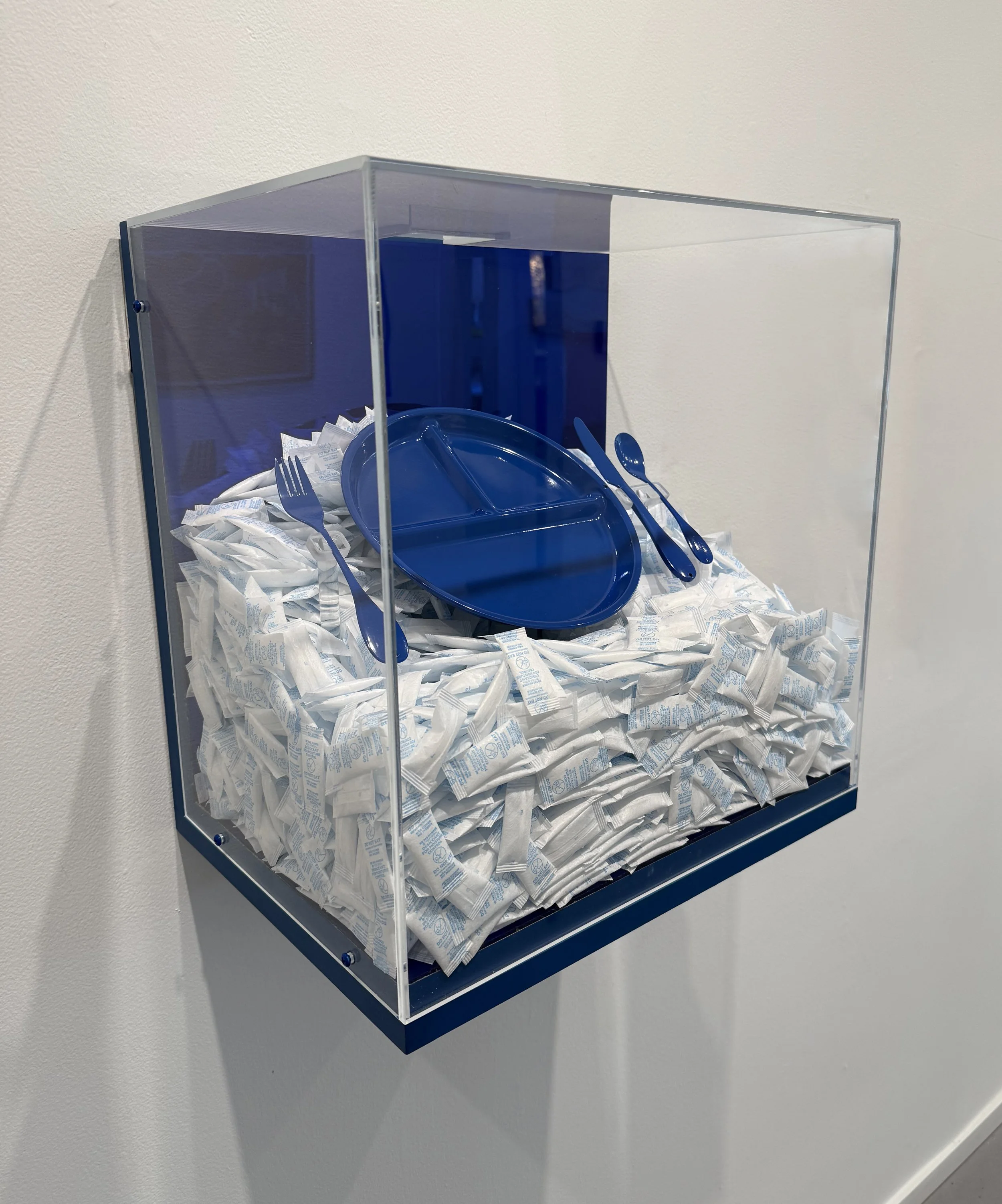
With Appetite Apparatus #5, Reynolds extends the visual language of institutional display. A wall-mounted plexiglass case preserves bariatric tableware alongside desiccants, a preservative material. Bariatric tableware is designed to regulate appetite through enforced scale, segmentation, and resistance, these plates and utensils externalize self-control by embedding it in form. Portion sizes are pre-decided, gestures are slowed, and consumption is visually policed before eating begins. As Appetite Apparatus #5 is coated in an appetite-suppressant blue hue, the vessel denies access to the already restrictive utensils, rendering the act of eating impossible.
By offering viewers a rare opportunity for physical alteration through visual, olfactory, and temporal engagement, Appetite Apparatus challenges participants to reconsider how food marketing strategies, sensory manipulation, and subconscious conditioning shape everyday consumption habits. Beyond the immediate encounter, the work proposes that these interventions may fundamentally alter how individuals relate to food and, by extension, to each other long after they leave the installation.